Is Charm Offensive?
August 12, 2026
Is Charm Offensive?
The pad Thai was meh, and the fortune cookies a great disappointment. One just said “Behind a successful man is always.” And my husband’s said he would “win over others with his charm.”
I snorted. “That’s so not you.”
Our friends were aghast, shocked by my cruelty, and they teased me hard. How could I say such a thing?
But I do not trust charm, and I would never have married a charming man.
Driving home, I asked Andrew if I had hurt his feelings. “Hell, no,” he said. “I’m not charming. You know me.” I do. He is entirely honest, entirely himself. Which is, if I dare to contradict myself, his real charm.
We compared definitions for the next hour, debating which of our friends possessed charm. My own definition, I was careful to explain, involved adroit flattery, well-practiced and subtly used to manipulate. The rogues who travel through Europe’s high society, insinuating themselves as gigolos for wealthy older widows. The snake charmers who never admit they have sewn the cobra’s mouth shut. I know the type; I was briefly engaged to one. Andrew followed, and he was pure relief.
Because he had never had such an experience, he had a kinder and much broader definition of charm. He included friends who were urbane and chivalrous; friends who were warm and magnanimous and fun; friends who were boyish, teasing lightly, keeping the mood up. By the time we pulled into our driveway, I was dizzy with charm’s possibilities.
Andrew’s versions all fit, one way or another, the standard definition: “a magnetic, pleasing quality that attracts and fascinates others. It is the power to delight, persuade, or captivate people through charisma, grace, and personality.” It is sincere, warm, empathic.
My version fits the DSM-5—or a police blotter.
“You do have a rather dark sense of this word,” he said gently. I conceded the point. But at bedtime, when I found my page in Akin, I read validation: Emma Donoghue has one of her characters recall of a boy’s father, “He was such a charmer,” then hurriedly try to correct himself, realizing that the word “sounded like a euphemism for con artist.”
I am wary of superficial charm, which is glib, calculating, and manipulative. It triggers a chemical reaction that stops you from pulling back, creating a little reflective distance, and analyzing what is happening. The intimacy is instantaneous; you feel chosen. Later, you feel a fool. And you narrow your eyes at every charming person you meet thereafter.
We had spoken only of men—we were, after all, addressing the fortune cookie—but it occurs to me now that my mother had charm. A benign, nurturing sort, utterly delightful for its recipient, nothing sociopathic about it. Yet it was a bit manipulative. Left insecure by a mother of seven who never much liked kids, she brimmed with warmth and need, and she learned exactly how to make someone feel good about themselves, open up, and relax. She knew what we all crave, deep down: to feel acknowledged, special, wonderful, forgiven. (Interesting—this is what many religions offer, too.)
Alas, I watched my mom in action and knew just how many liberties she took with the truth. The emotional goal of reassuring someone, and thus reassuring herself, mattered far more to her than blunt honesty. I vowed early on to never give a compliment I did not mean 100 percent—which left me far less charming, but always on solid ground.
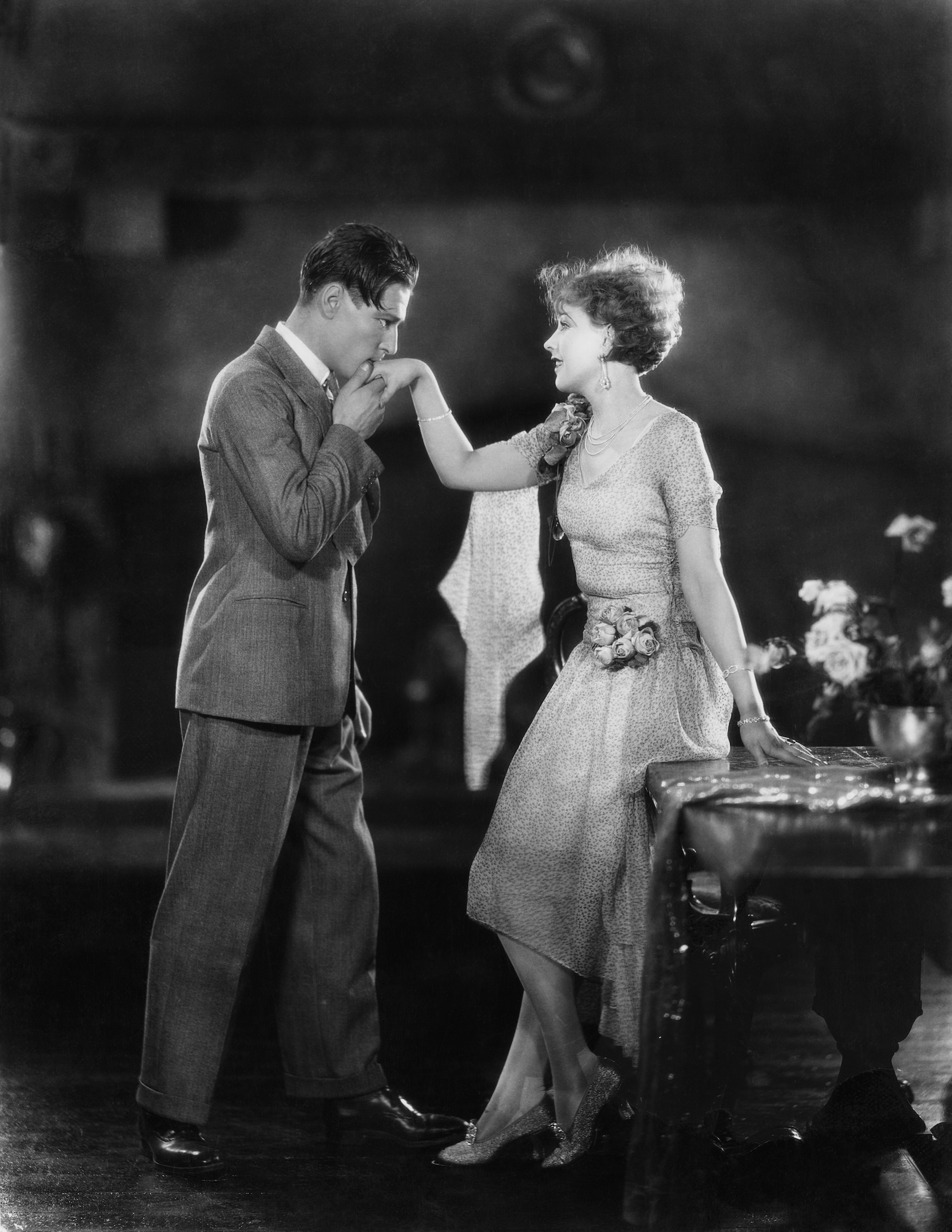
Now, though, I realize my definition is constrained. I hunt for icons. Who, on the page or the screen, is deemed to have charm? I would have picked Cary Grant, for the positive sort. Instead, doing its usual gobble of real food mixed with junk, the internet offers up Jay Gatsby, Atticus Finch (I hoped for integrity but no, for his southern manners), and Captain Jack Sparrow from Pirates of the Caribbean.
Seriously?
Another site adds Sir Lancelot, Ferris Bueller, Dorian Gray, and Count Dracula. A survey tacks on Don Draper from Mad Men, who I find far from charming. I am beginning to think that society is as confused about this quality as I am.
Which is a shame, because it acts as a social glue, and we need a vat of that right now.
If one is not born charming, yet aspires to the bright and kind sort of charm, can it be learned? A psychology practice online assures readers that “natural charm,” a trait, can be imitated, becoming a social skill. You only need “a few repeatable habits that help others relax around you. Think of charm as a set of tiny social comforts you offer again and again.”
Hmmm. Once again, I land on the cynical side. If I am to enjoy charm, I at least want it to sparkle. This definition sounds more like oatmeal on a cold morning. Still, the site does make good points. Charming people make others feel seen. They listen with interest, lead with warmth, welcome and include. They keep the humor kind. Their compliments are specific enough to feel real, not the bland, de rigeur “You look great!” They—this was interesting—match your energy. In other words, they do not deflate your enthusiasm with flat affect or buoy your sadness with drummed-up verve. How does one learn such a trait? First, by matching the other person’s pace, volume, and rhythm of pauses. Then, by tweaking gently. If someone seems tense, soften the voice; if someone looks bored, inject curiosity. In a group setting, let people finish speaking. Bring the quiet or shy into the conversation.
Charming people leave you feeling better, not deflated or restless or wounded or detached. They offer “deep presence”—in other words, the modern rarity of undivided attention. They read the room, mirroring energy, grasping social cues, and adjusting their own response instinctively—but their only agenda is harmony. They are easy in their own skin, willing to be open and vulnerable. This makes them disarming, because by readily admitting to flaws and worries, they make it safe for you to do so also. Not me, though; I stay on guard. If I feel a little shinier in someone’s presence, and lucky to know them, I turn wary.
There are objects, too, talismans and amulets meant to make you feel lucky. I do not trust them, either. After your first sociopath, magical thinking loses its power. You know dark charm is dangerous.
I shake off the memory, remind myself that there are also charms you attach to a bracelet, tiny silver symbols that cover your pulse with those you love. Those you trust.
And when I already trust someone, I am happy to be charmed. Especially by someone who has never studied how to charm.