The Precarious Joy of Eating Lunch
August 14, 2025
Lunch was the original meal, Lauren Collins points out in a recent New Yorker, since procuring food and the fuel to roast it took all morning, and you needed to replenish your energy right away. I rip out the article to save it. I have been defending lunch since I was six years old.
My mom was skinny, you see, and burned high octane energy without any seeming need to refuel—unless you count her Snickers bars. On Saturdays, we ran errands and went shopping, and around three in the afternoon, I would ask, in a small plaintive voice, “Mom, did we have lunch today?”
She found my attention to such trivialities amusing. I found her neglect of them appalling. In what universe is it okay to forget lunch?
To be fair, she did pack charming school lunches, trimming the crusts from the soft white bread we all ate back then with a metal cutter shaped like a bunny rabbit. She would continue to make my everyday life as nice as possible, though she let the big challenges hit me square in the face. No lawn-mower parenting for that woman. She knew my own life would teach me even more than she could.
Besides, she did not understand lunch.
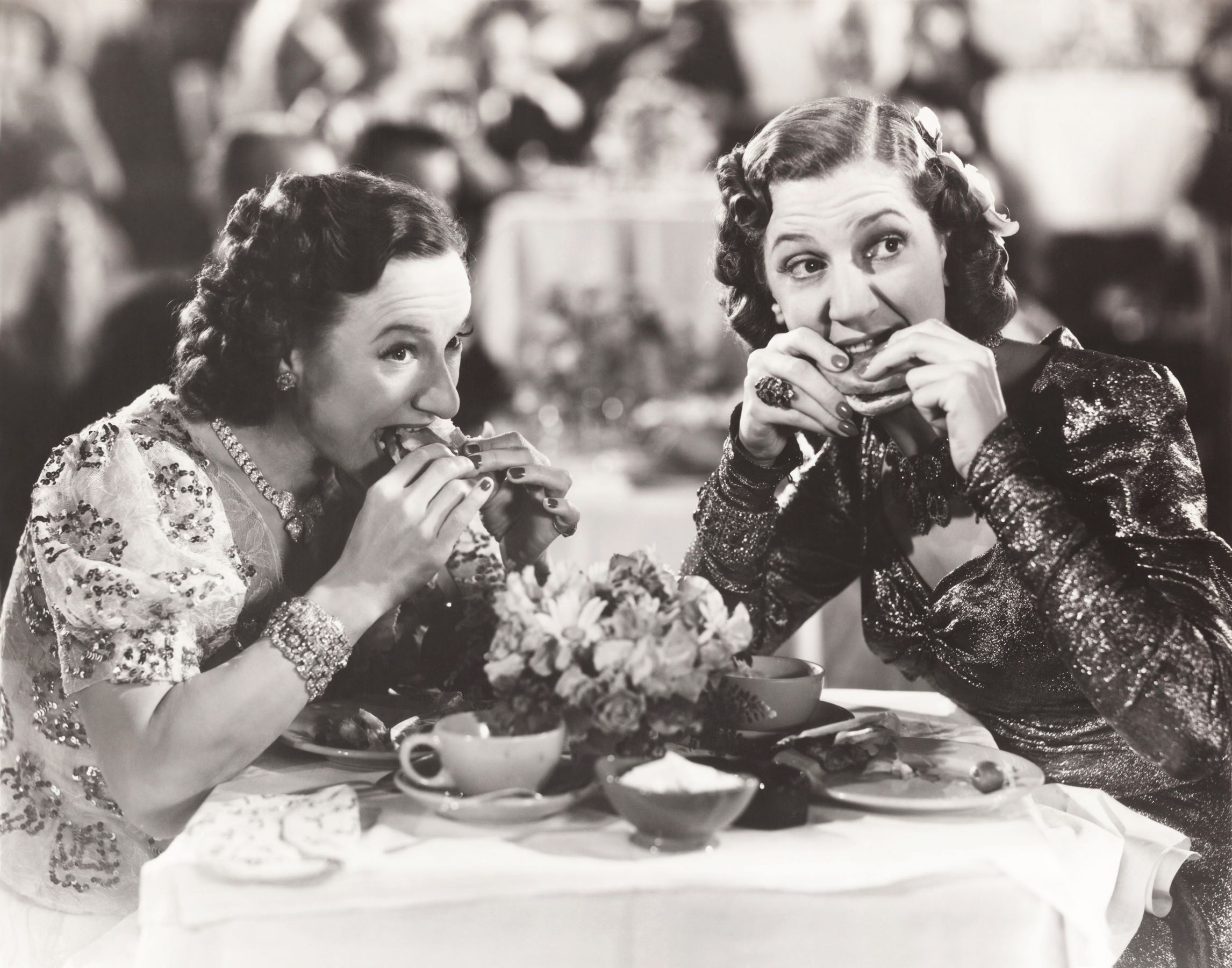
As soon as I was old enough to shop with my friends, I developed an intense affection for “the ladies’ lunch,” delicate and overpriced, but sweet respite after circling dozens of clothing wheels, rifling through their offerings in search of a miraculous convergence of size, color, and price. I also came to love picnic lunches, street-food lunches, sexy lunches in dimly lit booths, even solitary lunches with a book splayed behind them. One hot, magical summer in the between time, too young to work legally but old enough for independence, I spent every morning at the pool. Lunch, back in our air-conditioned apartment, was the day’s centerpiece: a baloney sandwich (still on white bread) with Durkee’s dressing and sweet pickles, a frozen baby Coke, and either a Reese’s or a purloined Snickers. An Agatha Christie was propped on the table. A nap followed.
In my ostensibly sophisticated single years, I went to places like Balaban’s for chilled cucumber soup, crusty bread, and a glass of Pinot Grigio. Now lunch is usually cheese, crackers, and a nonalcoholic beer. (I go through keyboards fast, because the cracker crumbs lodge themselves in the crevices.) Collins offers a similar recital of past lunches, noting that they trace life’s stages neatly. Lunches tend to be repeated regularly, unlike dinners, though they have many possibilities, unlike breakfasts. The time allotted for them is an excellent metric for workaholism and a society’s sensitivity to humanity. Here, you are lucky if you get a lousy half hour, and children are rushed through twenty-minute lunch seatings in crowded cafeterias. In France, they would be allowed two hours and a leisurely meal of what can still be considered real food.
Curious about the meal’s funny name, I find Samuel Johnson’s announcement that “lunch” came from “clunch” or “clutch,” meaning “as much food as one’s hand can hold.” But he was playing with us. It is more likely that the shortened form of “luncheon” came from “nuncheon,” meaning a midday meal, or, less appetizingly, from “lump,” meaning a thick piece of food. Not every sandwich can be a bunny rabbit.
Incidentally, my mom did finally understand. When she grew frail and holed up in the tiny house we found for her down the street, the only way we could pry her out was to tell her that our rescued pup, Louie, was a wreck and needed company during the day. She lit up and began coming while we were gone, bringing her own lunch—and food to spare. They ate together on the couch, a tray in my mom’s lap, the dog waiting courteously for her to begin before lapping up the yogurt and sandwich he knew were for him.
“Louie likes lunch,” she informed me, stern about my neglect in feeding him only twice a day. I raised an eyebrow but kept quiet.
We should all like lunch. It is a sunny, sociable meal, a fortifying break in the middle of the day, a bit of sensuous pleasure before you return to abstraction, a helpful burst of calories if you are using your body as it was meant to be used. Exquisite lunches can be had without a second mortgage at fine French restaurants who save their profit margin for dinner. In the years when people drank wine at lunch, afternoon meetings were far more pleasant.
I find it deeply disturbing that my husband skips lunch. He then relishes a substantial dinner, while I self-righteously fix myself a smaller plate. King Charles also believes that lunch is a luxury. My mom once had a boss who drank a Slimfast every day at noon. He had no weight problem, just did not want the mess and fuss of lunch to interrupt his work flow. Collins cranks my stomach’s spin even faster by noting that Donald Trump will go sixteen hours without eating, then gobble up two Big Macs and two Filets-O-Fish. How many of the country’s many current problems do we owe to this gluttonous and tacky debauchery? Unless one is a saint or a participant in a clinical study of that stupid intermittent fasting trend, long periods of abstention feel masochistic, as do the sudden quantities required to compensate for them.
Power lunches are another insult to the form, filled as they are with aggressive posturing, off-menu ordering, and self-conscious swagger. Okay, you are busy and important, now can I please have some soup? Formal luncheons are dreadful, too: the food is never as good as it is at a formal dinner, the awards and speeches are even more boring, and no one dresses up. New-job lunches are inherently awkward: must someone invite you along? Will they examine your brown bag’s contents with disdain? Once you are established, however, lunch fills with mirth and ritual enactments. The disgusted, noble emptying of the moldy leftovers in the communal fridge. The wildly celebratory free food in the lunchroom. The petty theft. I will never forget the friend, famous for his calm, dry delivery, who stood chatting with an office mate while the guy delved happily, repeatedly, into a brown bag and scarfed its contents. Finally my friend’s calm broke.
“Dude,” he said, “you’re eating my lunch.”
Read more by Jeannette Cooperman here.