What Is It With the Knives?
By Ben Fulton
November 14, 2025
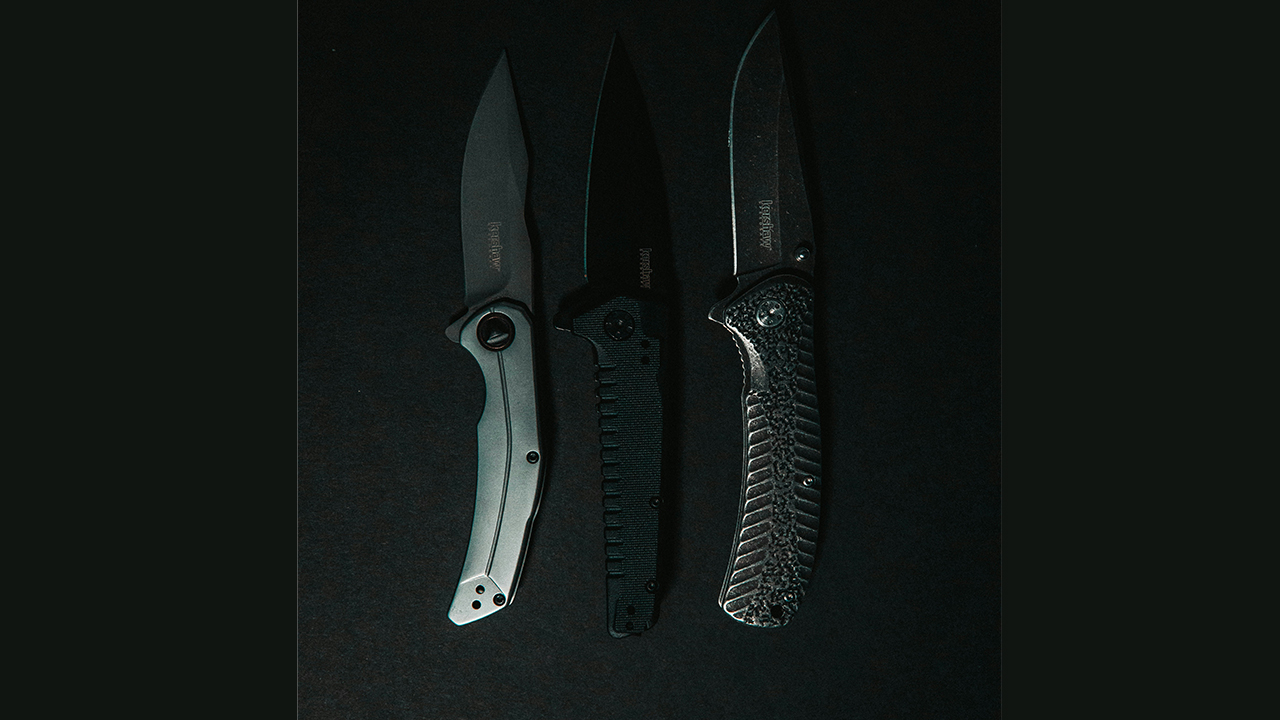
Stanley Kubrick did not choose the knife as the progenitor of human tools spanning all the way up to spacecraft when he directed and co-wrote his 1967 film 2001: A Space Odyssey with science-fiction author Arthur C. Clarke. The humble rock—as every film buff knows—scored that honor. But judging by the resurgent popularity of designer knives, Kubrick should have forsaken his final choice.
What is that? You did not know that designer knives have for years been a niche market among the elite with money to burn? Please allow me to enlighten you.
My nascent awareness of this strange trend began with my first paid subscription to Wired magazine, the premier chronicler of all things tech since back when the internet was heralded as the next best thing to life itself. Adjacent to that Condé Nast subscription I received at about the same time, regular installments of the buying guide Gear Patrol, an email newsletter showcasing tantalizing product reviews of the latest in cars, watches, stereo equipment, kitchen appliances, and, yes, knives.
But not just any old blades, mind you. These were “every day carry” (EDC) designer knives carrying the signature of their creators as if they were works of art. Excuse me, not “were” but are. Because it was clear from the very first write-up of these featured blades that Gear Patrol’s bylined authors wasted no time on the mediocre, but went straight for the throats, so to speak, of designers and manufacturers who made only the best products.
The headlines of these write-ups read as if from another world, where the universe hung in the balance by whether or not a new knife surpassed past incarnations: “CRKT Teamed Up with an Actual Green Beret for Its Latest American-Made Tactical EDC Knife,” read one; “CJRB’s Super-Affordable Genteman’s Knife Packs Two Deployments and Tactical Vibes,” read another; and yet another to announce, “This Affordable Overperforming EDC Knife Just Got a Sneaky Upgrade.” The text of the write-ups themselves was an expert blend of emphasizing utility and beauty. The ultimate sales pitch, basically, as in, “a blade made from Terravantium Dendritic Cobalt, a steel that’s so completely corrosion-resistant that it’s guaranteed rustproof for life.” At $349 for the Terrain 365 Invictus-TL, how could you resist?
Given the ubiquity of Amazon packages requiring a quick open and subsequent dispatch, coupled with the increasing hostility of our polarized political age, there are doubtless some who see the purpose of owning the finest in EDC knives. The better angels of our nature, though, would be well within their rights to find it all slightly creepy, if not downright sinister.
Of course knives have utility. Most of us own the kitchen variety, which do well enough by dicing onions and slicing apples, with maybe a back-up Swiss Army knife for the more unusual tasks of gnawing through duct tape or puncturing leather. Personally, whenever I need an Amazon box opened I most often reach for the serrated edge of my house key. It may not accomplish the job on first try, but it has never failed on the second or third pass over the packing tape.
I once had a friend who went into ecstasies collecting a few French Laguiole knives here and there. Those carried with them an authentic back story of history and French culture, designed as they were with the famous “Napoleonic Bee” to lock the blade, plus a Christian cross embossed by handle rivets for impromptu prayers, both in the fields of battle and livestock. These were objects with stories to tell, as opposed to “cool” features with the potential for latent threats of skinning your opponent alive.
Of course devotees of these exotic, elite blades will protest that take as a condescending downer. “What on earth is wrong with collecting and admiring objects to admire, even if they carry the potential of inflicting pain?” they might ask. Nothing, of course. Certainly, they pale beside the toll inflicted on society by handguns, whether it be suicide or mass shootings. But none of that changes the fact that knife crime is a huge problem in some countries, just as none of the enthusiasm for collecting these items makes anyone complicit in the stupidity and cruelty of psychopaths who enjoy the sight of other people bleeding to death.
The best question surrounding this trend may be, as so often happens in our current age of hypermasculinity and hostility to feminism, not “Why spend $349 for a knife to open your packages when the edge of a housekey will suffice?” but instead “Do men ever grow up?”
I say this as an adult who once had a knife fetish as a boy. Or, more specifically, a boy and a latchkey kid with loads of extra time to practice knife throwing. It all started after first watching Swiss Family Robinson (1960) at my neighborhood cinema. For all the young eyes of the audience, life on a tropical desert island was all about adventure, not so much the stress of baseline survival. So it was with knives used to build the Robinson family tree house, forage for fruit and coconuts, and fend off pirates. Soon afterward, I mowed enough neighborhood lawns to buy an “Eagle Knife,” followed by a “Survival Knife,” plus a color-coordinated quartet of throwing knives.
Eager to hone my skills, I hurled each of these knives in turn at a mass of folded cardboard propped up on a fence in the modest back porch of my mother’s apartment. It was hours of great fun, day after day, for at least a month and a half of weeks during the fall. Until, one day, I missed my cardboard target to have the knife ricochet into a neighboring back porch, and straight into a glass of iced tea held by a man anxious to relish the end of his working day. No one died, but my mother was held responsible for the cost of the neighbor’s trip to an emergency room for a thumb slit by broken glass as a result of my wayward knife. You would be right to guess that was the end of my knife-throwing career, but more than that, it was a rude discovery that, knives in pocket or no, my years ahead would have more unexpected edge than I could then know.
Of course knives have utility. But not everything they do is ultimately useful, or always under our control. Collecting them is fine for those with money. It is what they might be admired for that escapes our imagination. It is not that knives are double-edged, but—even for collectors—that they hide their edges.