The Call of the Wild
How restoring the non-human world will give us humans a second chance to save our own.
November 21, 2025
“We are all here on Earth together, quail and willows and humans, like strangers packed into the same ballroom. There are no exits, or if there are, they lead to cold space.”
—Emma Marris
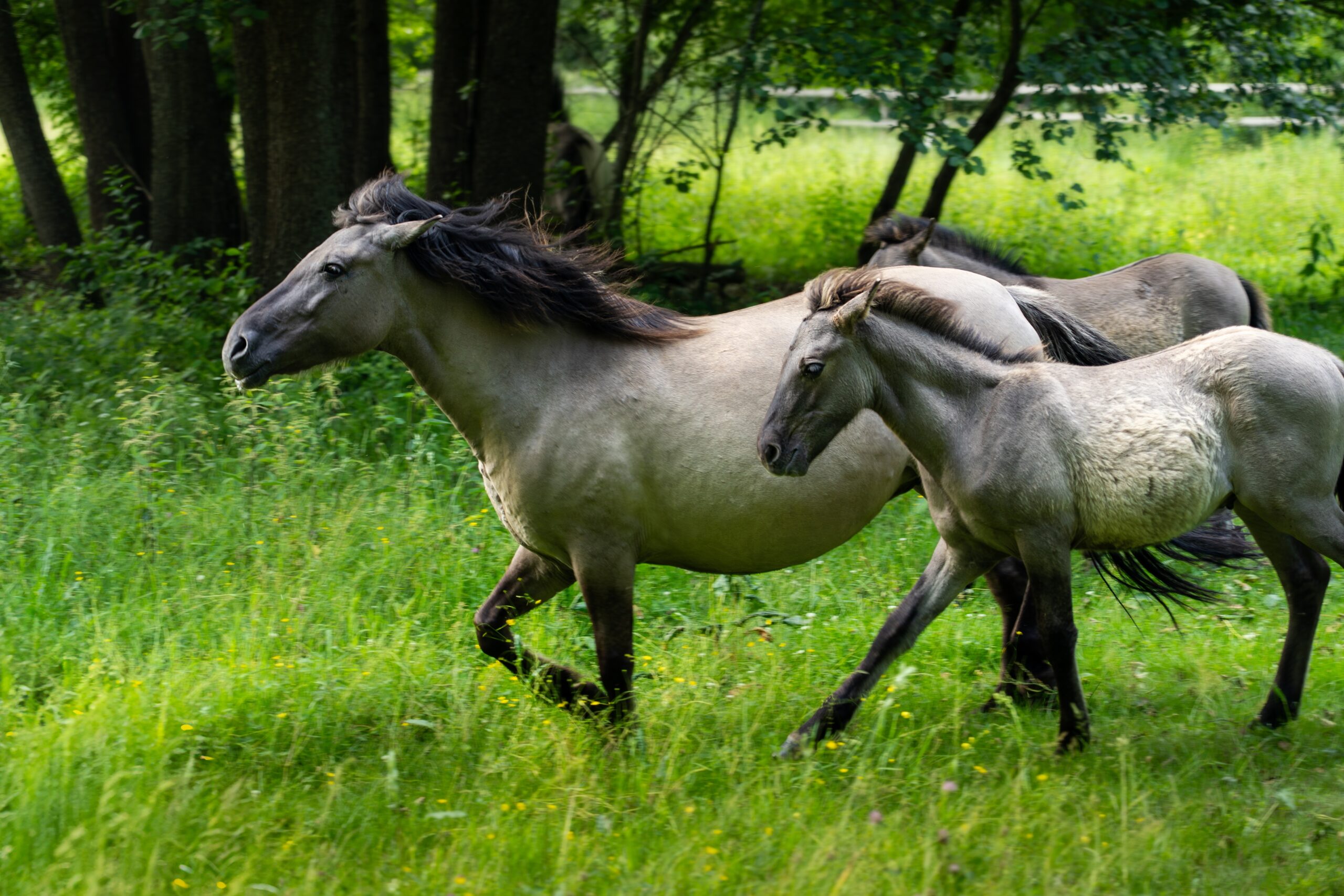
The only truly wild horses left on Earth, small and stocky Przewalski’s horses, are roaming the Iberian highlands again—after an absence of more than ten thousand years. Eyes closed, I can see them, pale tan with dark manes and creamy undersides, standing in companionable clusters as they graze the slopes of the Villanueva de Alcorón mountains. A peace settles over me, and when it fades—there are only a handful, will they survive and breed?—I hungrily seek out more good news.
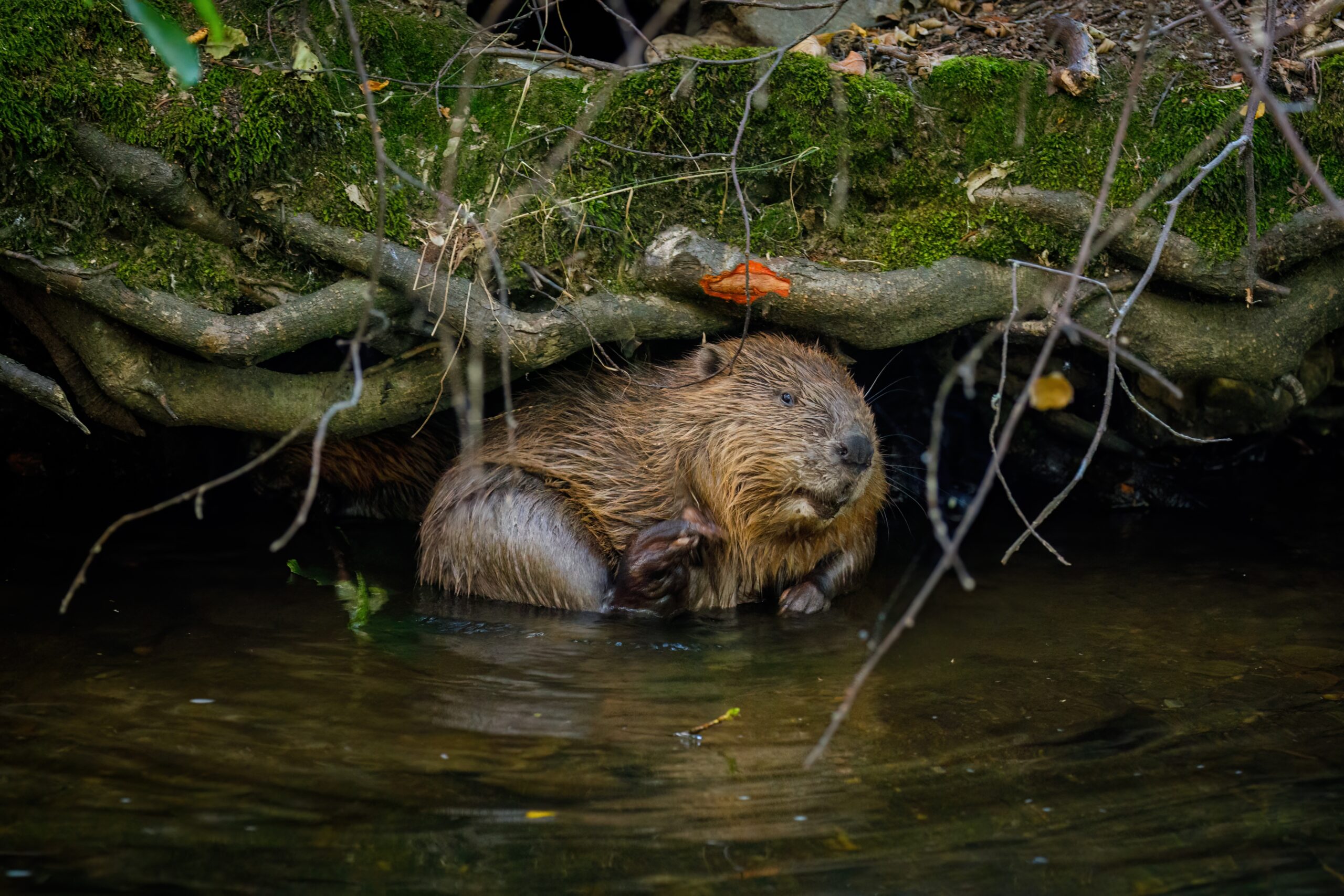
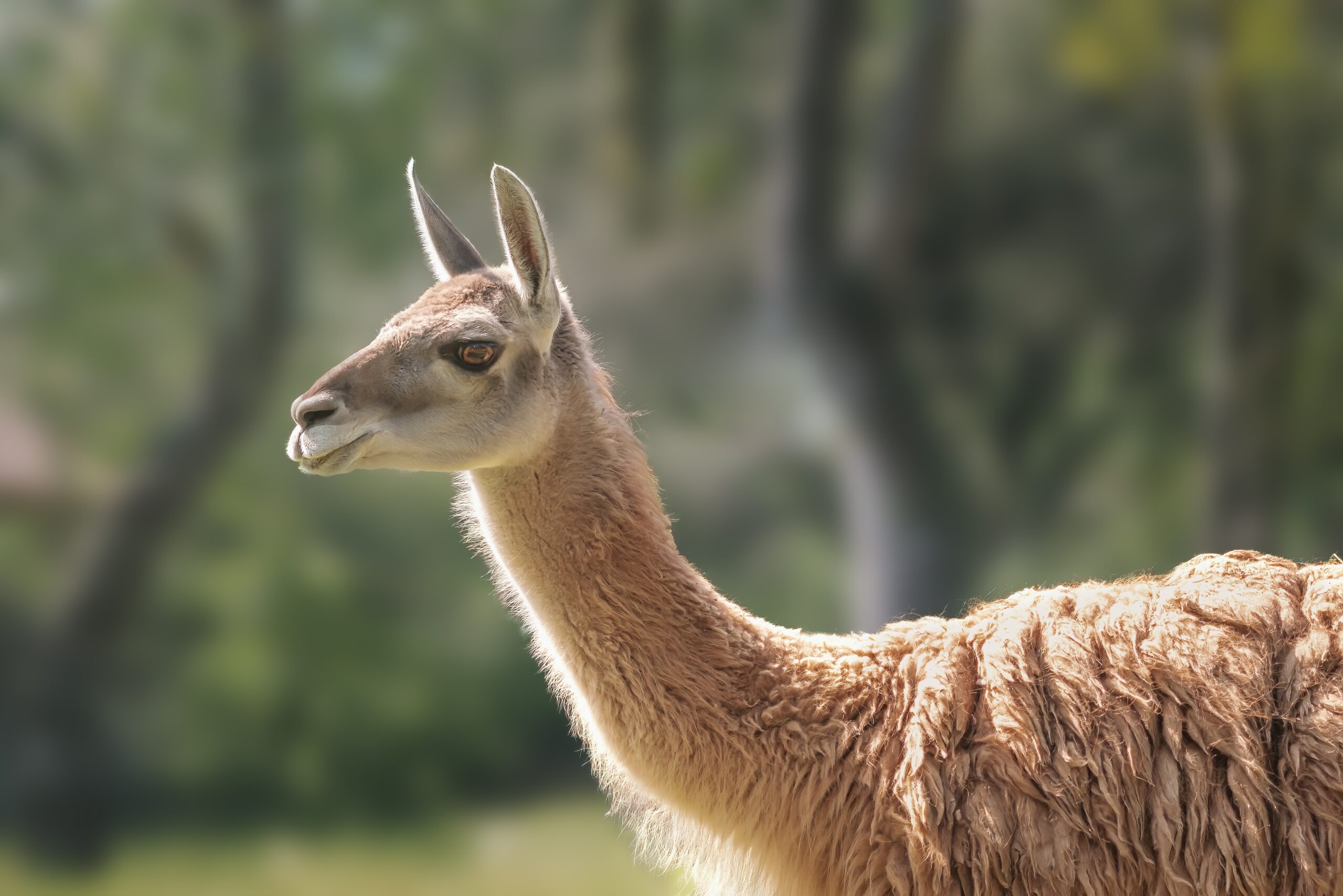
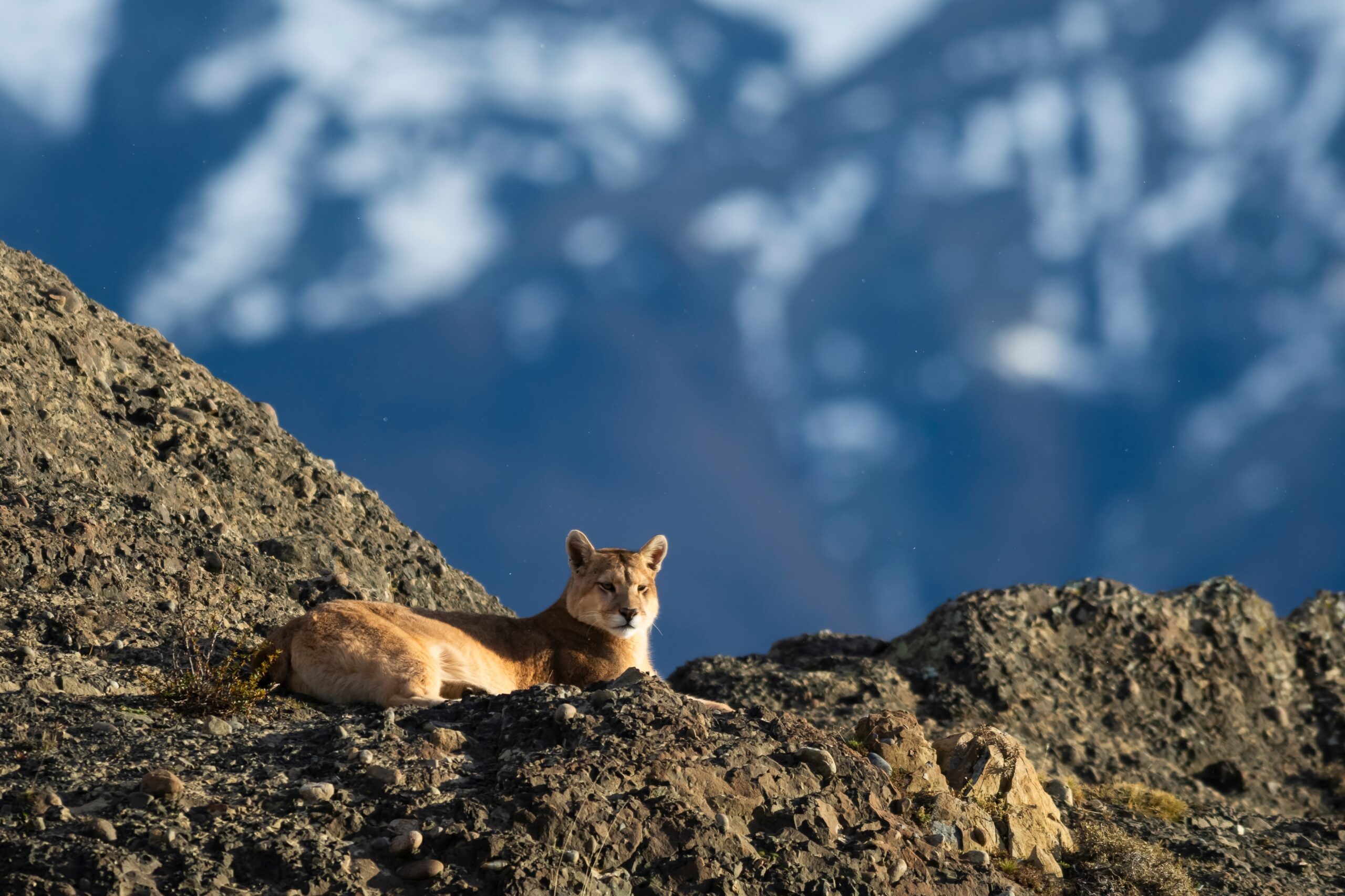
Beavers went extinct in the Netherlands in 1800, but more than six thousand are now busy damming Dutch rivers. In Patagonia, hundreds of miles of fencing have been ripped from a former sheep ranch so that the woolly guanaco, with their big soft eyes and long curly eyelashes, can range freely. Solitary, tawny pumas are returning, as is the nearly extinct nandu, a gawky, long-legged bird with a fuzzy flat-top and big, wide-set eyes like periscope lenses atop a long, skinny neck. Above this tableau soars the near-threatened Andean condor, its twelve-foot wingspan needing barely a flap, its pinkish wrinkly head a surprise above a pure white ruff and black feathers.
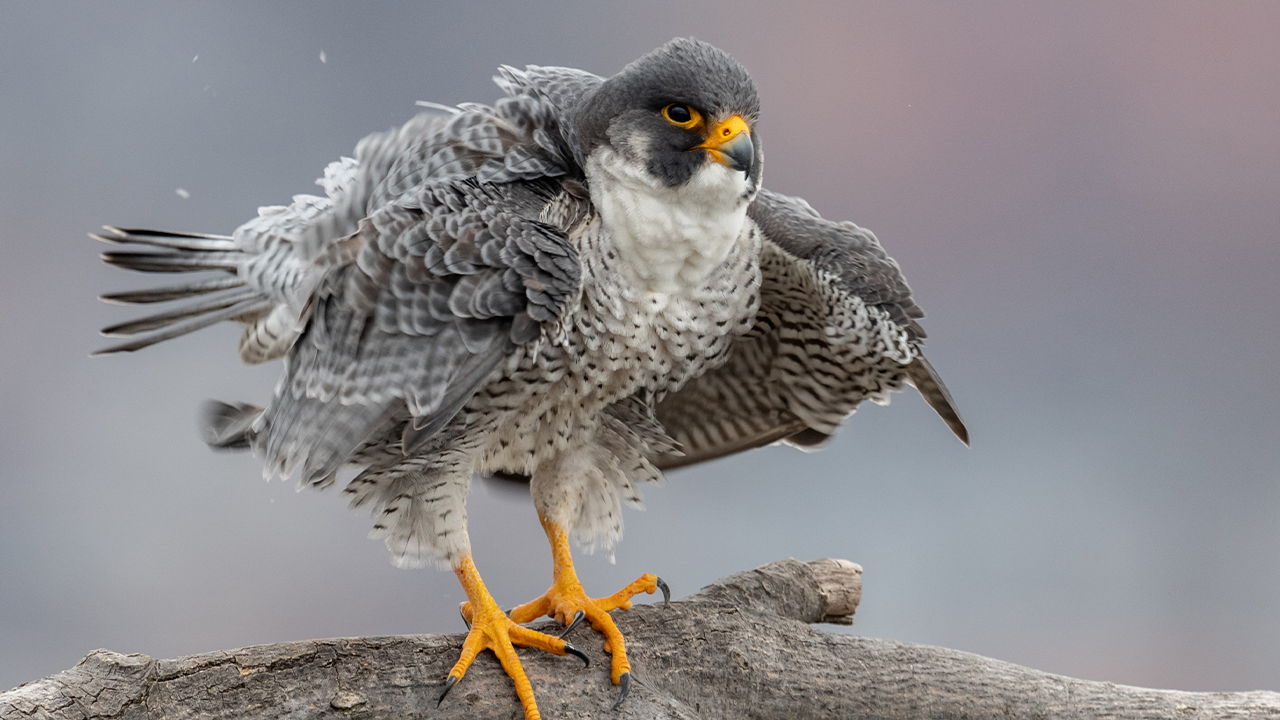
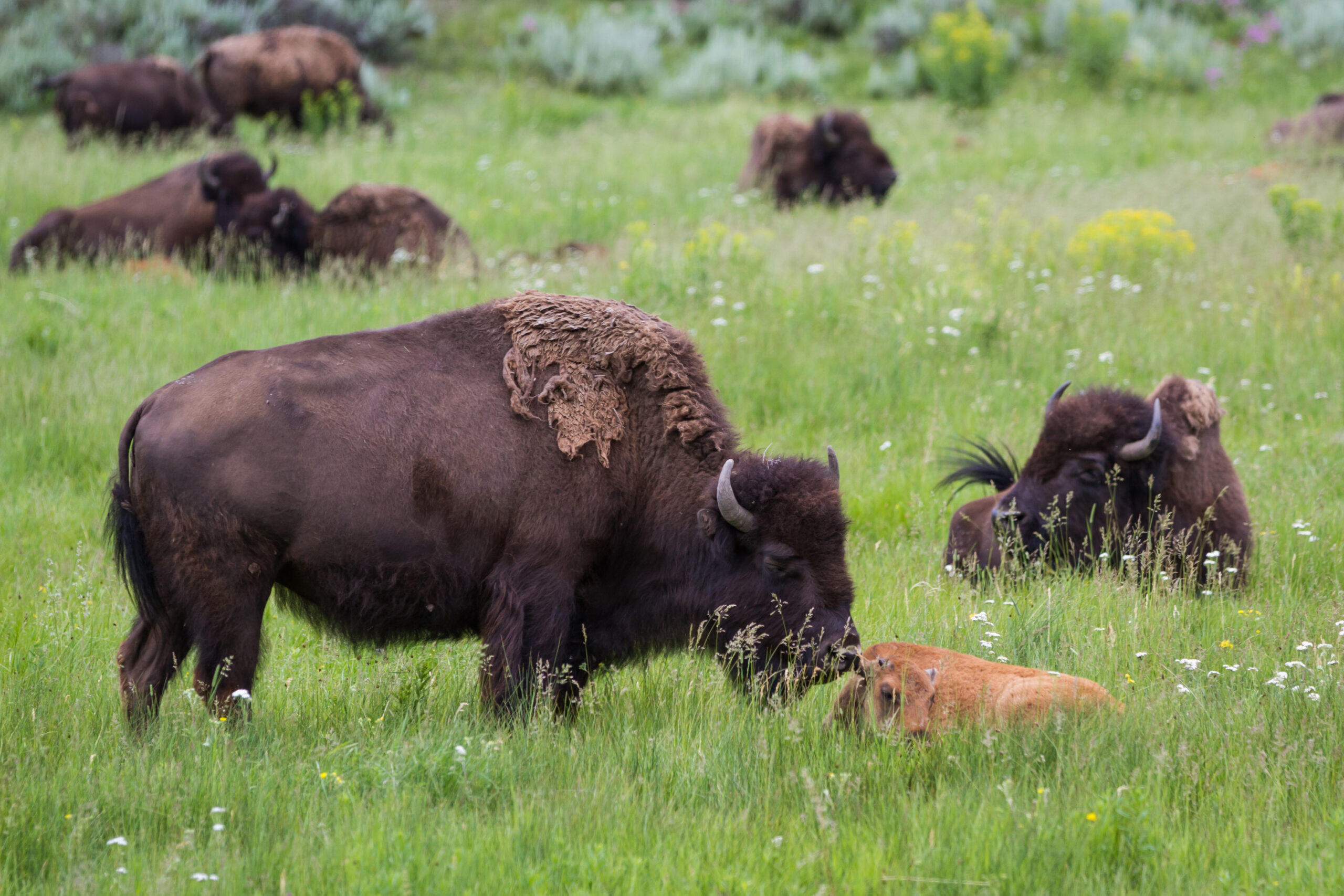
I absorb this news hungrily. Here in the United States, the shaggy-bearded North American bison, whose population was nearly wiped out in 1884, now number half a million. The perky little black-footed ferret, once thought extinct, is back to burrowing through South Dakota’s Badlands. The California condor, largest land bird in North America, graces coastal cliffs again. Peregrine falcons, brought back from the brink, nest on Manhattan’s bridges and high-rise ledges, keeping pigeons in check. Restored Midwestern prairies are welcoming back the shy prairie violet, the only flower on earth that the regal fritillary, a fashionplate of a butterfly with black-banded saffron orange wings and cream highlights, will entrust with its larvae.
In England, Isabella Tree and Charlie Burrell introduced herds of free-roaming ponies, pigs and deer to their West Sussex estate, and “nightingales, peregrine falcons, lesser spotted woodpeckers, purple emperor butterflies” all flocked back. Next, the couple introduced a group of white storks. Soon one was nesting in the castle chimney, part of the first white stork family to breed successfully in Britain in the past six hundred years.
This is what rewilding can do. But can it work fast enough?
Peregrine falcons, brought back from the brink, nest on Manhattan’s bridges and high-rise ledges, keeping pigeons in check.
Missouri once had fifteen million acres of prairie. Less than half of one percent remains. Why care? Scrape one gram of loam off the top of a fertile prairie soil and stick it under a microscope. About two million protozoans and fifty-eight million bacteria will wriggle on that slide. Not only is that rich soil nearly gone, but all topsoil is in danger: UNESCO warns that “90 percent of the planet’s land surface could be degraded by 2050.” Oh, Earth will make more, people say, and in time, it will. But it takes between five hundred and one thousand years to form one inch of soil.
Our kind has wrought such damage; we know the litany by heart. More than 10,000 species are now critically endangered. “Civilization” has destroyed habitats, polluted, drained resources, acidified oceans, destroyed coral reefs, and spewed microplastics and big plastics everywhere. Humans have clear-cut forests, paved grassland, overharvested, overfished, and overhunted. Subtract our beeps and horns, and the world goes quiet: since 1970, the number of birds animating North America’s skies has dropped by nearly three billion, with blackbirds, warblers, finches, and other songbirds the hardest hit.
Meanwhile, much of the existing ground is being strangled by honeysuckle, kudzu, vetch, cheatgrass, and various exotics. Many of these invasives were suggested as habitat by conservation departments, their midcentury management strategies blind to the harm.
“In less than a hundred years,” writes Ellen Meloy, “we have surrendered several million years of intimacy with the earth.”
Can we get a second chance?
“We’re just beginning to value wild places—now that we’re losing them. Yet we haven’t understood how our increased attraction to wilderness is the wilderness’s own intense desire for life. Our longing is an echo of its own.”
—Belden Lane
What we need is one trophic cascade after another. Meaning: the magical repopulation that spirals, finally, in the right direction, moving from one species to the next after the apex predators and large grazers are restored to the top of the food chain. The famous example is Yellowstone, where the wolves’ return checked the surging elk population and kept the remaining elk on the move, which prevented them from overgrazing the land. Once willows and aspens could recover, their shade cooled the water, which helped fish thrive, and the canopy created a refuge for songbirds and insects. Beavers chewed up the soft willow for lunch and used the branches to shore up river banks, slowing erosion.
“Rewilding”—the word carries a frisson of danger, a bit of thrill. Yet its basic principles are practical: restore natural processes and native species, especially the “keystone” species who play critical roles in the ecosystem. Reduce or remove human management and interference. Link large landscapes into wildlife corridors. All of which sounds so obviously right, the lack of consensus puzzles me. Why am I surprised, though, when we have never even been able to agree on what “wilderness” means? The concept has been tossed about for centuries, fear and romance slicking its surface. As an artificial construct, “wilderness” lends itself to endless argument, with those who care the most getting stuck at opposite philosophical extremes.
Missouri once had fifteen million acres of prairie. Less than half of one percent remains.
Save the rants for the pub. This is no time for ideological purity; we need to act. And all the arguments boil down to a single question: should we act parentally, taking kindly, worried care, or deferentially, by granting freedom and watching from afar? Funny, I have often faced the same question in friendship and marriage. How much should one intrude in another life, and where is the line between caring and meddling? All one can do, I finally decided, is love, and pay attention.
How to rewild? Think of someone just released from years of captivity: what does freedom mean to them? The ability to move through the world as they like. To have space. To be connected to the rest of the world, not stuck in a closed compartment. To eat what they like, do what they will, own the boundaries of their own body, and have whatever they need to thrive. Does giving animals that kind of freedom require zero human presence? We were once wild ourselves, you know. Yet we have since unwilded most of the world. Are we to simply walk away, distancing ourselves in a grand romantic gesture, instead of trying to repair our mistakes?
Had we done less damage, withdrawal could work. “Sitting quietly doing nothing spring comes and the grass grows by itself,” reads a Zen poem. But our grass is soaked in forever chemicals, and our spring brings a sudden killing heat. We should make as much room as possible, stuffing our hands in our pockets when we feel an overwhelming impulse to steer. But we cannot simply unlock the cages we have built and say, “Go, be free,” to a world we have yanked out of balance.
“It is vain to dream of a wildness distant from ourselves.”
—Henry David Thoreau
In the Oostvaardersplassen reserve, horses, cows, and deer are starving to death, their skin a loose curtain over hard bone, the flesh long gone. Soft-hearted Dutch citizens risk arrest to toss bales of hay over the fences. The government puts up roadblocks to stop them from trying to rescue the animals one by one.
Oostvaardersplassen was a grand experiment to bring back the red deer, cattle, and feral Konik horses that grazed on European river banks before humans took over. What were not reintroduced, however, were the Eurasian wolf, lynx, and brown bear that had been their natural predators. So when a succession of mild winters let the grazers flourish, their populations grew steadily. Now the harsh winter of 2017 has most of them starving, their suffering so heartwrenching that many are shot as an act of mercy. Sixty percent of the animals are lost to starvation and this grim kindness. In 2018, caps on herd size will be set, meaning that another 1,800 red deer will have to be killed, and several hundred Konik horses—small Polish ponies of a soft gray-brown—will be sent to reserves in Belarus and Spain. Three years later, with the population again growing, two hundred of the remaining horses will be slaughtered.
“Rewilding”—the word carries a frisson of danger, a bit of thrill. Yet its basic principles are practical: restore natural processes and native species, especially the “keystone” species who play critical roles in the ecosystem.
The original plan was to link the Oostvaardersplassen marshland to other habitats in a wildlife corridor, so the animals could migrate at will and forage wherever they could find food. When that plan had to be tabled, ecologist Frans Vera, whose conviction had pushed this project into existence, said closing off the marshland was “killing the integrity of the ecosystem.” Still, he pressed forward, sure that even confined, the herbivore populations would eventually stabilize. Mass starvation events, he said, are necessary and normal.
Maybe so, but when the Dutch watched news footage of an emaciated deer stumbling into a lake to drown, while other starving animals huddled against the fence too weak to stand, the protest grew fierce enough to persuade the government to provide emergency food.
Now, the experiment serves as a parable. Given our track record, any impulse to save wilderness from human intervention is understandable. Accustomed to guilt, we assume that whatever humans do will do harm. But we have already created the conditions of other animals’ suffering. And though we may have forgotten how to live in nature, we are part of it. That old division between human “civilization” and “wilderness” might have begun as arrogance, but it now smacks of self-hatred. And negligence.
“We will never find a way home until we find a way to look at the caribou, the salmon, the lynx, and the white-throated sparrow in the face, without guile, with no plan of betrayal.”
—Barry Lopez
The idealistic hands-off extreme is risky, but traditional conservation has also lost its sheen. Curators fell in love with a particular species that needed rescue, so made a safe place for that “good” species, plucking it from its ecosystem and shrink-wrapping it for its own protection. The “bad” species, predators that could keep a reestablished population in balance, were kept away. This approach “spins unbounded tinkering,” remarks Meloy, “with further tinkering made necessary by past tinkering.”
Still, the main reason golden snub-nosed monkeys still brighten forest canopies, and clouded leopards still hang upside down from the lower branches, and giant pandas still tumble with sweet clumsiness, is that Taoist monks protected vast swaths of nature in central China two thousand years ago. Now managed by the government, those preserves shelter old-growth forest, clear water, hundreds of medicinal herbs, and animals otherwise endangered. Stop the traditional protection of rare species on nature reserves, and we could see greater species loss.
So why not do a little of everything, situation by situation, rather than wrangling so stubbornly over philosophy that we end up doing precious little? The bigger the area, the less management it will need; that rich variety of species, terrain, and microclimate will write its own symphony. Smaller areas, though, as well as certain rare species, will require vigilance and thoughtful planning. Idealism cannot keep itself so pure that it risks the lives it wants to protect. And conservation cannot play God for long.
• • •
Other animals were once alive to us, sacred and relevant, creators of the universe or at the very least messengers of its truths. They could heal us, help us in our herculean labors, impart enough wisdom to rule a kingdom. And traditional hunters’ relationships with animals were “contractual—principled agreements, founded in a spirit of reciprocity,” as Barry Lopez reminds us, with “mutual obligations and courtesies.”
Was it Christianity that eventually broke the contract? Adam had been placed above nature, labeling and claiming dominion over it. Humans were obviously the smart ones, the civilized and the saved. Wilderness was raw and dangerous. Renaissance humanists let the religious argument go but clung to homo mensura, man as the measure of everything. Today, homo mensura and his livestock dwarf the biomass of wild vertebrates by 96 percent to 4. And we have surrounded ourselves with so many walls and screens, so much insulation and artificial light, that we have lost contact with the few remaining wild animals altogether—unless they are plush, caged, or flattened onto film.
When the Dutch watched news footage of an emaciated deer stumbling into a lake to drown, while other starving animals huddled against the fence too weak to stand, the protest grew fierce enough to persuade the government to provide emergency food.
Now, the experiment serves as a parable.
The live ones, we no longer see as our partners. “I believe this is a false sophistication of mind,” finishes Lopez, “and ultimately destructive.” To the animals, but to us as well. All those ways of being are lost to us. We cannot draw on their energy, color, and intrigue; we have no idea how to coexist well with them. We are left with only our own company, plus a few trained poodles and parakeets. What a lonely way for a species to live. Ego-bound, we are sustained only by our own thoughts, which grow more derivative by the day, and our own desires, which wind up destructive. When we do encounter wild animals, notes Meloy, “we are quite surprised by the sheer truth of them.”
We are also terrified. And because we are terrified, we begin to loathe them—the predators especially, but also the bugs and varmints, strays and starlings. And once we loathe them, we want them dead. Shoot the wolves, gas the pups, kill the tigers and make a paste of their bones.
“The infantile atmosphere of modern society…continues to demand that living things be cartoons, warm and lively in their imagery, preferably projected by or seen as electronic and mechanical devices.”
—Robert Bly
David Abram, philosopher and cultural ecologist, was first a magician, and the way magic intersected with traditional medicine intrigued him. Traveling through southeast Asia, he was startled to realize that the healers’ art lay not in the doling out of herbs or murmuring of incantations, but in their ability to connect people with the mangroves, Sumatran tigers, orchids, spotted doves, and damselflies around them. There were “ways of speaking that allowed everything its own life…. Even whole forests were assumed to be sentient and have their own intelligence.” The magic act was keeping all this squawking, buzzing, pouncing, lush energy in equilibrium; the healing came from balance.
Children start out with a sense of this connectedness; they are wide open and full of wonder, eager to see and touch the natural world. How do we learn to ignore its energy? Blame what I am doing right now. When we encode our experience in symbolic squiggles of ink, “the rest of the sensuous terrain begins to fall mute,” Abram says. “The land gradually comes to be felt as a kind of passive or mute backdrop against which human history unfolds.” We are what matters: our wants, our ways and systems. Next to these urgent abstractions, the physicality of pine trees, eagles, owls, horses, mountains, and rivers fades in importance.
But we have entered a time of reclamation. Who would have thought there could be lawsuits insisting that rivers and mountains have the legal rights of persons, safeguarding them from exploitation? The strategy delighted me—until I realized it was, though noble, one more human game. Rivers and mountains cannot hire their own lawyer. We are still forcing our own opinions upon them, just more fondly.
At least we are unlearning our scorn. Like members of a twelve-step program, we are acknowledging nature’s higher power. The other day, I saw a giant white egret flying over a lake and forgot to breathe. A few years ago, a wild horse approached and nuzzled my face. Decades ago, hiking in Newfoundland, I came upon a moose with her calf, and I can see them still. Such encounters stop time. Rapt, I gaze as long as possible, soaking in this other creature’s charism. A break from the expected, yes, but also a gift, a bit of grace, a reminder that I am part of the same wilderness, not just a castoff creature who lives in a box.
A naturalist friend of mine, Dr. Susan Barker, writes of walks she used to take down “a rutted road with just enough mud, gravel, and puddles to say I had come into the country. On the north side was an old field. On the south, a creek tumbled over rock ledges back by a tree-covered bluff.
The bigger the area, the less management it will need; that rich variety of species, terrain, and microclimate will write its own symphony. Smaller areas, though, as well as certain rare species, will require vigilance and thoughtful planning.
Technically, the field was part of a set-aside program that pays farmers to leave the land fallow.” And what happens as the years pass? “Nothing short of a miracle. When plowing is halted, grasses, goldenrod, milkweed, and other plants with seeds carried by the wind are the first to sneak into the old furrows. They are followed by seeds spread by birds who eat various fruits and discard the leftovers (seeds) out the backside as they fly off.” Prickly short eastern cedars began to grow, “and when cold winter winds blow, birds wiggle their way into clumps of needles and sleep warmer for it.” Soon fast-growing maples sprout, and if five or six decades pass without the field being plowed, “oaks, hickories, and sassafras will reach for the sky, and in spring, their leaves shade flowering dogwoods. Come autumn, the dark green cedars contrast with bright red sumac leaves, and patches of goldenrod wave in the wind beneath the maples’ soft yellow leaves.”
Her words paint the changes for me. Their gentle succession bears no resemblance to the wilderness Meloy complains is sold to us as product: “lurid alpine calendars, whale-noise CDs, and my personal favorite, a forty-minute video of a crackling campfire.”
“When we chain and confine all our wild country, eliminate the free-roaming animal life, then there will be no space left for that last wild thing, the free human spirit.”
—Ray Dasmann
What would it mean, I wonder, to rewild myself? To become a little less tame and timid, disconnected and remote? Wildness is natural, instinctive, and, when coerced, defiant. Hence, the centuries spent trying to beat it down. We brand a teenage girl wild if she is promiscuous; a teenage boy wild if he is destructive. A wild creature is not one you can tether; it will not automatically do your bidding.
A freelancer, informed of a full-time job opening at the magazine where I once worked, politely refused, saying he had become “too feral.” I grinned, knowing instantly what he meant. He was free to spend his time as he liked, sleep and eat when he chose, skip maddening, long-winded meetings and forms and morale-building exercises….
Were I feral, I would rise with the sun and be home by dark, with no need for glaring artificial light. I would run naked in thunderstorms and shout my opinions, play no one’s political games. (Politicians are scared of wildness.) I would join a small pack—that seems natural to our species. Nation-states might have economic advantages, but they are often too big to cohere. Whenever my pack encountered a foreign creature, we would decide whether to hide, hunt it, welcome it as an ally, or avoid it. This is a familiar triage, one I learned at cocktail parties. But in human society, such decisions are freighted with bias, private ambition, and manufactured fears. In the wild, they are a simple calculus—and if we dare admit the irony, a more rational one.
What about sex—what would be natural for our species? Monogamy, I hope, at least as an option. I am not emotionally sturdy enough for other geometries. But the cultural overlay would dissolve, and my husband would not have to labor so patiently to loosen me up about certain things I was taught nice girls did not do. (Feel free to wonder.) For food, I would choose to forage rather than hunt. I hunt now, but in a supermarket. Seeing skinned flesh in a plastic package distances the truth, like the gloss of civility we once used to hide our hatreds.
What would count as civility if all of us rewilded? Kindness, I suspect, as it should now. What would signal cultivation and refinement? Not devices or designer labels, but an ability to marshal raw energy for the group’s sake. Our sophisticates would not be the rich, but the deft diplomats and natural leaders, those with keen observation skills and an ability to understand and respect other creatures’ ways.
What would not exist, were we wild again? Pretense. Coercion, scapegoating, ostentation. Our dens would be designed only for comfort and warmth, with pillows everywhere and soft throws draped on every chair. There would still be screens, because what we warily call media is at base simply group communication. But those screens would track only danger or opportunity. Amusement would come in a different form: sociable, direct, and immediate. Play for its own sake, companionable silence, mutual aid, wonder, and delight.
We would stop asking AI for solutions. Or would we? Humans are tool makers, homo faber. But our rewilded selves would have an instinctive trust in immediate, direct experience, and in the wisdom of the pack elders. And we would still possess enough patience to learn from knowledge gathered in the past.
“That’s wild,” I often say, admiring and a little wistful, when I hear stories of adventure, invention, or surprise. Rewilded, I might live such stories. Not at the risk of safety; wildness is conservative that way. But by exploring more of the world around me, and more of myself. Touching something deep inside that my careful little life has never let me access.
I would move more often, more eagerly, through the landscape, paying closer attention to its changes. I would not rush toward controlled comfort, discomfited by chilly breezes, bugs, or a little sweat. I would be more spontaneous and far less worried—except about storms, food, water, and predators. What else do I worry about now, other than everything? The uncontrollable. Wild creatures know how to accept, not fret or rail.
I bet I would sleep better.
• • •
This was a thought experiment, safe from consequence. If I really wanted to live wild, I could throw away my pretty dress-up clothes and symphony tickets and move off grid. But so far, my only attempt at rewilding—other than refusing Roundup (a macho cowboy name for a carcinogen) and planting native coneflowers, sedums, and black-bean hyacinth vines for the bumblebees—came when my husband and I let a corner of the yard lapse into a jungle of weeds. Storm-sheared branches tangled into habitat, and we added a bug hotel, a hummingbird feeder, and a saucer shallow enough for the bees to drink and not drown. Soon a possum was visiting nightly, and there were tiny brown mice and clouds of butterflies and hot buzzing insects above the nodding pokeberries.
For the critters’ sake, I tried hard to like those dense weeds, but the scratchy mess of them drove me crazy. There came a crisp fall day when I could bear it no longer, and I yanked them all out. What does this mean, that I cannot make my peace with what the ground yields spontaneously? And why have we made cultivation the opposite of wilderness, opposing what is natural to what is civilized?
Humans are tool makers, homo faber. But our rewilded selves would have an instinctive trust in immediate, direct experience, and in the wisdom of the pack elders. And we would still possess enough patience to learn from knowledge gathered in the past.
Nature’s ability to soothe has been thoroughly documented. Rewild enough of the planet, and stress levels would fall for us and every other life form. The extinction crisis would grind to a halt, restoring the biodiversity that gives us (that self-interest again) healing medicines and healthy food. Large grazing animals set free would munch the grasslands low, cutting the wildfire risk, and they would keep the earth alive by trampling through it, rootling and puddling, grazing and shitting seeds, altering the topography and opening spaces for smaller forms of life.
Is this just dreamy, naïve wishing? Of course. But it is also possible, if we control our avarice and our population. Imagine the soil rich again, no longer depleted and poisoned. The animals we call “meat” could live freely and die without cruelty. We have been taught that respecting nature is inefficient, and organic methods cannot scale up. But how much of that assumption is about profit rather than possibility? Wild Idea Buffalo Co. is restoring prairies by reintroducing their most venerable resident. Instead of rounding up the buffalo and shipping them to a slaughterhouse, Wild Idea does only field harvest, with the animals carefully selected by a sharpshooter, then drained of blood in the field, where the blood nourishes grasses and wildflowers. The kill is instant, and the meat is not soaked in the stress hormones of panic….
Rewilding would change how we think about food. And it would cool the planet far more effectively than any of our harebrained schemes for artificial cloud cover, superpowered artificial trees, or artificial snow cannons in Antarctica. We have forgotten how well Earth regulates itself, because for half a century, we have used chemicals and artificial controls to orchestrate the results we wanted.
“After centuries of expansion, scarcely restrained by law or morality, we can begin to set free what we have enchained. No one says this sort of cultural turn-about will be easy. No one says it is even possible. But it is necessary.”
—Kathleen Dean Moore in The Heart of the Wild
Did biologist E.O. Wilson have any idea how often he would be quoted when he said we needed to place half the world under protection? That, too, sounds like a naïve dream. But if we relax our criteria—counting as “protection” salvaging the dead spaces, restoring species, and cleansing what we have made toxic—it can happen. Rewilding Europe created a scale of wildness from one to ten, with city parks at one or two and much of nature between three and five. Nines and tens are rare these days. But while you cannot turn a parking lot into a wilderness, you can add enough life to raise a one to a two or a three to a five—which makes an exponential difference.
Cynicism creeps back: a deserted urban park, needles glinting on the weedy edge of a cracked asphalt playground, can be rewilded? Anywhere can. Any square foot of ground or water can hold more life. We do not have to wait for pristine swaths of natural ecosystem that need only a few missing natives.
Corporate towers with fake lakes can plant a little refuge brush for migrating birds. Suburban backyards can be livelier and less tidy, maybe adding a little frog pond.
Such changes sound slight, but if we make enough of them, we will change the world. What can make that happen? I used to think the answer was information, urgently spread—but all that dire information paralyzed us. Then I decided what was lacking was will and a little blind optimism. But those who care are too sensitive and aware to be optimistic. They see the baselines shifting, as each generation takes the nature they experienced in childhood as the norm and forgets how much was lost in all the preceding generations. Imagine this country just two centuries ago: clean air filled with birdsong, vast sunny prairies dotted with wildflowers, thick forests, and clear streams. We need to long for that again, and use the images to reshape our landscape.
We have been taught that respecting nature is inefficient, and organic methods cannot scale up. But how much of that assumption is about profit rather than possibility?
Susan Barker smiled when I apologized for all the violets and crabgrass in our chemical-free yard. “You have an old-fashioned yard,” she said, and I realized instantly that she was right. When I was a kid, nobody had lawns so perfect they looked like Astroturf. That obsession is relatively new, its perfection dark enough for David Lynch.
We need an aesthetic that is organic and full of surprises, not pruned and fenced on a grid. And we need a dose of humility. “We are just too many people consuming too many resources,” John Davis, executive director of The Rewilding Institute, tells me. “If we would just peacefully, compassionately lower our numbers and live more simply, most of the world could prosper. Wilderness and high civilization could prosper.”
I listen and think, We will never do it. Humans are at war with nature, either beating it back or grabbing its spoils. But what if we believed prosperity could be generous, not a prize for vicious competition? Maybe then we could accept the necessity of curbing our own enterprise. Adding safeguards to our technological innovations. Letting population decline. Leaving space for the nonhuman.
We have, I suspect, overprized our own achievements. Frictionless efficiency and streamlined speed bring profit. But to be resilient, nature needs slower rhythms, a wild diversity, a ridiculous abundance. And to coexist with nature, we need courage more than control. As theologian and environmentalist Belden Lane writes, “we can’t pick and choose, reckoning only with daisies and lovable black labs…. The Great Conversation will have to be pursued with long sleeves and thick gloves, with a beekeeper’s head-net in place and snakebite kit within reach. It involves risk.”
Take those risks, and our experience will be richer, more real, less comfortable, more sublime. The world will again be a place where we regularly lose ourselves to awe. Rewilding, writes George Monbiot, “could produce ecosystems as profuse and captivating as those that people now travel halfway around the world to see.” Which reminds me of an old question, one that has puzzled me since I watched a friend glance with indifference at a hot pink sunset, edged in purple and shot through with gold rays. Why are some of us touched by nature, others not? Is there a gene for this? Do we simply copy our parents? Are entire cultures more sensitive to nature than others? Probably a bit of all of that. But most rewilders side with E.O. Wilson, who believed that biophilia is a deep-down sense in all of us. At the core of being human, he argued, is that sense of connection to other living organisms. “They are the matrix in which the human mind originated and is permanently rooted.”
Lose the wilderness, and we will lose our minds.