The Economic Paradox That (We Hope!) Might Save Us All from AI Devastation
By Ben Fulton
September 26, 2025
Reading bumper stickers on interstate highways is one of the more entertaining aspects of long car trips, and this summer I was treated to an exceptional number of flash reading opportunities. The most memorable was a large, hand-written scrawl attached to an eighteen-wheeler semi-truck. It read: “Artificial intelligence automation is increasing at a rate of at least 20 percent per year, with 75 percent of all jobs fully automated in four years! All of your wealth will be destroyed, and neither you nor anyone you know will likely have a job! If you live in a major city, leave now for the countryside while you still have a chance! You have been warned!”
It is hard to know how to react to such blatant fearmongering. Rather than gulp in fear, I decided to chuckle in cynicism. Then I promptly shifted into the left-hand lane to pass this doom-laden soothsayer and leave him at the wheel of his public anxieties.
Right now, it seems as if the entire world is navigating its economic and societal hopes and fears by whatever artificial intelligence model, large language or otherwise, strikes first, and hardest, at the labor pool of flesh-and-blood humans. There are doomsayers. There are naysayers. There is the side issue, big and growing bigger, of whether or not our simple room to live will be completely overtaken by data centers necessary for accommodating all this change.
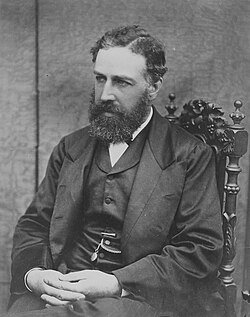
An oft-invoked economic rostrum known as Jevons paradox sits firmly at the center of all this turbulence and strenuous anxiety. Put simply, this paradox stipulates that, contrary to seemingly rational expectations, increasing the efficient use of a commodity or input results in more consumption of that commodity or input, not less. Named after the nineteenth-century English economist William Stanley Jevons, who noticed that innovations squeezing more energy out of coal led to increased use of ever more coal, the paradox is usually applied to energy sources. Ever since Jevons first articulated his paradox in 1865, though, it has been variously applied to water, increased electricity efficiency standards used to refrigerate food and, now, the anticipated consequences on white-collar employment of artificial intelligence. Do not worry about artificial intelligence improving on human faults to produce goods and services better and faster, the paradox implies, because almost every advance in the efficient use of a commodity results in an increased supply of that commodity, which results in a reduced price and increased demand. Increased fuel efficiency in cars leads to more available fuel, which we then buy more of because the price drops as the fuel supply increases. In the context of artificial intelligence displacing white-collar jobs, we may rightly expect fewer such jobs in the future, but also what economists call a “rebound” when the expected salary of white-collar workers drops, leading employers to hire more because the supply of white-collar workers has grown as a result of artificial intelligence increasing economic efficiencies.
Maybe that sounds more dire than optimistic. Few AI execs are eager to hazard a guess as to how low white-collar wages must drop before this “rebound” kicks in, but perhaps we should take solace in knowing that Microsoft’s chief executive invoked Jevons paradox by name in a social media post earlier this year.
Jevons paradox is beguiling in the ways it scrambles our expectations surrounding increased efficiencies. We might also call it the best worst argument for cynics eager to argue that working toward the supposed holy grail of energy efficiencies is, basically, a waste of time and money. Economic theories, unlike the more iron-clad scientific laws, have a strange life of their own because they tend to move in and out of vogue as the empirical evidence of economic data shifts, turns, and sheds its old skin for new veneers. Like the theories themselves, economics is a multidimensional discipline. For economists, the uncertain but also certain nature of their field is often its most salient feature. For the rest of us, it is, in Thomas Carlyle’s famous coinage, “the dismal science.”
Economists seem to view Jevons paradox as an impressive guiding light, albeit one lit along an always uncertain, ever-changing path. We should never be surprised when advances in efficiency lead to an increase in both use and demand. But we should also never be surprised when other unseen factors interrupt the expectations outlined by Jevons. Thomas Malthus was famous for postulating that populations would sooner or later, if not always, outstrip the production of food. Then, lo and behold, one Fritz Haber came along to invent nitrogen fertilizers.
It goes without saying that we no longer live in the nineteenth century, let alone the Victorian England of one Englishman with the ability to perceive something extraordinary in the way people utilize resources. But perhaps we can take comfort in the fact that his paradox has at least survived long enough to be quoted and debated in our current age of AI anxiety. Perhaps we should hope against hope that Jevons paradox will prove itself useful all over again.