The Death of Parties Has Been Greatly Exaggerated
By Ben Fulton
August 8, 2025
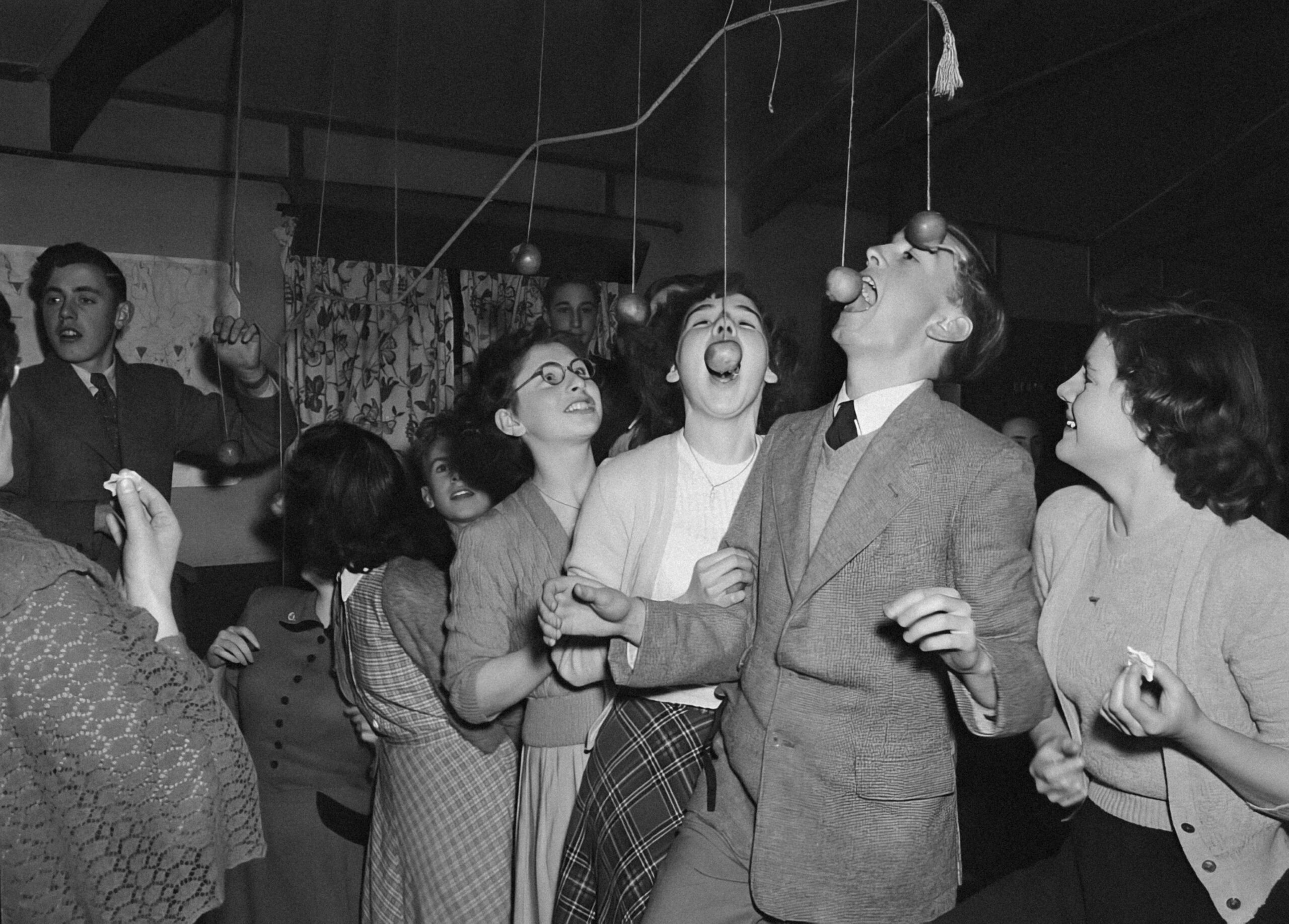
The easiest social trends to validate are the ones that originate with our own individual and family experiences. The panic over adolescent development and screen time is obvious because what parent has recently had a conversation with their teen lasting more than ten minutes? The panic over anthropomorphic climate change—relatively speaking, given the political atmosphere—is obvious because when we are not doomscrolling news about summer weather, we are busy cranking up the AC.
So it is with the so-called “death of partying” phenomenon, because when was the last time you attended a social gathering of peers, friends, neighbors, or some mix of all three?
In many ways, this spate of anxiety is a repeat, or at least reminiscent, of Robert Putnam’s well-trod 2000 book Bowling Alone: The Collapse and Revival of American Community, itself a repeat, or at least reminiscent, of Alexis de Tocqueville’s Democracy in America, that illustrous 1838 tome in which the famous French political theorist marveled at all the non-governmental institutions that made us vibrant, dynamic Americans, as opposed to aristocratic Europeans constrained to class and institutional tradition. Civic organizations, town halls, and, most of all, churches bound us in ways that government could never compel. These organizations were voluntary and treated participants equally.
The difference between Putnam’s now 25-year-old concern and the current panic, however, is that this time we are not worried about social cohesion or dynamism so much as our lack of good old-fashioned fun. This is fine as far as studies on social engagement go. We know that social bonds are integral to physical and emotional health. We know that loneliness contributes to suicide. What we do not know, or do not want to remind ourselves of, is that few words rank higher in subjective qualities than “fun.” One person’s monster truck show is another’s five-hour, no intermissions, opera performance.
In his July 9, 2025, Substack post, journalist Derek Thompson runs down “The Usual Suspects” in placing blame. Work and professional stress sap us. Parenthood drains us, especially when fraught with the changing roles of women, often deemed more social than men. That television and cell phones command more of our attention than even work or family is not a pleasant thought, but who among us would be the first to deny it? The other intriguing wrinkle on the horizon is the admirable trend among youth of spurning not just alcohol but also sex. Parties, at least when most Americans were growing up, were almost always seen as the means to those ends. The “ends” are shifting.
What is a “party” anyway? It is real-time social interaction, to be sure, whether your grandfather’s Rotarian luncheon or the keggers of fraternity and sorority life. But our collective choices of “interaction,” loosely defined, began to multiply with TV channels long before our parents’ cable subscription, and have multiplied exponentially since the internet and social media. With interaction not only redefined but vastly multiplied, we have built walls around ourselves. We cannot, as E.M. Forster put it famously in words later used by The New Yorker to describe the possibilities of online life, “Only connect.” Instead, we make multiple connections of durations impossible to predict. We know these self-selected connections are bad for our nation’s politics. But are they really so bad for us individually? Few of us would defer our choices, much less our choice of “fun,” to another (pardon the word) party. And if we believe in the freedom of choice, we have chosen our camp. Are we too afraid to admit that other people are just boring compared to the internet? Are we too timid to say that what we really want is a “party” redefined, reformulated, or done up some other way?
C.S. Lewis would be among the last of famous figures we could imagine letting his hair down at a party. He reportedly disapproved of parties and social gatherings, not because they were a waste of time, but because he saw them as superficial compared to friendships, preferably of the deeper variety. This stodgy, bookish theologian died in 1963, whole decades before the dawn of serial television, the internet, and social media would consume social calendars. A discontent, though, is a discontent. Clearly, there is nothing special about parties qua parties that will save us from the alienation that psychologists and media pundits fear on our behalf. The modern world has long since grown too large in choices for us to lament the death of parties. The party is where we want it, and what we want to make of it.