How We Could Keep Holy
February 13, 2026
I assumed that transhumanism, the tech bros’ plan to live forever, was just an inevitable outgrowth of arrogance. Hubris, in fact, as they play God. But this week I read The Sabbath, a small, graceful book that the rabbi and philosopher Abraham Joshua Heschel wrote in 1951. Three quarters of a century ago—and prescient. Heschel wrote that “technical civilization is man’s conquest of space.” But here is the rub: to triumph over space, we have to sacrifice our fourth dimension: time. “We expend time to gain space. To enhance our power in the world.”
“As soon as I have time,” we say. “We’ll have to make time.” “There’s not enough time.” “Why can’t there be more hours in the day?” “I’ll rest when I’m dead.”
We suffer this lack of time, or at least this perception of lack, in more ways than we realize. Always slightly overwhelmed, slightly rushed, we live with more adrenaline than we need, and this hurts our bodies. Keeps us up nights. Makes inconvenience feel like disaster and disaster like the end of the world. We cannot imagine how to even begin to tackle big problems, because there is no fucking time.
When I retire, I will volunteer, I promise myself. I will have fun with my friends more often, too, relax and hang out without feeling the need to rush home and do a little more work. I will strengthen my body, stop eating treats to console myself for all the work I am doing. I will listen to my husband’s ideas and share mine without feeling that we must stop talking soon, it is bedtime, we will never sleep, we both have to get up early. I will be patient in traffic jams and long lines, because my time will no longer be measured out in teaspoons.
Surely I could do some of this before I retire? But somehow it is easier to stay on the gerbil wheel. Keep running, lest I fall off, because I want (and need) the salary, and the sense of engagement and accomplishment, for as long as possible…. The wheel keeps me dizzy.
“To have more does not mean to be more,” Heschel points out. “The power we attain in the world of space terminates abruptly at the borderline of time. [And] time is the heart of existence.”
Which brings me back to the tech bros. They must have stumbled onto that last line, because now they are trying to vanquish time as well as space. Not only do they want to colonize Mars, but they want to live forever.
AI was beyond anyone’s ken in 1951, yet it comes straight to mind when Heschel remarks that “nothing is more useful than power, nothing more frightful.” I feel that ambivalence, that blend of exhilaration and terror, when I think about this technology I use and despise, and the speed at which it is—developing? Evolving? We have raised Heschel’s calm observation to the hundredth power.
Yet as humans, we have not changed one whit.
“We suffer from a deeply rooted dread of time and stand aghast when compelled to look into its face,” Heschel writes. Medieval monks dealt with this by praying for heaven and mortifying the flesh. We use screens. They make sure that we are never just bored, quiet, musing, wondering, scared.
We have been doing this for a while now—yet we grow more anxious by the minute. Lately, we have a new trick: turning over big chunks of who we are to AI, because it is faster and (depending on one’s definition) smarter.
Tech entrepreneur Bryan Johnson no longer lets himself have a sudden craving and spontaneously order a pizza. Instead, he has a System that automates every decision. “It’s akin to saying yes to the internet, computers, and AI to improve our lives in ways that exceed our natural abilities,” he explains. His larger aim is to reverse his biological age and live until 2140, with the hope of achieving immortality by 2039.
Stop laughing. We do this too, in tiny secret wishes and stabs at fitness or enduring legacy. Nearly all of us are scared of our own death; this is the curse of our species, the price we pay for self-awareness and ego. And to be scared of death is to be scared of the passage of time, the flip of that calendar month by month, the way I am surprised every Sunday; how could a whole week have flown by already?
“Time to us is sarcasm,” Heschel writes, a line I love without understanding it. Time is, he continues, “a slick treacherous monster with a jaw like a furnace incinerating every moment of our lives. Shrinking, therefore, from facing time, we escape for shelter to things of space.”
Or rather, his and my generations did. We piled up furniture, dishes, clothes. “The intentions we are unable to carry out we deposit in space; possessions become the symbols of our repressions.” Retail therapy for a broken heart. A new house, boat, or vacation condo to hide from an unhappy marriage. “Things, when magnified, are forgeries of happiness.”
Not only do they disguise absence, pretend perfection, and fake the life we want the world to think we have, but they also make false promises. Sportscars promise men they are still young and virile. Pricey moisturizers, dyes, and make-up promise women they will never shrivel or go gray. “Is the joy of possession an antidote to the terror of time which grows to be a dread of inevitable death?”
Hallelujah, that younger people are not bent on accumulating stuff. But what they want instead is experience and constant connection, both of which suck up time instead of forestalling it. In need of a focus, they are sleepmaxxing or proteinmaxxing or maxxing whatever is trending.
Looking over their shoulders, entranced, my generation is now caught by both ploys at once.
The Jewish ritual of the Sabbath feels dead by comparison, free from work or acquisitive entertainment, quietly engaged with spirit and community. Who, of any faith, keeps that sort of Sabbath anymore? Are we even capable? I have tried—and failed each time. What would need to happen? First, an entire household would have to agree. Which means that everybody would have to come out of their private hidey-hole and sacrifice their private distractions for a block of time that feels like forever.
Then, housework has to be set aside. Which sounds delightful, until you realize that you have just given up the only day you have time to do multiple loads of laundry.
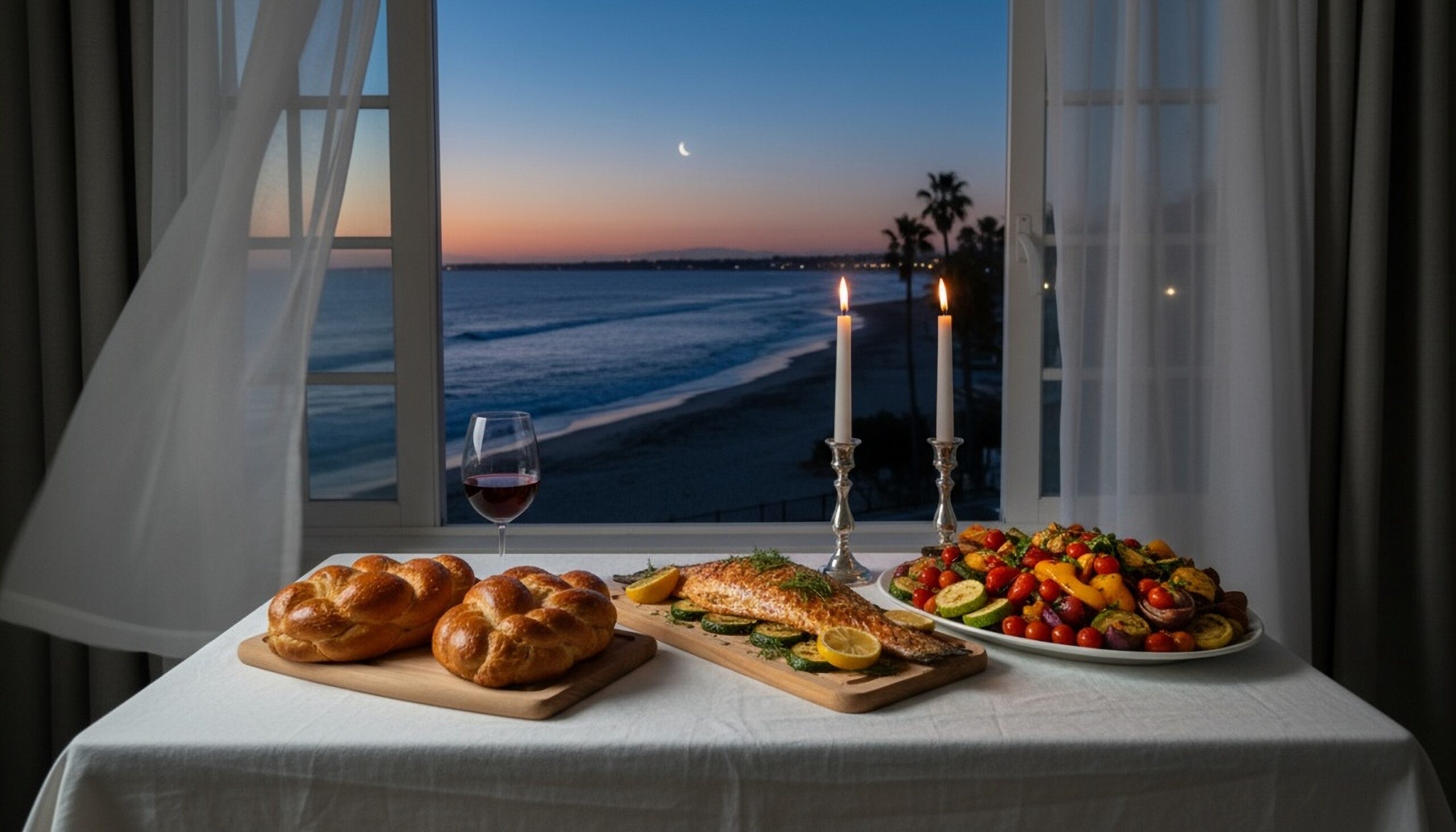
You cannot even cook: the Sabbath dinner, that sacred candlelit ritual, must be prepared ahead of time. The preparation must be real cooking, fresh and from scratch, not Door Dash or HelloFresh or processed frozen junk treats stuck in the air fryer. And everybody will have to eat the same meal, setting aside that long list of peeves and quirks we each now keep.
Next, work must be set aside. Once, that was not a hardship, on a weekend. Now? The Sabbath has become the day you read the long report, catch up on email, finish the PowerPoint. Writing is forbidden on the Sabbath. So is finishing.
In all that empty time—which is meant for reflection, worship, prayer, enjoying nature, and enjoying one another—you will begin to feel antsy. You will want to shop online, check your team’s score, reply at least to texts, put on your workout video or playlist.
“The spirit of the Sabbath is to shift from controlling the world to resting in it,” I read online. Heschel puts it more precisely: “The meaning of the Sabbath is to celebrate time rather than space. Six days a week we live under the tyranny of things in space; on the Sabbath we try to become attuned to holiness in time. It is a day on which we are called upon to share in what is eternal.” Not to pretend we can control time, but instead to simply live in it.
And why is that so hard?