Recipes for Rascals
The mysteries and satisfactions of making a historical ginger cookie at Christmas
January 3, 2026
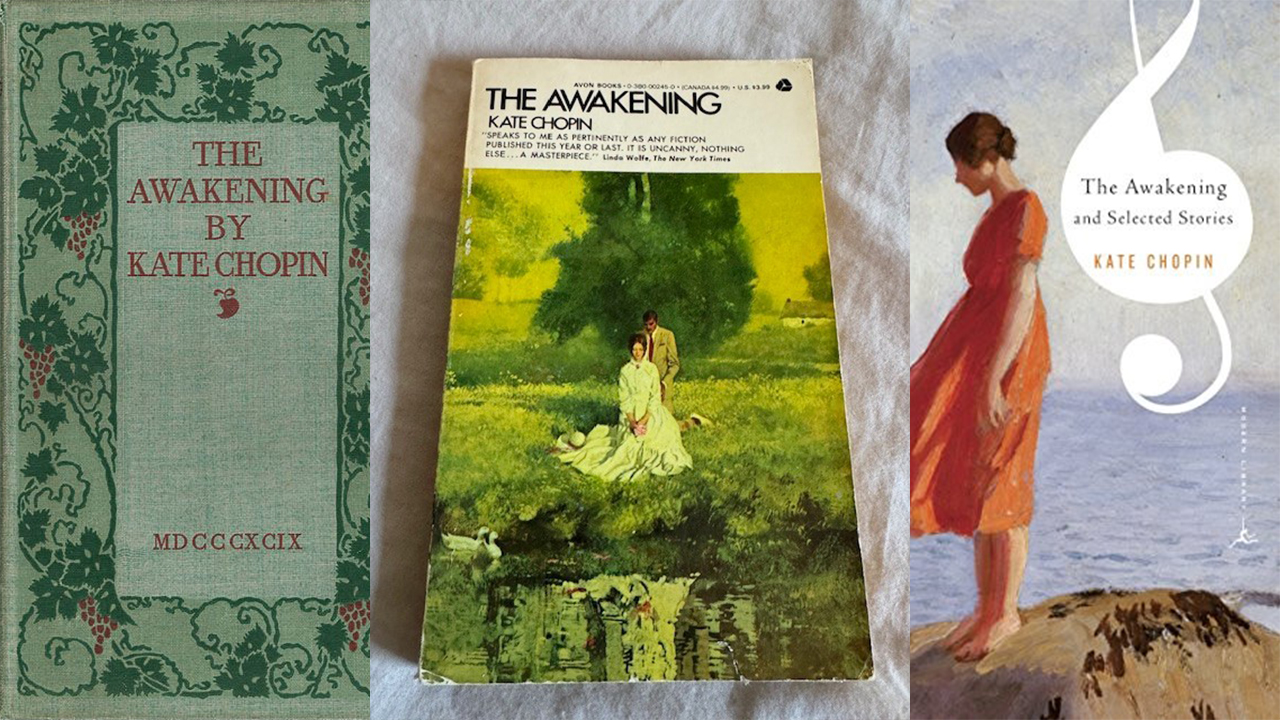
It is fun to get together to bake cookies for Christmas. This year I thought a friend and I might try making the historical gingerbread cookie called “ginger nuts,” which are mentioned several times in Herman Melville’s widely anthologized short story “Bartleby, the Scrivener.” Ginger nuts in the story are a “peculiar cake—small, flat, round, and very spicy”—which the scriveners in the narrator’s law firm “gobble up” by the score, often with with Spitzenberg apples to “moisten their mouths” as they work at their “dry, husky sort of business,” copying lengthy, dull, legal documents by hand until their eyes or backs give out.
“Bartleby” is not set specifically in the Christmas season but was published in December 1853, exactly 10 years after Dickens’ A Christmas Carol. The short story is also about the haunting of a lawyer who thinks highly of himself, and though not moralistic in the way of Dickens’ novel, it is also about compassion, empathy, and connecting with others.
“Bartleby’s” title character—like some combination of law clerk Bob Cratchit and his son, Tiny Tim—is a study in poverty, meekness, mildness, and, vaguely, illness. But Bartleby also represents the mystery of personality and the problem of being “in the world, but not of the world.” He famously “prefers not to” do anything, really, including engage with the lawyer (his employer), the other scriveners, or even eventually his work. He has no interest in money, lives on “a few crumbs of ginger-nuts and a morsel of cheese,” and has no lodging to call his own. He also will not leave, and his “pallid haughtiness” and “austere reserve” agitate his boss and coworkers, one of whom already burns in the hell of his own day-drinking and the other in that of his frustrated ambition. What does presence mean, when it communicates no intent?
The lawyer-narrator comically tries to sound it out. “My mind…ran on in reveries concerning the probable effects upon the human constitution of living entirely on ginger-nuts. Ginger-nuts are so called because they contain ginger as one of their peculiar constituents, and the final flavoring one. Now, what was ginger? A hot, spicy thing. Was Bartleby hot and spicy? Not at all. Ginger, then, had no effect upon Bartleby. Probably he preferred it should have none.”
He [Bartleby] has no interest in money, lives on “a few crumbs of ginger-nuts and a morsel of cheese,” and has no lodging to call his own.
One comic thread is that the ginger nut (and by association other cookies of its type, such as those made with black peppercorns) has an aggressive presence but offers scant sustenance. It is meant to aid digestion of other things, to have a warming effect in winter, to relieve boredom, and perhaps to remind us we are alive in the sometimes dry, husky business of life.
• • •
When I went looking for a recipe to recreate the ginger nuts of the story—something I have wanted to do for more than 20 years—the earliest mention I found was in Traditions of Edinburgh, Volume 2 (1825), by Robert Chambers. Google Books misidentifies Chambers as “an American artist and fiction writer” who was not born until 1865. He was instead “a Scottish publisher, geologist, evolutionary thinker, author and journal editor” with 12 fingers and 12 toes, born in 1802.
Traditions, published in Edinburgh, offers details and anecdotes of a changing city. One of the personalities in the old wynds of the city was a Mrs. Flockhart, the model for the character of that name in Sir Walter Scott’s Waverly (1814). Mrs. Flockhart in life, known locally as Luckie Fykie, was a “neat, little, thin” widow whose husband “had left her a good deal of money, together with his whole stock in trade, consisting in a multifarious variety of articles, such as ropes, tea, sugar, whip-shafts, porter, ale, beer, butter, sand, caum-stane [local sandstone], herrings, nails, cotton wicks, papers, pens, ink, wafers,” etc.
My understanding from Chambers’s account is that she had a 225-square foot space that held a dry-goods shop, a “dwelling house” (her residence), and a “hotel” (a public house or inn). Her “shop was only a kind of cloak to her more secret sources of profit butt the house,” Chambers says.
…evidently, those involved in the law on both sides of the pond ate spicy cookies habitually, the way we might snack on salted peanuts.
Her “very numerous and respectable” customers included Sir Walter’s father—who had a special position as a solicitor, not unlike the lawyer’s in Melville’s story—as well as lords and professional men on break from the law courts at nearby Parliament House. They would enter, see Mrs. Flockhart busy, “salute her with ‘Hoo do ye doo, mem?’ and a coup de chapeau, and then walk ben [behind] the room, where, upon the bunker-seat of the window, they found three bottles, severally containing brandy, rum, and whisky, flanked by gingerbread and biscuits. They seldom sat down, but after partaking of what bottle they chose [as well as the spicy biscuits, or cookies, that held up to the spirits], walked quickly off.”
I had a little thrill thinking I had solved a small literary mystery—why Melville bears down on ginger nuts to the degree that he does—when I read that Mrs. Flockhart’s esteemed clientele included the future Lord Melville. But he was no real relation to Herman, and I cannot prove Herman read Chambers and thought to use gingerbread in his story. The more interesting cultural point is that evidently, those involved in the law on both sides of the pond ate spicy cookies habitually, the way we might snack on salted peanuts. According to Chambers, the “thin, crisp…cakes” in Edinburgh were called “Parliament” when cut square, and “snaps”—our ginger snaps—when baked round.
• • •
There is no recipe in Chambers, but there are many for gingerbread in The Scots kitchen: its traditions and lore, with old-time recipes (first published 1929), by Florence Marian. She attributes her recipe for “Parlies,” or Parliament cakes, to a “Mrs. Fletcher,” whom she believes is Mrs. Flockhart:
With two pounds of the best dried flour mix thoroughly one pound of the best brown sugar and a quarter-pound of ground ginger. Melt a pound of fresh butter, add to it one of [black] treacle, boil this, and pour it on the flour. Work up the paste as hot as your hands will bear it and roll out in a rectangular shape, a sixth of an inch or less in thickness, on a sheet of greased paper to fit a baking sheet. Mark into four-inch squares. Grease the baking-sheet lightly and draw the paper carefully on to it. Bake in a slow oven for about forty minutes, when the cakes should be well risen and lightly browned. Separate the squares when soft. They will soon harden.
We used grated, raw ginger in a bid to make the recipe more authentic, but I read that powdered ground ginger was in Europe by the fourteenth century, so I might as well have saved my knuckles.
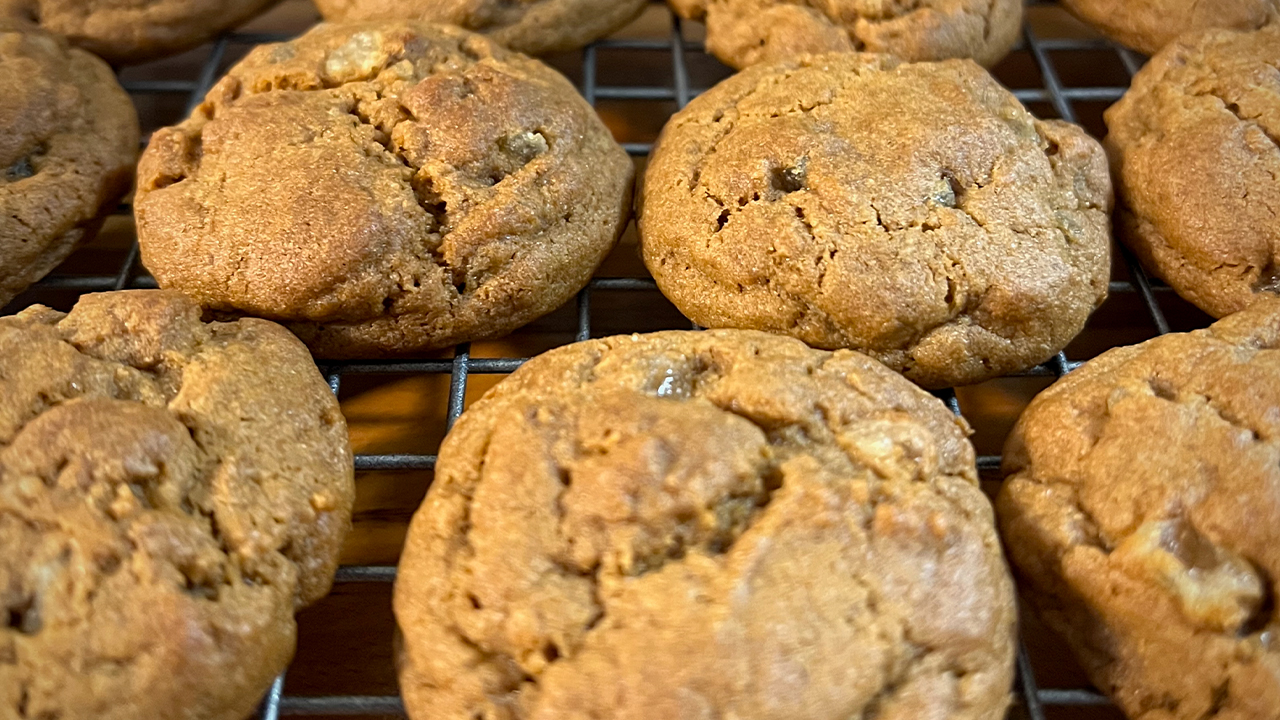
As far as my friend Tanya and I are concerned, this is the closest we came to Melville’s ginger-nut in our afternoon of baking. We scaled the recipe down to 25 percent in volume and substituted American unsulphured molasses for the treacle. In the end we wished we had made them as flattened drop cookies instead of in a sheet, though the sheet’s (probably undercooked) center had a delicious, buttery, toffee-like quality. The boiling tar of butter-molasses cooked the raw flour before it even baked, as with hot water pastry.
We used grated, raw ginger in a bid to make the recipe more authentic, but I read that powdered ground ginger was in Europe by the fourteenth century, so I might as well have saved my knuckles. To make the cookies hot and spicy enough to get a lawyer’s attention, add 50 percent more ginger by weight than is called for.
• • •
That particular Parlie recipe is passed around on the internet in slightly altered forms as being from a cookbook contemporaneous (1826) with the Chambers book: The cook and housewife’s manual: containing the most approved modern receipts for making soups, gravies, sauces, regouts, and all made-dishes; and for pies, puddings, pickles, and preserves; also, for baking, brewing, making home-made wines, cordials, &c. The whole illustrated by numerous notes, and practical observations on the various branches of domestic economy. The author is Christian Isobel Johnstone, an early feminist journalist, novelist, and editor, writing as Margaret Dods (a nod to Walter Scott’s Saint Ronan’s Well [1824]).
Dods does not refer to Mrs. Flockhart’s gingerbread, but she does have a “plain gingerbread” recipe very similar to Florence Marian’s Parlies. For variety, Tanya and I also made Dods’ “gingerbread nuts,” based on her “fine gingerbread,” which has the strong taste of a certain kind of modern fruitcake:
Fine gingerbread: Two pounds of flour, a half-pound of brown sugar, a half-pound of orange peel cut into bits, an ounce of ground ginger, half an ounce of caraway-seeds, cloves, mace, and some allspice. Mix with these a pound and a half of treacle, and a half pound of melted butter. Mix the ingredients well together, and let them stand for some hours before rolling out the cakes. The paste will require a little additional flour in rolling out. Cut the cakes, mark the top in diamonds with a knife, and bake them on tin plates. Gingerbread-nuts may be made of the above paste, but a little more of the ginger and other spices should be employed, and a good deal more flour.
The “nuts” recipe made a reprobate dough that hurt my hand trying to stir it and baked into a soft, pretty drop cookie that was unpleasant in its overpowering spice perfume, the kind of treat you fob off on an older relative who claims to prefer antique flavors, or which you take a picture of, put on Instagram, and throw in the trash.
• • •
For comparison, Tanya made “Triple the Ginger Cookies,” an excellent modern recipe that I highly recommend warm (in four ways), with scoops of dulce de leche ice cream to preserve the balance.
I also picked up store-bought cookies: Pepperidge Farm Gingerman Ginger cookies (crisp and light, a pleasant taste, the best of the corporate lot); Walker’s Shortbread Gingerbread Men (ginger barely discernible and a “detracting” note from the original shortbread, observed Tanya); Voortman Bakery Holiday Gingerbread (“mid,” as the kids say, heavier on allspice than ginger); and Archway Classics Crispy Gingersnap Cookies (crisp, a ginger bite, maybe the closest to the historical I sought but with lots of cinnamon not called for by the old ones).
Why all this trouble? Because I would prefer not to have to say, after my curiosity had been aroused, that I did not try.
• • •
“Poor fellow,” “poor Bartleby,” “poor scrivener,” “poor, pale, passive mortal,” “alone, absolutely alone in the universe…[a] bit of wreck in the mid Atlantic,” says the lawyer. I will leave you to discover Bartleby, as the lawyer does, at the end of his path, if you wish. It is a story about the frailties of connection, messages not going through, the hardness of a world not aligning with our preferences and plans. Bartleby has his own kind of integrity, even dignity, but he is completely defenseless. It is nothing original to point out that he is an incomplete Christ figure, with no effect on the world but baffled curiosity, and no resurrection except in memory.
• • •
This morning I was eating randomly from the seven kinds of gingerbread cookies now on my kitchen counter and happened on a short video of artist-musician Laurie Anderson, who is shown visiting the arms and armor gallery, of all things, at the Met.
“Being in a museum is being with objects that are incredibly charged,” Anderson says. She explains that she and her late husband, Lou Reed, used to come to this gallery on Friday nights, because he did martial arts, loved the armor gallery, “and liked heavy metal anything. He liked protection.”
She gently mocks Henry VIII’s suit of armor and asks where he thought he was going in it, in his old age. “His old man gear, when he’s going out to start a war,” she says. “Oh yeah!” She points out how like inhuman robots the heavy armor for men and horses is. She says she much prefers an elegantly-made but somewhat frail-looking chain-mail shirt with “a straight cut…like a Nehru jacket,” she says. “I just think, what would it be like to make something like that?”
Believe you me, I already had enough experience in the world to know I do not prefer historical cookies.
“The cut is not like the robots around here. You know, they’re like….” She makes robot moves and bleeps. “You know, this is like”—she moves sinuously—“Mr. Fluid.”
“Why go to a museum?” she asks. “What’s the point of doing that? For me, the point is to learn to be in the world in a better, bigger way. […] I walk out, and I walk out differently than I walked in. […] And also, just because it reminds me of all the Friday nights that we were here and how much fun we had….”
Believe you me, I already had enough experience in the world to know I do not prefer historical cookies. (You might add a little salt to the Parlies, I just remembered, since most of us bake with unsalted butter, and Mrs. Flockhart must have used salted, because they could use some.)
The real fun is in getting curious and having an opportunity to be in the world in a bigger, better way. To connect with someone (and her black cat with a Manx tail that jumps up where you are rolling out some disaster of a dough), to share warm things in a world that can be cold in different ways according to the season.