Our Haunted Fascination for Life After Death and Death After Life
A review of a new collection of ghost stories from around the world
March 31, 2026
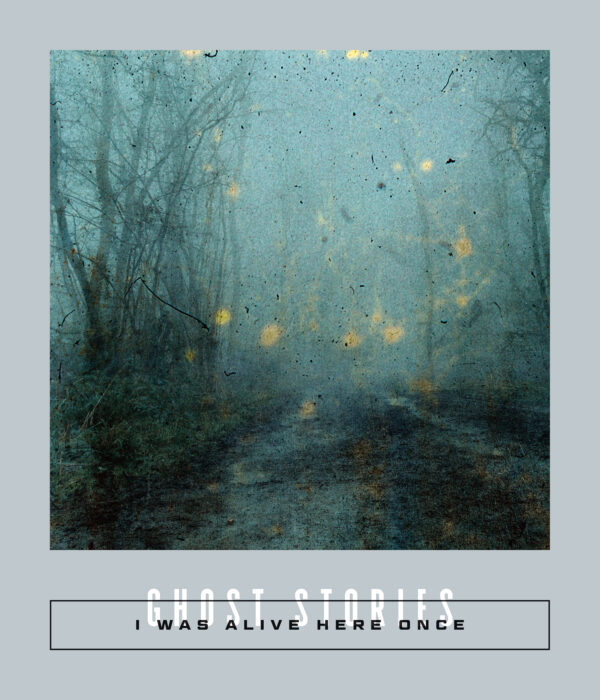
I Was Alive Here Once: Ghost Stories
A ghost can be many things: a memory, a person, a moment, or a place. It can haunt you, and it can help you. It is something or someone that, for some reason, falls off the tracks of time. Stuck in the past, it straggles through the present, lost and alone.
I Was Alive Here Once contains many different types of ghosts in many different stories, fables, and fairy tales, from many different cultures. Sometimes, the world we know is the ghost in the story; the aftermath of war, the wreckage of environmental destruction, lingers in the background of tales driven by the supernatural. Other times, the ghosts blend into our reality, and the supernatural takes a backseat, with ghosts that hardly even know that they are ghosts.
“A person ought to know if they’re a ghost,” one character says. She asks if her sister is a ghost, but the sister only turns the question on her. She then contemplates her own existence, and it is within this confusion that Thórdís Helgadóttir’s Icelandic story “The Skerry” unfolds. A young girl is gifted a bird of her same size, and she embarks on a journey through the sea with her bird, accompanied only by her sister. She wonders why her sister, wiser and more responsible than her, does not have her own bed or eat with her family at mealtime, and it is then that she wonders if her sister is truly there at all.
Can a ghost be an identity that you have never fully shed, that still lives in the old clothes kept in the back of your closet?
But later, the sister steps in and helps their mother and abandons the bird, and now, as the sister takes a central role, this young girl fades into the background, becoming the spectator of her own story. The plot takes on an abstract shape, so when the sister “meets a young woman who is also her,” it is as peculiar as it is rational.
Can a ghost be an identity that you have never fully shed, that still lives in the old clothes kept in the back of your closet? Can this girl and her sister be each other’s ghosts, a metaphor for the different versions of ourselves that we kill and become as we grow older?
The first story in this collection, “A Swamp’s Love,” a Korean tale by Cho Yeeon, also deals with this idea of the double, of two ghosts that need each other to fill their hollow spirit and feel whole. A Water ghost meets a Forest ghost, and they fall in love.
After Water first meets her new acquaintance, she is filled with butterflies. Every time a branch snaps, or leaves make a sound, she looks up, hoping that her friend is there, her curiosity “like a thirst that [can’t] be quenched, even though she live[s] in a creek.” Water has been so long alone, invisible to the few who have passed through her home. After years of floating, empty of thoughts, Forest, whose name we learn is Yi Young, appears, and suddenly, for the first time, Water is seen.
This story lingers on that feeling, of what it means to be seen, of what it means to be forgotten, and then to remember oneself. When men come to tear down their home, to take everything away, the two ghosts cling to each other “as if nothing existed beyond them,” holding onto their memory of what once was, of what was shared between them. They are the voice of silent nature, whispering for compassion. They are the planet personified, pleading for survival.
Ghosts are not always transparent, but they are, frequently, invisible—unseen to the world around them, or sometimes, the world around them unseen, unreachable—forcing them into loneliness, into realities of their own. Companionship is like a lifeline. This is as true for Water as it is for Maruko, the protagonist of Tomoyuki Hoshino’s Japanese story “Jupiter,” who finds that everything she thought was familiar is the figment of her own imagination, that she is on a distant planet in some reality she has created, that she is dead.
Maruko has built walls around her, constructed a life of normalcy, and it is not until Gyōten reminds her of the war and horror they have faced that she questions the existence of herself and of the world that she has built. “You deny what you did by denying everything, by living in the past, as if none of it ever happened at all,” Gyōten says, and Maruko replies, “You’re just the same as me, wandering the face of the earth unable to accept your own death! And why is that, do you suppose? Why can’t we accept our own deaths? Because they are unacceptable, that’s why! We all got on the same train together, after all.” She lives in a world of ghosts, a projection she has manifested, a coping mechanism for making sense of the nonsensical. She is not a ghost that stays in our world, haunting the living. She is her own ghost. The complete destruction her community has faced haunts her, freezes her in time, just as she now haunts herself.
Ghosts are not always transparent, but they are, frequently, invisible—unseen to the world around them, or sometimes, the world around them unseen, unreachable—forcing them into loneliness, into realities of their own.
Other stories lean into this manifestation of new realities. Anna Kántoch’s Polish tale “One Step Ahead of You,” embraces the land of fairy tales, where there are “axed heads,” “evil stepmothers,” and “wolves [who] gobbled up carless young girls.” The story begins, “Once upon a time, in a land far, far away, life was simple.” This mix of Star Wars and Brothers Grimm makes the section on the next page rather peculiar, where “If anyone were to ask, Wojceich would most likely reply that he is the most ordinary, boring person under the sun.” The story alternates between the mundane and the fantastical, with a mix of horror, as “the new, strange world seeped through into my own reality layer by layer, like mold growing on the wall of a cave until it’s impossible to ignore.”
In the eighth, final story of this collection, fables similarly seep into reality. Jarupat Petcharawet’s Thai short story, “The Death of Aunt Huang” reckons with old legends and a forest ghost, an enraged spirit that has been broken free from the confines of a tree. Aunt Huang’s father had always said to not chop down the tree in their backyard. But he provided no explanation, and now he is gone, and the ugly tree is blocking light from the rice stalks, so Aunt Huang’s husband chops it down.
A vengeful spirit comes out from the tree’s sap and harms Aunt Huang from inside of her. Meanwhile, we learn how this spirit came to be stuck in the tree, how Aunt Huang’s grandfather, Sa Buapa, accidentally killed a novice monk and hid the body, and his ghost has been “bound and trapped” within the tree for generations, resentment building up inside of him. Aunt Huang learns this through the voice of the young monk who speaks to her within her own head. “Tears pool in the corners of her eyes like the sap leaking from the knot of the crocodile-bark tree,” and she brings a knife to her own neck, but it is the monk controlling her; “he want[s] me,” she says, “to know what it feels like to have your head cut off.”
Each story is a ghost in itself, singular, indescribable, and yet, a part of something bigger, a mirror of all the others, a reflection of some shared understanding between regions and cultures and people of how the past is never truly gone.
The spirit inflicting pain has been hurt himself, cut loose through the severing of the tree trunk that has become his body and neck. Like in “A Swamp’s Love,” the ghost here personifies nature, putting words to the pain humans have inflicted upon it. But unlike Water, who searches for love, this spirit is angry and out for revenge.
Eight authors, eight translators, and eight stories. Each one is distinct, alone in its narrative and characters, but together in one collection. Each story is a ghost in itself, singular, indescribable, and yet, a part of something bigger, a mirror of all the others, a reflection of some shared understanding between regions and cultures and people of how the past is never truly gone. Sounding out from across the globe, these stories remind us of our common fears; they sit with you, haunting you, long after you turn the final page.