In Small-Town Indiana, LAM Runs a Lost and Found for the Forgotten Among Us
A story of faith, hope, charity, and the promise of rehabilitation
December 1, 2025
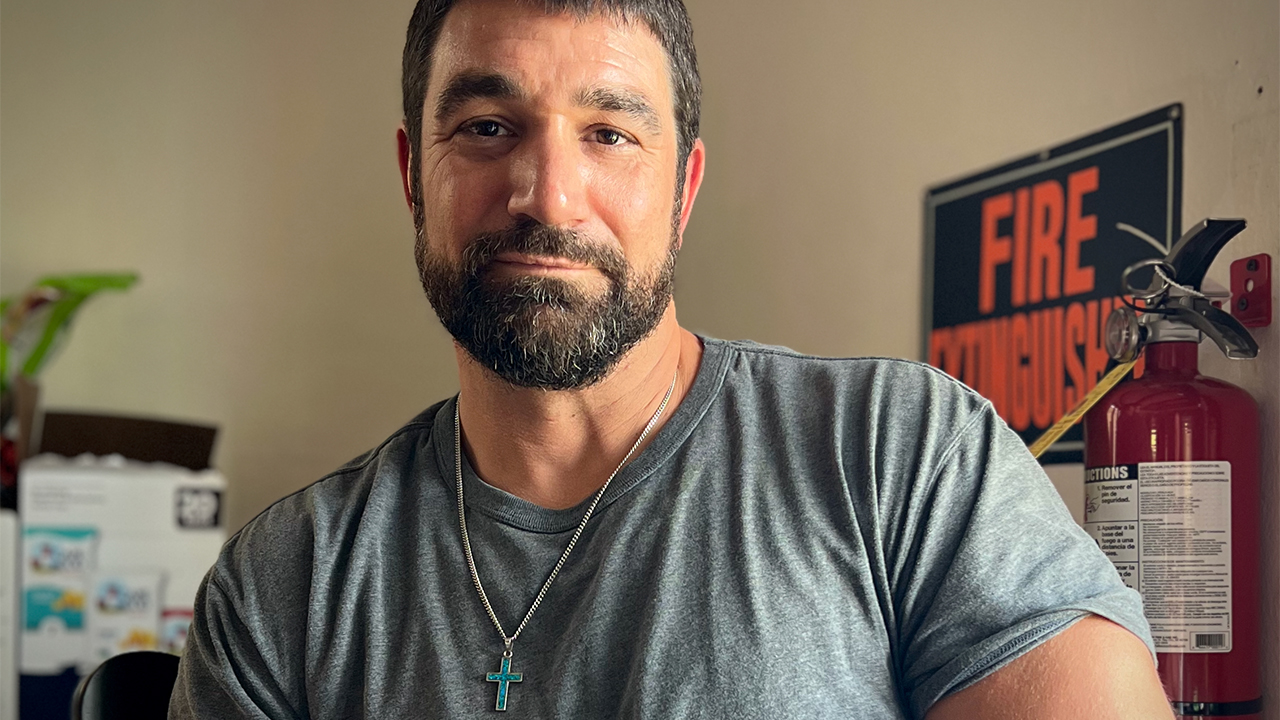
Marsha Bishop, a cousin I met for the first time only this year, was driving me around Vincennes, Indiana, where she lives and works. Vincennes was one of the first settlements in the Northwest Territory and has a lot of visible history. We saw sites associated with America’s ninth president, William Henry Harrison, and sixteenth, Abe Lincoln, as well as comedian Red Skelton, who was born there in 1913. We drove past the Indiana Military Museum and Vincennes University, founded in 1801 as Jefferson Academy.
We drove past the Knox County circuit courthouse and out to the county jail, where Noble Parish, the Jail Major [Commander], was leaving a shift. Marsha introduced me from the car.
“I love him,” she said as we pulled away. “He’s so precious. He’s fair to me and to our people, which is good.” She looked through the windshield at several young women waiting for a ride next to the road outside the jail. “‘Hi, girls. I don’t know where you’re going,’” she said aloud. “But they got their bracelets on.” These were ankle monitors. “They’re ready to go somewhere.”
Marsha drove us across the Wabash River on the Lincoln Memorial Bridge into Illinois to show me the strip of trailers and gaming parlors some locals call “Shanty Vegas.” The area is known for drugs and other illicit activity, she said, but it has been hard to find anyone who cares to clean it up.
“And then there’s one, two, three,” she said, counting the parlors, which have slots and video gambling. “This is the Hanger [Bar & Slots]. That’s a good place to eat breakfast, they tell me; I’ve never been there. Three on this side. Oh my gosh. Four, five. I think that white building right there, I think you can get a massage in there, but I think that might be legit. […] There may be one more [parlor] down there. […]
“I can see where if you were trying to come over here to church, you might be tempted to stop. […] I just happen to know some people personally that may or may not leave their wives in bed and come over here in the middle of the night and go back home. I may or may not know them.”
We turned around in the parking lot of the Abundant New Life Church, in a former Dodge dealership, and drove back into Vincennes. Marsha pointed out a CVS in town that was halfway up an infamous list of 10,000 pharmacies in the United States that each sold millions of prescription opioids during the epidemic that has killed 900,000 people since 1999.
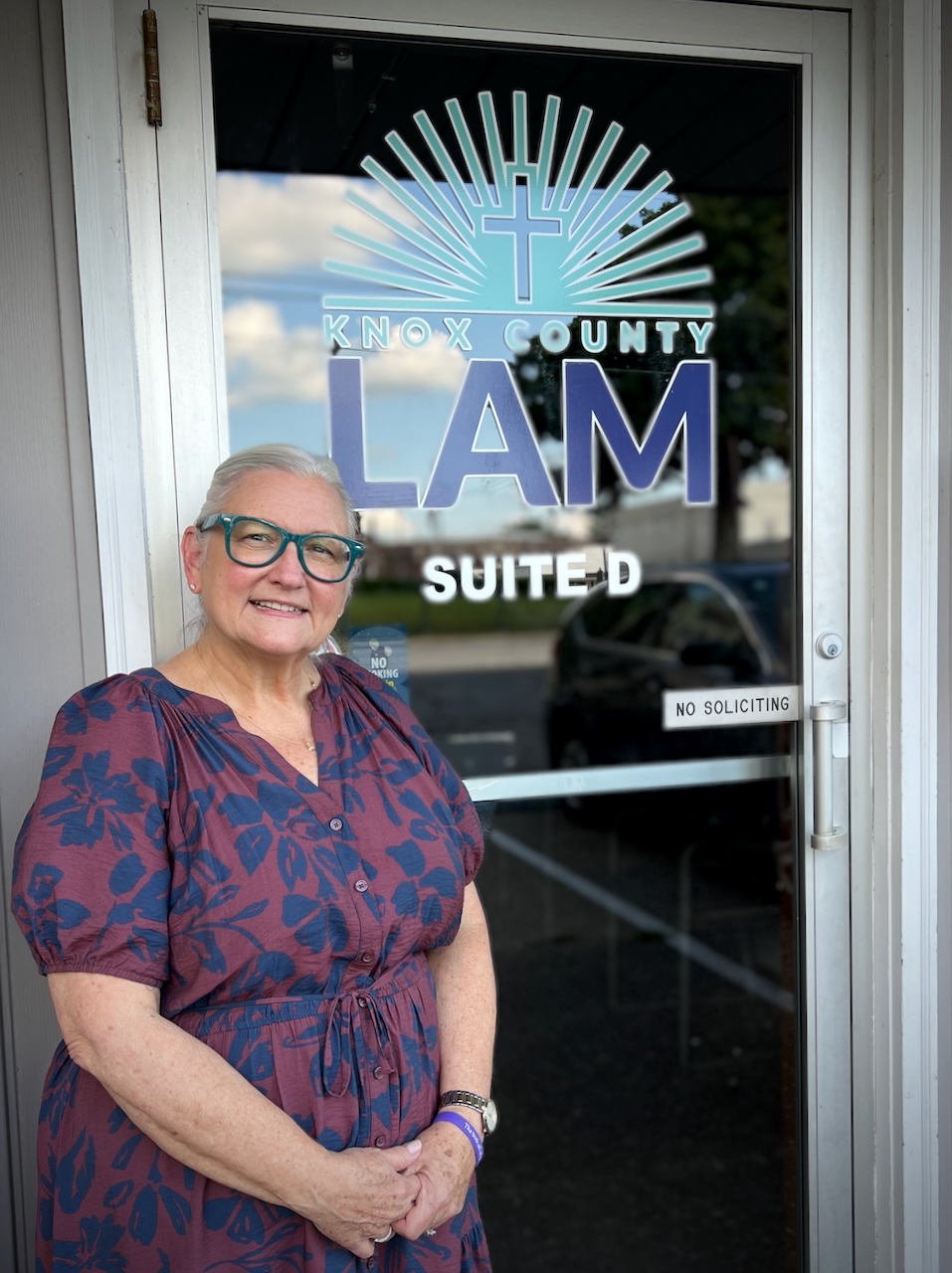
Marsha Bishop is the Executive Director of Knox County Life After Meth (LAM), a 501(c)(3) nonprofit that “help[s] incarcerated addicts recover and re-enter the community.” LAM runs faith-based services inside the county jail and 5 recovery residences in town. The organization was founded in 2005 to counter the scourge of methamphetamines in the community but “quickly became a program that dealt with all drugs, including alcohol.”
“Indiana has consistently placed in the top half of U.S. states and territories for the highest drug overdose death rate since 2013 and consistently has a higher overdose death rate than the U.S. average,” the state’s Department of Health said in 2021. These deaths occurred (as they did nationally) in three overlapping waves: “an increase in prescription opioid-involved deaths, a spike in heroin involved deaths and a surge in synthetic opioid involved deaths primarily consisting of illicitly manufactured fentanyl (IMF).” Knox County was hit hard.
LAM “uses [an] evidence based curriculum…the Life Recovery Bible [and] the 12-Steps of NA/AA” in its work. It also partners with the “Knox County Sheriff’s Dept., Knox County Drug Court, Knox County Family Court, Knox County Council, Knox County Community Foundation, the United Way, Knox County Cares, Good Samaritan Hospital, CFS Corp., Samaritan Center and the Faith Community of our county.”
We turned around in the parking lot of the Abundant New Life Church, in a former Dodge dealership, and drove back into Vincennes. Marsha pointed out a CVS in town that was halfway up an infamous list of 10,000 pharmacies in the United States that each sold millions of prescription opioids during the epidemic that has killed 900,000 people since 1999.
If you have ever cared for an addict, you know the desperate feeling of no easy solutions. Science has no inoculation or cure, so treatment is a combination of lengthy and often expensive behavioral and pharmacologic therapies that still depend on “the individual’s desire to change,” as LAM puts it. A 2011 paper says, “For 1-year outcomes across alcohol, nicotine, weight, and illicit drug abuse, studies show that more than 85% of individuals relapse and return to drug use within 1 year of treatment.”
A 2016 article in the journal Addiction says that while Alcoholics Anonymous (and presumably Narcotics Anonymous by association), eg, “continues to arouse controversy…because of [its] ostensibly quasi-religious/spiritual orientation and emphasis,” it “appears to be an effective clinical and public health ally that aids addiction recovery through its ability to mobilize therapeutic mechanisms similar to those mobilized in formal treatment, but is able to do this for free over the long term in the communities in which people live.”
My visit was not just to catch up with Marsha. She had told me when we first met earlier this year about a man who had been through the LAM recovery program, still lived in one of their houses, and had pled “open” at his final sentencing hearing, offering evidence of his efforts at living a new life. The judge in his case gave him a 25-year probation, so he could stay involved in his two-year-old daughter’s life. I had never heard of a probation that long—a long bet on another chance.
As Marsha and I drove up Business Route 41, I was distracted by a couple of dozen police cars with their lights going a block away, near some railroad tracks. I wondered if there had been a derailment. As it turned out, it was a more personal event for clients of LAM and the legal community of Knox County.
• • •
Marsha Bishop grew up in Eldorado, Illinois. Her father was a long-haul trucker, and her mother worked at electrical co-ops. Marsha went to Lockyear Business College in Evansville, Indiana, for an accounting degree and was married in 1981 to Randy Bishop, a radiation therapy technician. They had four children and were youth leaders in the Christian Church. A fifth child, Macy, was born in 2001.
In 2003 Marsha started a ministry for “disenfranchised women.” On April 25, 2004, she did a Sunday school lesson with them from Philippians on “Your citizenship is in heaven.”
“And I was like: ‘No matter what happens here on this earth, God has got it. It’s going to be okay,’” Marsha says. “And that afternoon we sent Macy Jo to heaven. She was struck by a car and killed at the end of our driveway, about three o’clock on Sunday afternoon on a street where there wasn’t really any car traffic. Macy was on her trike and [her sister] Madison was on her bike. [A] little girl from our youth group came around the corner [in her car] and [saw only] Madison and ran over Macy.”
The driver was 19.
“During this grieving time I was given opportunity to…believe lots of lies,” Marsha says. “Lies like: You could be mad at God, you can be mad at people, you can blame your husband. You can talk to [your daughter] after she’s already dead. You can do all these things. […] I never bought into any of it from moment one.”
Her other daughters tried to take blame for the accident, but Marsha tried to quash those thoughts by telling them, “You’re going to stop that right now. You’re not going to do that. This is no one’s fault. It’s a tragic, horrible accident. We are not going to take that guilt ever. Do you understand me?” She told me, “[W]e also called the little girl that ran over her and had her come in the next day to our home. And we prayed over her the day after the accident.”
In their community’s outpouring of support for her family, Marsha “saw the grace of God…and felt comfort,” but, “The nights were the worst. I would lay on my bed and just weep, and my pillow would just be wet. […] I can’t describe to you how painful it was. I can’t tell you how my arms ached for her and how my body just ached to see her…. But my faith was such that I knew that she was okay somehow. And I would just be like, ‘Father God, if it’s appropriate, can you kiss her goodnight?’
“Those [were the] kinds of questions I was asking God because I was really, really, super close to him right then. […] He healed me from this horrific pain. And it wasn’t overnight; it wasn’t in three weeks. It was years…before I could even sing praises without weeping.”
Marsha turned the energy of both her grief and her faith toward not only her own family (“We had kids in high school and elementary school. We had a daughter getting married.”) but also the “disenfranchised women,” two of whom were addicted to meth and were either going to or returning from prison. They were “a precursor” to her later work, including at LAM.
“[B]oth of them taught me about addiction and recovery,” Marsha says. “[How] they believed these lies about themselves…about God…about life in general. [O]ne had lost a husband unexpectedly, and the other one had lost her children. And both of them told me that those losses sent them deeper into their addiction, which had put them in prison.
“And so I thought in my brain, when I was putting the rest of my life together…‘God chose me…because I think that that’s what I’m supposed to do, is just dispel the lie that you have to go deeper into your addiction when you’ve had loss.’”
“[T]he morning of Macy’s funeral [I] told God that if He couldn’t use this loss to further His kingdom, He needed to take me. I’m not going to take myself, I’m not that kind of person, but I couldn’t live with the pain if I didn’t think He was going to use it somehow.”
My visit was not just to catch up with my cousin Marsha. She had told me when we first met earlier this year about a man who had been through the (Life After Meth) LAM recovery program, still lived in one of their houses, and had pled “open” at his final sentencing hearing, offering evidence of his efforts at living a new life. The judge in his case gave him a 25-year probation, so he could stay involved in his two-year-old daughter’s life. I had never heard of a probation that long—a long bet on another chance.
In 2011, about the time she and Randy moved to Vincennes, Marsha started a low-residency seminary program in California, combining philosophy, leadership, and theology. She focused on addiction.
Immediately after she started her program, a pastor in Vincennes told her, “Hey, I lead this Bible study out at the jail. Why don’t you come with me?” That was her introduction to LAM. She was ordained about a year after graduation and volunteered with LAM inside the jail. Later she was hired as the pastor at Owensville [Indiana] United Methodist Church in 2017 and became the Executive Director at LAM in 2018.
“I believe that God has prepared me my whole life for this,” she says. “I don’t feel like the loss of Macy was something that took me down…. There were no days for that. […] I felt like God gave joy! For ‘the Joy of the Lord is my strength.’ And so I try to stay joyful. […] And I do believe that if it were not for that tragedy, the worst day of my life to this date, I wouldn’t be sitting here talking to you right now.”
“I hate for people to be alone, because I know what loneliness does to people. I see it every single day of my life with our population, because they isolate. The pandemic was horrific for our people. You’re not designed to live alone. That’s why the community model is so important.”
• • •
LAM, which has a paid staff of seven, does its work in three main locations: in its office across the street from the county courthouse, at the county jail, and in their recovery residences. (There are five other recovery residences in town, owned by churches or by individuals, but LAM is the only one credentialed to national standards, Marsha says.)
The jail contains administrative units called “pods,” which hold prisoners sorted and grouped according to sex, status, and behavior. (Marsha and Tania, a staff member, tell me about inmates and a resourceful method of artificial insemination involving a Frito-Lay bag and an ink-pen barrel.) Most pods hold 16 to 32 people, some dorm style, and some have two- to four-person units with “rolled cells,” meaning the doors are rolled closed or open, and inmates told to exit or enter.
Inmates who want to participate in the LAM program must qualify—after 30 days of incarceration, so drugs are out of their systems—with an application letter and a personal interview. The jailers, as Marsha calls them, including Noble Parish, “are very concerned that we have a good reputation in the community, so they’re very concerned about who we put in the program.” When accepted, the men live together in the “LAM pod,” a dorm with 24 beds.
“[W]e just want ’em to learn to be friends with each other and learn to trust each other, which is really hard,” Marsha says. “They live in a land where nobody trusts anybody. And when the foundational relationships that they’re supposed to have [had] with their parents have always betrayed them, it’s hard to trust anybody else. This stuff, it’s not a surprise.”
LAM currently has 51 people actively involved in jail or the houses. Marsha says some 800 men have come through the jail program since 2010, and probably more than 400 women.
She says she told the men that the LAM pod “should be the most peaceful pod in this entire building. And they were all in agreement that it is. […] These guys try to respect each other, respect themselves enough to get rest at night. They…have to follow all jail rules, but then they [also] have rules with us.”
These include participation in six hours of class for LAM each week. One hour focuses on working the 12 steps of Narcotics Anonymous. (“[T]he first step has 85 questions,” Marsha says. “And we don’t let ’em do one-word answers. They must write sentences.”) “The staff leads that, because it is evidence-based, and you have to really make sure they do all the work,” Marsha says.
Each inmate is also given a Bible and a workbook, and another hour each week is devoted to Bible study led by an outside pastor. The remaining four hours take up other topics—shame, grief, codependency, anger, a unit called “Never Go Back”—meant to give what Marsha calls “atomic habits”: “things that will help them change the way they just operate their lives.”
“They [also] have to do their homework,” which includes reading assignments with discussion questions, and reflective writing. This is peer-led, but LAM staff are present to keep topics “on the rails.”
“It’s a community model,” she says, in which prisoners work together, hold each other accountable, and “encourage each other to do their next right thing or to make the next right decision.”
“[W]e are faith-based,” Marsha says. “So a lot of it is bathed in prayer, but it’s not just a prayer- and Bible-study. We get that a lot: ‘Well, it’s just one more Bible study.’ No…because a lot of people don’t even come to faith in our group, and we’re okay with that.”
“I don’t want you to do it because you think that will please me,” she says. “This isn’t what it’s about. Your long-term recovery should not depend on me…or any other person on our staff. It’s got to be: ‘I believe that God heals that.’ [Personally] I know that God sees that and he brings comfort and he brings joy and he brings peace and he brings forgiveness and he brings a clean slate. All of the things. But me speaking that isn’t as powerful as them experiencing it themselves. And it’s contagious, but it’s not something that you can just make happen….
“What it is about is them opening their hearts enough to figure out that they could have a different life than what they’ve had, that maybe they’ve been forced into because of their background with their family or oppressive relationships. Can I say it like that?”
Once a court has decided inmates in the LAM pod have served their time and are eligible for different placement that could include work release, they might move to a LAM house, where there are obviously rules, to include no substance use. Typically, they must submit to drug screenings and meet with a probation officer near the LAM office. LAM makes sure they make their appointments, pay for their ankle monitors—more than $100 a week—and test clean.
“We do allow them to have a romantic relationship,” Marsha says, “but they must disclose it to us and see a mental health professional once a month to help them navigate it in a healthy way. And I sound like I don’t like relationships. Yet I had the same boyfriend since 1978. […] So I have no tolerance for people that jump from one to the next and the next and the next, because I don’t think it’s conducive for a clear mind and clear motives. And it leads to all kinds of problems like we’ve witnessed today in this very town. It’s sad.”
Marsha had been told, as we sat in the LAM office talking, that the police I had seen earlier were at the scene where a young woman, Taylor Hendershot, had been murdered by her former boyfriend, Dylan Smith. Smith shot her in the parking lot of Cardinal Liquor and had barricaded himself in a house near the tracks. Both were well-known to the LAM community, and Hendershot was the step-daughter of a judge that Marsha works well with, she says.
LAM currently has 51 people actively involved in jail or the houses. Marsha says some 800 men have come through the jail program since 2010, and probably more than 400 women.
“There’s several in town that are two, five, seven, 15 years clean because of our effort,” she says. “Still clean, still productive, still reunited with their kids, still leading a life, paying their taxes, all the things. There’s some that have died. They get out of jail, and they do something crazy.”
Having a full-time staff is a financial strain, she says, “but the work depends on them,” and there is plenty more work to be done. “I need like a million dollars. Don’t have a million dollars, but it’s crazy. Just a little crazy. We’re going to be fine. God always provides what we need when we need it. He’s never late. Ever, ever, ever.”
• • •
Marsha refers to the LAM recovery residences in town by their street numbers. Eighteen-fourteen has nine men in it, for instance—three rooms with two residents, and the others single rooms. Men get in by having at least 90 days in the jail program and can stay nine to 24 months. They have to find a job in the first two weeks, pay their bills, buy their food, and “try to put their lives together.”
“They’re not going to get rich,” Marsha says. “But they do need jobs that pay them well. And so that’s why we’re thankful for factories here in town that will hire them. The hospital will hire them in certain circumstances; Vincennes University sometimes will hire us. There’s a car wash in town that hires pretty regularly.”
“We got three men [in another house, called “614”] in the last 10 days. So they’re coming. We have more beds now. We’ve gone from about 15 beds total to…48 beds as we’ve added three more houses.”
In 2022, at their annual banquet, LAM mentioned they needed a third house for more intense programming. Afterward, a woman named Janice Mott called Marsha and said, “I want to donate my house. I’m 83 years old, and I just want to leave the house. You can have it. I just want to take out what I’m going to take to a condo.” Marsha showed me the tidy, brick house with five bedrooms and a sun porch. It is beautiful.
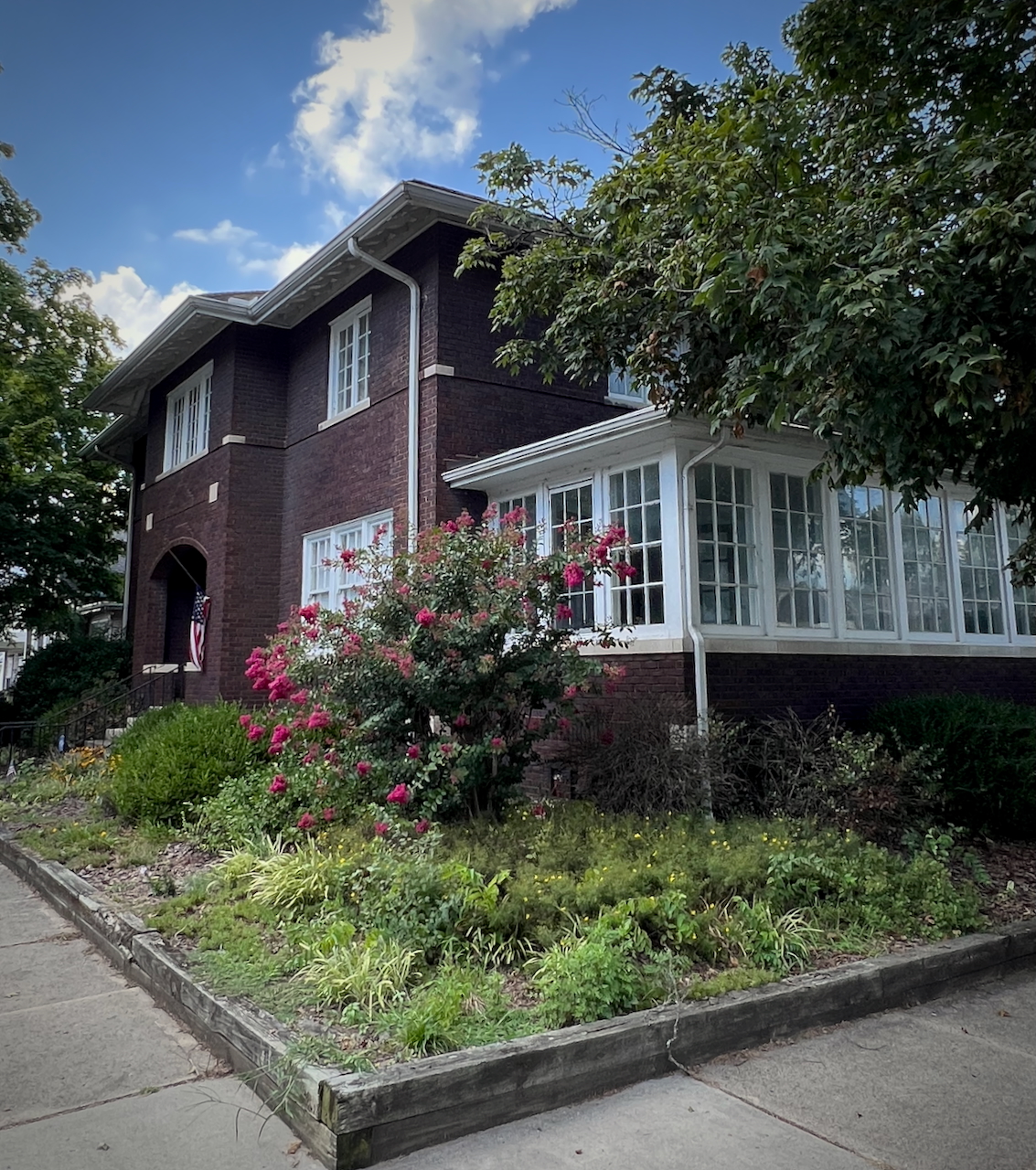
LAM has five houses that operate at “Level 2”: three men’s houses and two women’s houses. These homes are credentialed by the Indiana Department of Mental Health & Addictions (DMHA) to national standards, standards set by the National Association of Recovery Residences (NARR). Level 2 here indicates that the houses have a house leader (an earned position), and residents live out the social model of recovery. They get jobs, have specific chores, attend meetings, and become involved in the community. Here is the safe place for them to put their lives back together, while reuniting with family and making new friends.
We drove a short way through a neighborhood, and Marsha said, “This is our newest men’s house. And that’s where Mikey lives.”
• • •
Mikey Cox told me, as we sat on the porch of the halfway house, enjoying the day, that he had fought for and prayed for the 25 years’ probation deal “a long, long time.”
The last time he had bonded out of jail, more than four years ago, he was a 13-time convicted felon, had been to prison twice, and “in and out of jail so many times I can’t even count on my hands and my toes.” He was 39 years old and did not have children.
“I straightened up for a while, and I got with this girl and I had a kid and it really opened up my eyes about having a child. I tried to stay clean for that kid. And I mean, doing it for somebody else, it lasts for a while,” he said.
“I was clean for about six months. I fell back off and missed a court date, so they threw me back in jail for a few months, and I got out thanks to Marsha and the program.” That was 18 months ago, “and I decided to do it for myself. And that worked for a while to do it for myself and do it for my kid.” He says he struggled for a year to stay clean. “And then one day I relapsed, and then my whole world come tumbling down.”
“I failed a drug test. I was borderline going back to jail or not, and I just kind of isolated and I stayed to myself and I prayed a lot and I was just like, ‘Lord, just don’t take me away from my child. She deserves better.’ And that’s when I really turned to God and I questioned my own self and my own morals, and I really turned to God and I just prayed and he came through. I mean, as soon as I started praying every day and I really realized what I had in life and what I’m going to miss out in life, he came through, and that’s when they come to me with the drug court [granting] 25 years of probation.”
He is now a 15-time convicted felon—all drug charges, no violence, he stresses.
“When I caught these charges, she wasn’t even thought of,” he says, “and now she’s three, and they were trying to push on with these charges from back before she was even born. […] I wasn’t going to just let ’em take me away from my child like that. It wasn’t even on my part. It was on her part. I didn’t want my little girl’s dad to be just taken away from her,” he said.
“And I can say, man, ever since I give my life to God…life’s a lot easier. I’m more at peace. I mean, I don’t have to worry about the things I used to worry about.”
“[T]hey just give me enough rope to hang myself, I guess. [E]verybody’s just like, ‘You ain’t worried about 25 years of probation?’ I was like, ‘Not at all. I’m not worried whatsoever about it.’ […] I go in [to drug court] for 10 minutes every month, you know what I’m saying? For the next 25 years.” He is required to call a number and talk to authorities almost every day and to have his urine tested three times a week.
“I don’t have no kind of bracelet. I didn’t have no work release, no jail time, no bracelet, no nothing. I mean, I’m even done with the program here. I’m a graduate here. I mean, I could even move out if I wanted. And I got a little bit of money in the bank too, from saving up since I’ve been here. It’s something that LAM helps me with, saving up money. I actually have a factory job…they like to employ addicts. You know what I’m saying? So I got a good work environment. I know a lot of people. I used to get high with a lot of people, but they’re all in recovery now. I’m blessed there. It’s a good-paying job. I’m paid $20 an hour doing that.”
He grew up in Vincennes, his single mother struggling financially with him and three older brothers who “always thought it was cool to get me high, get Mikey high, get Mikey high, just smoking weed,” Mikey told me. “That was in elementary school, [then I] graduated to middle school, and then I started experimenting with the meth and the pills and the alcohol. And then about the time I turned 16, I was running away…and then once I turned 18, I…graduated from using to selling. [W]henever I figured out how to sell drugs and make money that was a hustle, and I was good at it…. I knew everybody. I was liked by everybody. It would seem like it was just a thing to do and it made me a lot of money, but it also got me…prison for six years.”
Mikey did not finish high school and does not have a GED, but he says it is pretty easy to get a factory job in town. “I work with some people that have some college experience, and I get paid just as much as they do,” he says.
“I’d like to save up and buy me a house. That’d be the plan…Yeah. I mean, I’d just like to buy a nice house. So I would have something to pass on to my daughter one day. […]I just want her to see me come up in the world and do good, and I never want to have to worry about her having to see me high or using or in jail or anything like that.”
I told him I admire what he is trying to do.
“I do it through Jesus,” he said. “So I mean God was the way when I had nothing else. I mean, I tried to do it for her, and I tried to do it for myself, and I was just holding on, and then…I failed that drug test. It’s Jesus that did it. God did it for me.”
“Marsha definitely helps out a lot. She helps run all these houses.” He implied she was tough. “She really knows what to do and what to say.”
Mikey said he would like to get his tattoos removed, some of which are offensive. “I’m not a hateful person. God took all that from me, you know what I’m saying? I mean, I was racial, I was hateful. […] I didn’t care about other people’s feelings or their properties or you, is what I’m saying. I would steal from you. I’d rob from you, I’d take from you and didn’t think [anything] of it. If you had kids or you worked hard for whatever you had, I didn’t care. [E]ven though I went to prison, none of my attitude changed. You know what I’m saying? I mean, it just made it worse if [anything]. But I’m just thankful that Jesus came into my life and he really, really changed me. I mean…between my little girl and having Jesus in my life, it’s the two biggest blessings that anybody could ever ask for in life.”
“[W]e are faith-based,” Marsha says. “So a lot of it is bathed in prayer, but it’s not just a prayer- and Bible-study. We get that a lot: ‘Well, it’s just one more Bible study.’ No…because a lot of people don’t even come to faith in our group, and we’re okay with that.”
He says he likes being kept busy doing things for the drug court and for LAM, working his job, and working out. He attends two churches. “Every week I get my daughter on Saturday, and she stays the night with me, and Sunday I take her to church with me. […] I want her to grow up and look back and see that dad took her to church all the time.”
“I’ll be 43 next month.”
• • •
Marsha invited me to the LAM meeting that evening, basically an NA/AA group with about three dozen men and women of various ages. People said their names, expressed their feelings, concerns, challenges, and worries, and their peers responded with encouragement and understanding. There were prayers, reminders of future events, and celebrations of recent accomplishments. Everyone knew about Taylor Hendershot and Dylan Smith, and the woman who served as facilitator for the meeting said Smith had stayed in the house where she was staying, but that her people were related to Taylor.
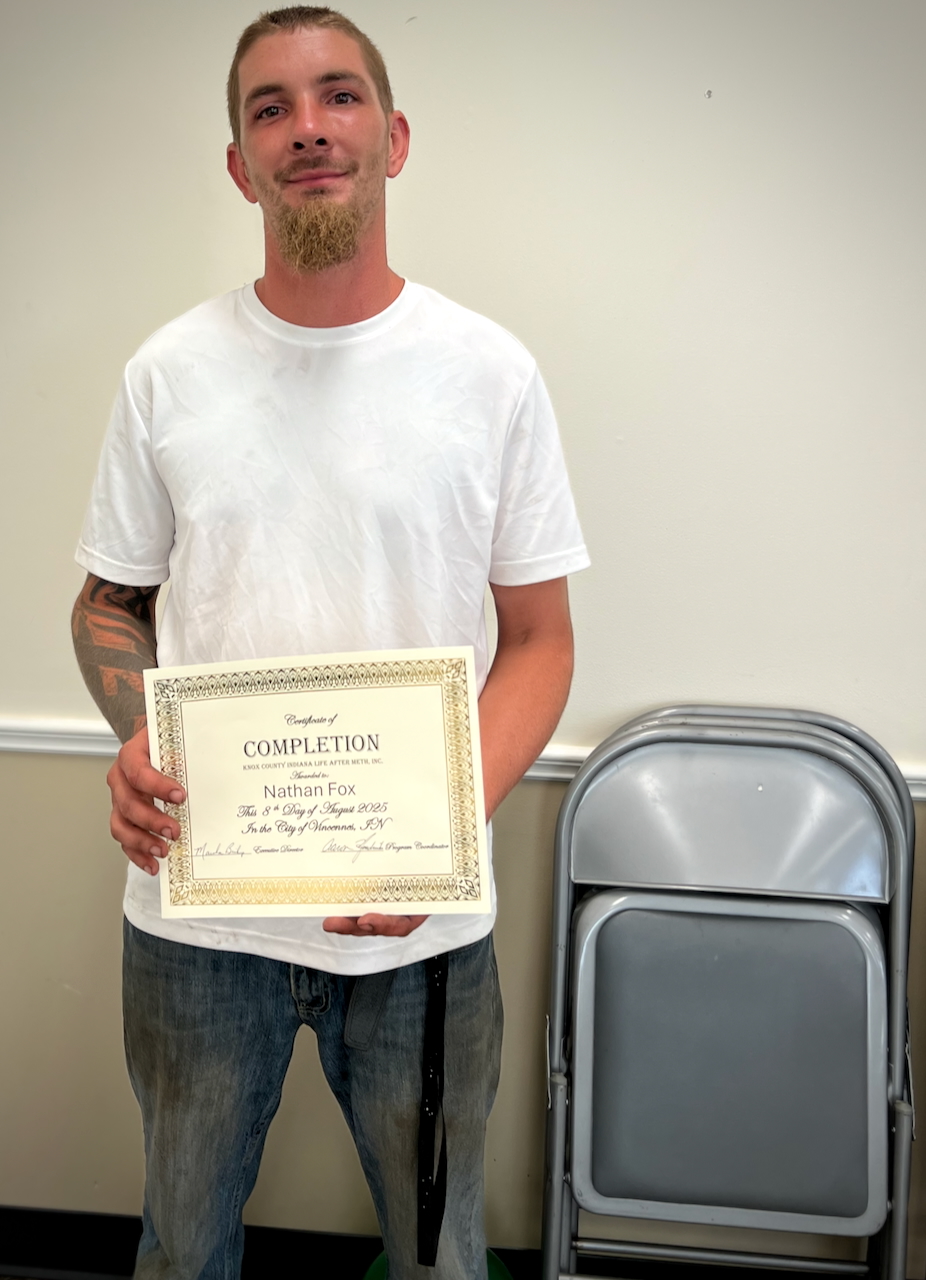
After the meeting, I spoke with Wendy Robinson, seven years sober after completing LAM. She lived in its women’s house for three years and became house manager after six months. She is now Director of Peer Services for LAM and coordinates all LAM Peer Staff. She is 51 and from Vincennes.
“I had used heroin and meth and pills, opiates, for 35 years of my life,” she said. “I had tried to kill myself 12 times. I went to jail. My [only] plan was to get out of jail. […]
“But when I got into jail, I got, by the grace of God, put into the LAM pod for some odd reason. I had no desire to be there, but that’s where they put me. I sat and watched those girls for a long time. The girls that were already in the program…had a different look to them. They were in jail, but it was almost that they were happy to be there. So I joined LAM and that was seven years ago. I bought a house; I bought a car.
“[I]t’s been an amazing ride. I’m not saying that it’s been easy. I had a friend that’s had seven years clean call me today that relapsed, and it’s broke my heart. This job’s not easy. I have a whole other full-time job, as a Peer. Night shift. I work three nights answering crisis calls and [doing] mobile deployment to people that are having crises. […]
“I’d never had a job before. I always sold drugs. Last year I made $88,000.”
She laughed.
“I worked my ass off, but I did it legal, so it was amazing. LAM taught me how to have a work ethic. Whenever I got out of jail, I started cleaning rooms at the hospital. One month after being out of jail, I had a job at the hospital.” Now she is a supervisor of peer recovery specialists there, a supervisor at the crisis line, and LAM’s Director of Peer Services. I asked her if she thought her success was unusual, and she said no.
In the car after the meeting I asked Marsha about recidivism. The most recent data she had access to was pre-COVID, for a three-year period, and was based on whether people got caught doing drugs or dealing and went to jail for it. She recalled that 69 percent of men with no jail counseling would reoffend. Men who had been through their program were at 39 percent, and women 29 percent. The numbers might be skewed, she said, by the presence of federal inmates in the Knox County jail, who were “probably all going to prison anyway.” She had hopes the jail would give LAM new data soon.
We discussed how research on “higher power” treatment has shown frustratingly divergent results, and she reminded me that Wendy’s path was not the goal for every person in recovery. It seemed to work out that Wendy likes to help people, and that is what she does.
• • •
Marsha drove me back to the LAM office, where my car was parked. We sat and talked a good while. She told funny stories, such as how she gets together with a group of other women clergy, who call themselves The Holy Hens. But when I praised Marsha for using her life to do good works, she was bothered that I did not understand that late in the conversation that it was no choice of hers; God had led her to it.
“[I]t’s been an amazing ride. I’m not saying that it’s been easy. I had a friend that’s had seven years clean call me today that relapsed, and it’s broke my heart.”
We argued a little over the bases of spirituality. When I brought up Vonnegut’s idea that human beings are “lucky mud” that gets to sit up and look around (“I loved everything I saw!”) and tried to tie it to Genesis, Job, Corinthians, she said she has no mud in her.
She did not like that my favorite book of the Bible is Ecclesiastes, which is particularly influential in literature. The good stuff, the hopeful stuff, was elsewhere, she said—in Paul, for instance. She said Solomon had whored his way to exhaustion and Ecclesiastes was all he had left to say. I was laughing then, which did not help my case.
Marsha did not care to hear how we have a relatively large amount of Neanderthal genetics in our shared family line. But as I was getting out of her car, she said she loved me—“You’re my cousin,” she said—and I replied cheerily, “I love you too.”
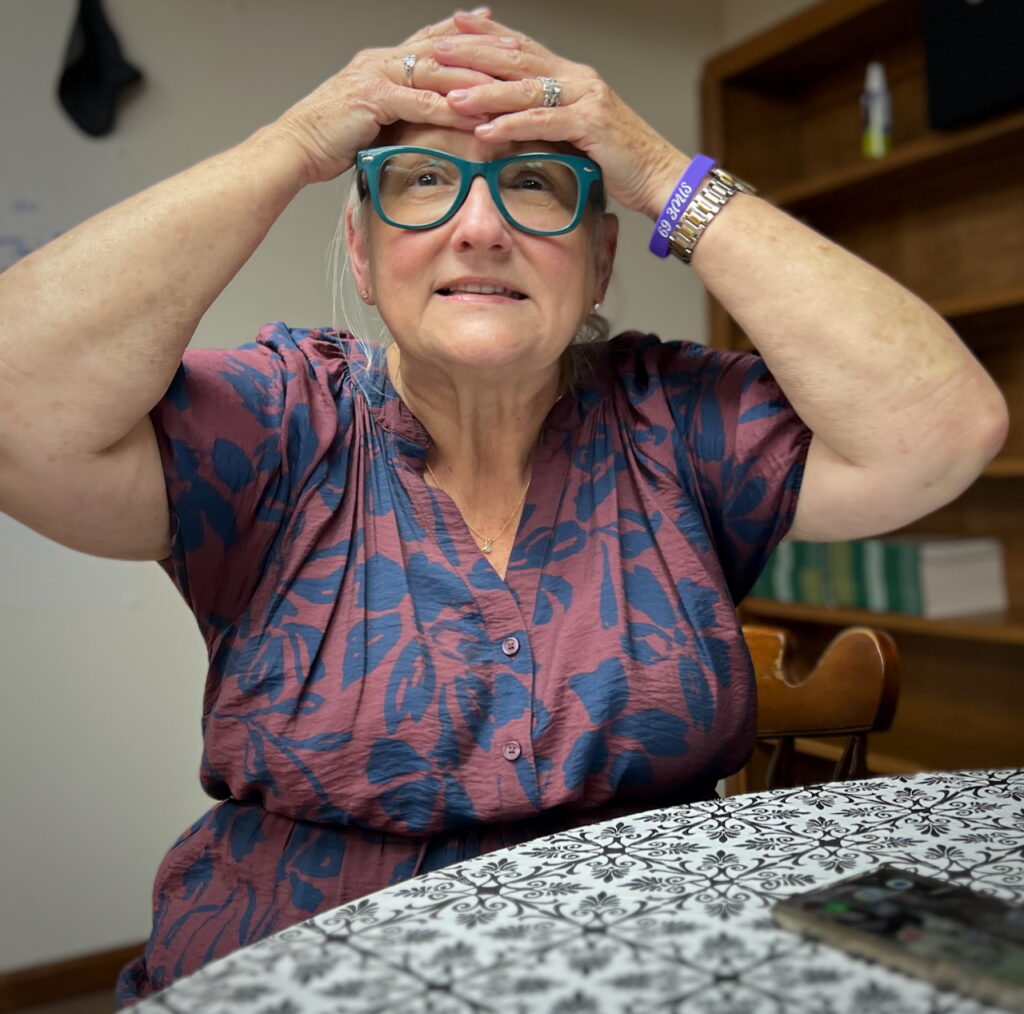
Earlier, when she was telling me about her life, she said, “I just think if you’re coming from a place of love, it’s good. It’s got to be good. There’s going to be difficulties. Randy and I don’t see eye to eye much. Tania [on LAM staff] and I are best friends. We don’t agree on hardly anything. We laugh about it all the time. She’s Democrat. I’m a Republican. We don’t even think about it. We don’t even talk about it. Do you see what I’m saying? Nobody cares. Nobody gives a rip, because at the end of the day, we have a common goal. […] Just be nice to each other. […] So it’s all good.
“Oh my gosh, it’s good.”