Maverick or Misfit, a Senator Seeks the Center of Things
An autobiography of a politician seeking common ground in an age of polarization.
By Gerald Early
January 30, 2026
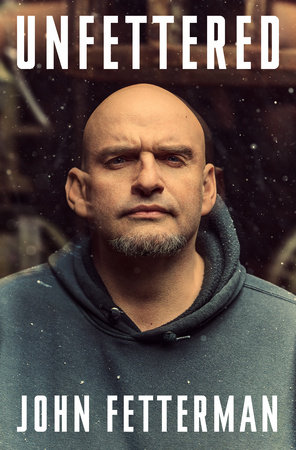
Unfettered
I. The disloyal Democrat
I’m a common sense and deeply patriotic Democrat. I believe the American way of life is sacred. My party doesn’t have an absolute monopoly on the solutions. Neither do the Republicans.
—John Fetterman, Unfettered, (205)
John Fetterman, a Democratic United States senator from Pennsylvania who won his seat in 2022, will likely be primaried by a progressive challenger if he runs again in 2028. The seat he won had been held by a Republican, Pat Toomey, since 2011. Toomey chose not to run again in 2021 in part because he voted to convict Trump of incitement to insurrection during the latter’s second impeachment trial and sensing that he would likely be primaried by a MAGA loyalist Toomey chose to bow out of that war. (Only one of the seven Republicans who voted for Trump’s second impeachment—Lisa Murkowski of Alaska—faced reelection in 2022, and won. Ben Sasse of Nebraska, Mitt Romney of Utah, and Richard Burr of North Carolina joined Toomey not to stand for reelection. Bill Cassidy of Louisiana is up for reelection this year. MAGA does a decent job of clearing the ideological moderates. No insurgency movement can survive without having the muscle of intimidation. Doubters go home!) Fetterman’s victory over Republican candidate Mehmet Oz tilted the balance of power in the Senate at that time to the Democrats. So, you might say, as the youngsters do, that Fetterman did his party “a solid” simply by winning, especially as that seemed not so assured during the campaign. The problems Fetterman encountered during his Senate campaign are mostly what Unfettered is about.
In the chapter, “Still Here,” Fetterman details how he differs from the progressive faction of his party on the two issues that probably define the Democratic Party today, opposition to Israel and Zionism, and opposition to preventing immigrants from entering the United States illegally or deporting those who have:
Fetterman on Israel: “My support for Israel is not new. I was quoted in the 2022 primary as unequivocally stating that ‘I will always lean in on Israel.’ I have never viewed my political party as an iron shackle adhering me to the party line. And I don’t take positions for my own self-interest. I take positions based on what I believe is right. I know this has cost me support from a significant part of my base, and I’m well aware that it may cost me my seat. I’m completely at peace with that. There is no choice for me but to support Israel. … It took less than a day after the formation of the Jewish state was announced for Egypt to attack it. Every day in Israel is a struggle for existence, just as every day is an homage to the memory of the Jews shot and gassed and tortured.” (200-201)
For the MAGA contingent, as for the progressives, political purity is the proof of principle, not just loyalty, but of moral superiority, of being unbendable, which many interpret as unbreakable. One must always believe oneself to be a better human being than one’s enemies or, alas, what is the fight for power about?
Fetterman on immigration: “Some in our party assert that an open border is a compassionate policy, but I don’t agree. An open border is not compassionate, it is chaos, both for those immigrants and for the citizens impacted by the overwhelming number of people coming in who need assistance. At its height during the last administration, there were 300,000-plus undocumented immigrants entering the United States in a single month. That is effectively the city of Pittsburgh showing up every thirty days. As this was going on, Democrats were swearing up and down that the border was secure and telling its voters to not believe their own eyes. I suspect this may have been the deciding factor in the 2024 election. You can’t tell people to not believe their own eyes and expect to win elections. … The open border has led to a staggering and heartbreaking number of cases of human trafficking and the sexual exploitation of women and children. I think one must also acknowledge the victims of horrific crimes committed by unvetted immigrants and the devastation those crimes leave behind.” (201-202) While Fetterman disapproves of the government’s action in Minneapolis, which has resulted in the killing of two anti-ICE protestors, he does not back his party’s call for defunding the Department of Homeland Security and shutting down the government, which he says is largely symbolic, as DHS already has its funding.
But even worse than Fetterman’s apostasy on these two hot-button issues is his having accepted an invitation to meet with President Trump. “For me to have turned down his invitation would have been wrong,” writes Fetterman, because, as he reminds his readers, Trump is the president, whether one likes it or not. He stresses as well the practicality of meeting with Trump as he is “the senior senator of a purple state in which Trump received over 50 percent of the vote. Any largesse he can give to any state is sorely needed.” (202-203) Fetterman mentions how Michigan’s Democratic governor Gretchen Whitmer got “twenty-one new F-15EX fighter jets for the Michigan National Guard” by meeting with Trump. (203) For the MAGA contingent, as for the progressives, political purity is the proof of principle, not just loyalty, but of moral superiority, of being unbendable, which many interpret as unbreakable. One must always believe oneself to be a better human being than one’s enemies or, alas, what is the fight for power about? Not for the filthy aggrandizement of merely being in charge, surely? That is as bad as wanting power for the filthy lucre. The true believer, and the MAGA crowd and the progressives are true believers, after all, must believe oneself worthy of it. The appeal of the political orthodoxy is that intractability for many is a sign of strength.
Fetterman fancies himself as the working man’s political maverick. “Unlike the majority of elected officials,” he writes, “I lived and worked for many years with those who were impoverished, who felt discarded and in fear of violence. I still live in a forgotten America.” (2) He made a stir on his arrival in Senate chambers attired in baggy shorts and a hoodie. Two new Senate dress codes ensued: first, the liberalization of an unwritten dress code that would have made it all right for Fetterman to dress as he did; second, the passage of a formal dress code called the SHORTS Act (“Show Our Respect to the Senate”) that required men on the Senate floor to wear a jacket, tie, and slacks. Fetterman felt calling the resolution SHORTS made it seem directed specifically at him, and so got the name pulled. Whatever the consternation over dress, Fetterman’s working-class pretensions overall, authentic or performative, made him a fit for his party.
Fetterman fancies himself as the working man’s political maverick. “Unlike the majority of elected officials,” he writes, “I lived and worked for many years with those who were impoverished, who felt discarded and in fear of violence. I still live in a forgotten America.”
Fetterman has defended himself against party disloyalty, saying that he has voted with his party 91 percent of the time. If that is true, he has been more loyal to Chuck Schumer than either Murkowski or Susan Collins of Maine have been to either John Thune or Trump. Of course, the MAGA faction would love to primary both of these women. It is said that Trump met with Fetterman to talk him into becoming a Republican, an assertion of uncertain veracity, but Unfettered reveals a man who makes a better Democrat than he would ever make a Republican. The fact that he would make a bad Republican ought to be apparent to his fellow Democrats. The fact that he is far more useful to them, indeed, to the progressives, than electing a progressive to replace him, ought to be apparent to them, too. I thought this was the party that believed in diversity in much the way Christians believe in the Trinity.
II. The sick man of the Democratic Party
When I was a boy, my mother told me life was about dying. “You are born to die,” she said, as if life, finally, is pointless and absurd. Actor Cary Grant said that life was about getting well, which meant that it was not pointless and not absurd. Take your pick. Fetterman, at different points during his campaign for the Senate, seemed to believe both. Ultimately, he put his chips on getting well, since, after all, he would die sometime in his life, no matter how he felt about it or whether he wanted to or not. As the old saying goes, how hard can it be to die? Everybody does it.
Fetterman was born in 1969 in Reading, Pennsylvania. His parents married because of his birth, about which Fetterman felt guilty because his father had to abandon plans for a collegiate baseball career. He also felt his parents were too young. Growing up, he felt “at odds with himself, awkward, shy, painfully self-conscious.” (7) He was bullied and friendless until he grew six inches in high school. (Fetterman is 6 feet, eight inches tall, the second-tallest senator in history.) The bullying stopped, and he joined his high school football team. He was not a good player, but he was determined and durable. Generally, in high school, Fetterman was unmotivated. He went to Albright College in Reading, his father’s alma mater, where he continued to play football poorly for a bad team and took his studies a bit more seriously. He had some friends, but he was essentially a loner, prickly, hulking, and moody. The seeds of depression were planted.
He earned master’s degrees from the University of Connecticut and Harvard’s Kennedy School but wound up in Braddock, Pennsylvania, an industrial ghost town, once a steel producer, that has become crime-ridden and riddled with abandoned buildings. Its population has shrunk to 1,700, an under-resourced nowhere. As one writer put it: “Braddock now resembles a spooky, miniaturized version of the South Bronx, circa 1975.” Fetterman writes, “There is no bank, no gas station, no Laundromat, no grocery except for the Family Dollar.” (33) He worked at a youth center. “I had no image of myself as some white savior sweeping into a town on a white horse. My only goal was this: If it was possible to make a difference, if it was possible to make progress, then this was where I wanted to be.” (36)
Eventually, Fetterman, even though Braddock is seventy percent Black, becomes the mayor from 2006 until 2019, beating Black candidates. (He was preceded and succeeded by Black women.) This is the start of his political career that leads to Fetterman becoming Pennsylvania’s lieutenant governor from 2019 to 2023 and to the U. S. Senate, although it is a bit like imagining some scenario where the mayor of Normandy is elected the U. S. Senator from Missouri.
Unfettered tells this story as well as Fetterman’s work with the Board of Pardons, where he clashed with current Pennsylvania governor Josh Shapiro, the rising star of the Democratic Party who eyes the presidency and is already making noise that he does not intend his being Jewish throw a monkey wrench into the machinery of his ambition among the pro-Palestinian faction of his party. Fetterman was more willing to grant releases for violent criminals than Shapiro was, who at the time was the state’s attorney general. “I believe in second chances,” Fetterman writes, “but in politics, they are considered dangerous.” “You are never going to lose votes by refusing to give a prisoner a second chance,” Fetterman offers as the conventional wisdom. (73) Suppose you supported the release of someone who commits another violent crime. Everyone in politics remembers how George H. W. Bush’s team used Black recidivist Willie Horton to defeat Massachusetts governor Michael Dukakis in 1988, because Dukakis signed Horton’s release. It is less risky not to grant releases. “Shapiro was far more cautious, and at a certain point, I began to think that what was influencing him was not mere caution but political ambition.” (71) There may have been some animosity as Fetterman had endorsed Shapiro when the latter ran for attorney general but Shapiro did not endorse Fetterman’s run for lieutenant governor. It is hardly surprising that Fetterman would use his book to create some political and temperamental distinctions between himself and Shapiro. Fetterman, whatever his ambitions, does not want to be overshadowed by Shapiro or somehow made subordinate to him. It is a matter of both ego and creating definitional space.
But most of Unfettered is about Fetterman’s 2022 Senate campaign against Oz, the telegenic and wealthy physician and nostrum peddler who was once the darling of The Oprah Winfrey Show. The details Fetterman provides about the mechanics and the grueling nature of such a campaign, especially with so much at stake for both parties, is worth the read for most political junkies who cannot get enough of this sort of stuff.
It is hardly surprising that Fetterman would use his book to create some political and temperamental distinctions between himself and Shapiro. Fetterman, whatever his ambitions, does not want to be overshadowed by Shapiro or somehow made subordinate to him. It is a matter of both ego and creating definitional space.
It was during the summer of the campaign that Fetterman, well ahead in the polls, suffered a stroke, from which it took him a considerable time to recover. While trying to come back from the stroke, Fetterman was hit with depression and lost the motivation to campaign, lost interest in the endeavor of winning the office, lost interest in life itself. He was deeply sick. At times, he wanted to quit, but to do so would have conceded the seat to Oz, as no replacement was likely to mount a successful campaign on such short notice. What made his illness worse was that he was deeply self-conscious of it. He was crippled by self-awareness but helpless to change. He refused treatment for his depression. No one could help him, not his wife, his children, his brother, his parents, his campaign manager.
After an abysmal debate performance, where he was barely able to speak coherently in large measure because the stroke impaired his hearing and his speech, thus giving audiences the impression of his being cognitively dysfunctional, Winfrey, surprisingly, endorsed him over Oz. It had to be all about Oz, not a particular attraction to Fetterman, whom Winfrey did not know. Perhaps Oz disappointed her by becoming a Republican, or accepting Trump’s endorsement, or running for a Senate seat in a state where he did not actually live. Maybe she wanted to play kingmaker for such an important contest. Perhaps she was sympathetic because Fetterman was being flayed alive by the conservative media as being unfit to hold office because of his stroke.
Fetterman beat Oz by nearly five points, a solid win. He had to be dragged to his victory celebration. It became nearly impossible to get him out of bed or from the sofa. He finally accepted treatment at Walter Reed Hospital after he was sworn into office, as it became clear to him that if he did not do something, he would fail as a senator, a husband, and a father. “Children need their daddy,” one of the hospital therapist told him, and it clicked.
The book has a happy ending as Fetterman is cured, rejoins his family, and is able to return to work. Unfettered clearly encourages people to seek medical help for depression, and educates people who do not understand the nature of the affliction, thinking that all the person needs to do is get up and get at it and quit moping around. In this way, it combines being a political autobiography with an overcoming-illness narrative. Fetterman occupies a portion of the political spotlight now that makes the book worth reading.