Locked Out
August 19, 2025
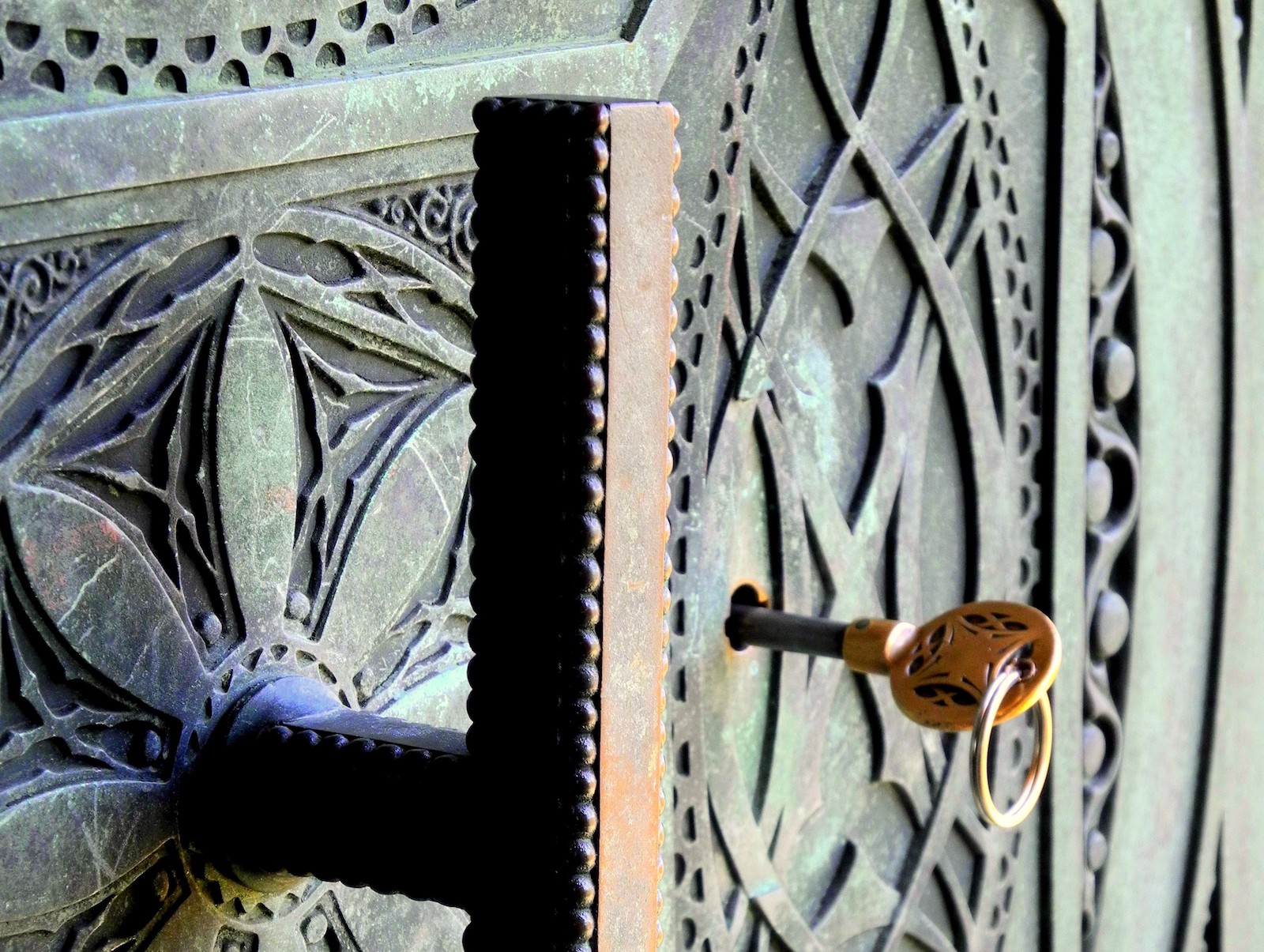
My house key is oversize, brass, with an interesting little saw of notches; I love sliding it into the lock and crossing the threshold into our home.
But lately, this simple act confounds me.
For some reason, the key refuses to turn. Jiggling, tugging the door toward me, pushing it back, turning the key first one way then the other—I spend long minutes, the dog going a little nuts inside and me going a little nuts too. The stymied phase lasts longer each time. Finally, the lock relents, or the key finds a better angle, or an angel takes pity, and I can enter our home. But there is a peculiar panic in finding yourself locked out of sanctuary.
WD-40 does nothing. Compressed air, less than nothing. My husband swears his key always works. But how could mine have become corrupted? It gleams dull and pretty, same as ever, and I have a hard time laying blame upon its innocent ridges. Finally, reluctantly, I swap it for the smaller dog-walking key and feel a huge relief—until it, too, snags in the lock.
It was such satisfaction, to always pass smoothly into safety. In fairy tales, keys open enchanted doors or forbidden chambers, but I was happy just to enter a place with air-conditioning and snacks. To be unable to enter your own home is like finding yourself unable to marshal your thoughts, or to speak the language of those around you. You are suddenly cast adrift, temporarily placeless, cut off and kept out.
Locks have always felt alienating to me, a layer of suspicious vigilance I resent needing. Never have I locked a file cabinet, a drawer, or my own office; only main doors, for everyone else’s comfort. But what better compliment than to say of a place, “Nobody locks their doors”? Our town is safe enough to live that way, but my husband has watchdog genes, so we keep our old city ways. Nor will he let me do that sweet predictable thing and slide a spare key under a flowerpot. And so here I am, fumbling and swearing on my own side porch.
Most residents of this Wild-West country of ours seem fond of locks—and especially thrilled to possess keys that open them. Locks spell safety but also privilege. We like as much access as possible: VIP passes, press passes, memberships, code words to enter retro speakeasies…. All harmless, I suppose—if we were not so eager to control others’ passage. Exclusive clubs, hatreds, insurmountable barriers—we use them all to deny entry. Boys’ clubhouses of old nailed up Girls Keep Out signs—and later in those boys’ lives, their swank bars and athletic clubs and entire professions had the same signs, written in an invisible but obvious ink. As for the old Whites Only signs…they are back. Huge amounts of human energy are expended either keeping people out, kicking them out on a whim, or deciding who shall be let in.
If I am unnerved simply by a fumble with a house key, how does someone cope when they are yanked from a Home Depot and shipped out of a country where they have lived for years? Family incomes, slight to start, have been sliced in half because parents cannot risk the chance that they would both be arrested, their children left with no one. And what about U.S. citizens who have no house but have made do with a tent—finally finding one that does not leak—and formed a community of sorts? Now they, too, will be seized by authorities and institutionalized. This is a time of denial, ejection, rounding up and locking up and shooing away.
Even supposedly neutral systems seem to delight in creating barriers. I tried to send a magazine to a man whose house was shredded by the recent tornado, and he told me the post office will not deliver to that address or let him come pick up mail for that address, because no one is living there. A chunk of our city was obliterated. Could they not have offered a forwarding system, or a pick-up service, for six months? I sent a birthday card to a woman who has been (unjustly) imprisoned for decades. When I told her I hoped it would arrive on time, she burst out laughing. “Oh, they don’t let us get cards. They scan it, and a long time later, we might see the image.”
Access, entry, safety, home—these are far more precarious than people who glide through life with magic numbers, luxurious estates, and the irrevocable status of wealth will ever realize. Those people feel wanted and welcomed everywhere they go. But the categories of people who are locked out keep expanding. Refugees, immigrants, people who are struggling, people who are not White or have not conformed to conservative White Christian norms…where do they go? “Back home”? This country used to be a home for them. I am using the smug third person, but given the attitudes toward free speech, protest, and human rights, soon I will be asking, “Where do we go?” Can camps, prisons, and institutions hold all of us?
For eighteen years, I have been returning home, sliding that brass key into the lock, and stepping into comfort. Now I tense before I even try, wondering if this time, I will be stuck outside for hours, dripping with sweat, waiting for my husband to get home. The mildest of inconveniences, in a world laced with real pain. But multiply it, ratchet it up until the anxiety is unbearable, and you reach the new everyday reality for a third of the country. There is no locksmith they can call.
Read more by Jeannette Cooperman here.