Bo Gritz, America’s Special Operations Problem, and the Tragedy of Pulp Masculinity
A decorated, self-mythologizing soldier maybe confesses to war crimes and murder and no one seems to care.
March 31, 2026
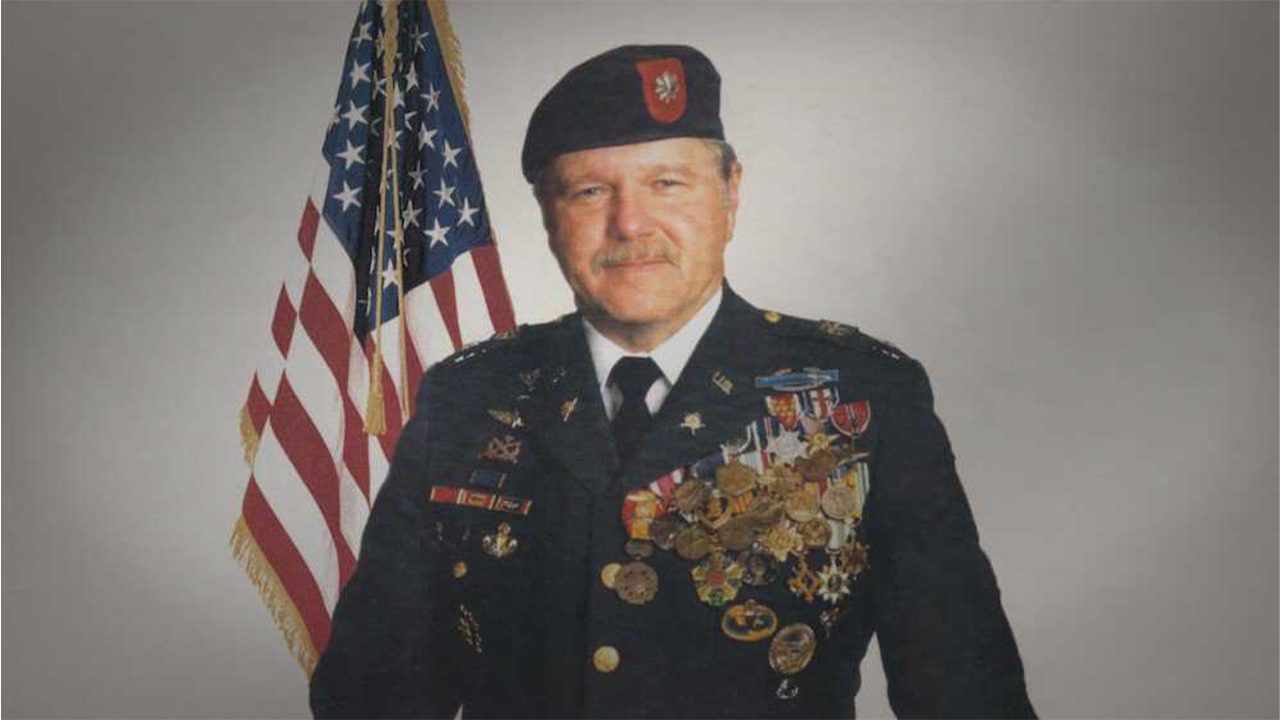
Special operations forces are necessary to the US military, and we have some of the best in the world: Army Special Forces (“Green Berets” and “Delta Force”), Army Rangers, Navy SEALs, Marine Raiders and Force Reconnaissance, Air Force Pararescue (PJs) and Combat Controllers (CCTs), and for transportation and support, the Army’s 160th Special Operations Aviation Regiment (SOAR) and the Navy’s Special Warfare Combat [Boat] Crewmen (SWCC).
Thirty-five years ago, Lieutenant Colonel Bo Gritz, a decorated Green Beret in Vietnam, wrote in his self-published book Called to Serve, “Nuclear, biological, and chemical weapons have all but ruled out traditional use of field armies to settle political disputes. The potential for escalation with massive loss of resources is too great to risk except for political posturing….” (72)
That may be overstating it (see 2003’s Battle of Baghdad), but it has been true that many “low intensity conflicts” in recent decades have used special operations forces (SOF) so heavily that their casualties are disproportionate, units are chronically understaffed, and burnout is a serious problem. SOF compose only about 3 percent of all US active-duty forces, but the details of 20 percent of the military’s top medals awarded since 9-11 have had to be kept secret, because they were for SOF missions.
Gritz says in the documentary about him, Erase and Forget, “American government officials have no idea what Special Forces really does…they just know it’s kinda like the easy button,” he says, slapping the table, “that you see advertised on television. You hit the easy button, somebody takes care of it, and, uh, good.”
There are other downsides to SOF use. They cannot hold or occupy large territories. They are secretive and often function quasi-independently, so oversight is more difficult if not sometimes impossible. They also work directly with intelligence agencies, which have their own agenda, not to mention their own special operations branches that recruit SOF, so lines blur. Many SOF veterans get hired as mercenaries, bodyguards, and trainers for private companies such as the former Blackwater, which contract with the government but hide behind corporate shields when someone must be held accountable.
Gritz says in the documentary about him, Erase and Forget, “American government officials have no idea what Special Forces really does…they just know it’s kinda like the easy button,” he says, slapping the table, “that you see advertised on television. You hit the easy button, somebody takes care of it, and, uh, good.”
Brandon P. Buck says at the Cato Institute website, “Special Operations Forces cannot do everything. They are a scalpel that policymakers in Washington, DC, have tended to use as a multitool. Their proposed use in Iran for seizing the regime’s stockpile of enriched uranium is but the latest idea in this trend. It is also the most reckless—an idea closer to fantasy than to feasibility.” Retired General Stanley McChrystal, known as the former head of Joint Special Operations Command, said in an interview at the Times last week that covert action, special operations, and air power are “the three great seductions.”
SOF have developed a unique culture, both hyper-professional and piratical, which feeds the fantasy. They are macho, brutal, and highly technology-dependent. They demonstrate pro-level athleticism, physical courage, and inhuman endurance; they are also tragically vulnerable. As such, they were always destined to capture the American imagination—as legacies of JFK, as heroes in movies and TV—from The Green Berets, with John Wayne, though Rambo, Magnum, PI, and Lone Survivor—and as personalities/characters in books, video games and other media in a way that diverged from the real-life WWII model of the Anglo-European commando.
The Green Berets called themselves “The Quiet Professionals” early on, even though they were the first modern SOF to be on heavy rotation in the media. Robin Moore’s book The Green Berets, the basis for the Wayne movie, came out in 1965, three years before peak US troop levels in the war. Moore also cowrote the #1 hit song “Ballad of the Green Beret” (1966) with Green Beret medic Barry Sadler. But maybe because Green Berets had a founding remit to be teachers living among the oppressed, also doing civic works as one of several tools of counterinsurgency, they lost ground during the Global War on Terror to the SEALs, who seem to be getting all the book contracts, movie deals, and podcasts, because they are primarily “door-kickers.”
A (mostly-male) slice of American society fell in love with the idea of SOF as supermen, or maybe Batmen—earthy guys who work out, have armored suits and gadgets, and fight evil (mostly in the dark of night). The SOF superhero has become an aesthetic that can be cosplayed, smack-dab in the middle of civil society, without the hard work of training or the discipline that comes from it.
What I call SEAL-love has intensified in our age of cheap, performative masculinity. We are perverts for it; we are sick with it. It appears in gun ownership (especially assault rifles), as shocking consumerism and libertarian rage bait. It is everyday cops who look like soldiers in Fallujah, with military-surplus vehicles and weapons. It is in the justifiable memes about Meal Team Six and US Gravy SEALs: White guys with paunches they used to call Dunlaps—their bellies done lapped over their belts—in tactical gear with long guns, standing in line at fast food joints on a normal day. It is in whatever this guy on Instagram is doing, dancing with a hunting knife as an expression of “freedom” at his farm.
Remember that period when Tiger Woods used to like to go hang out with SEALs and fondle their weapons? That was weird.
It is also in a speech by our Secretary of Defense Pete Hegseth at a May 2025 Special Operations conference, where he stressed that “SOF contributes to his core priorities of restoring the warrior ethos, rebuilding the military and reestablishing deterrence. [Young recruits are] looking for adventure, camaraderie, risk [and] danger. They want to push themselves and test themselves against others. They want to flourish in an environment that embraces hard work and discipline and the warrior ethos. Special operators know a thing or two about all of those. […] Special operations forces have long operated like a tech startup. You’re agile and nimble, lean and lethal, and you leverage innovation to get more capability.”
At a press conference on March 2 this year, Hegseth spoke what a retired Major General called “the words of a potential war criminal”: “We also don’t fight with stupid rules of engagement. We untie the hands of our war fighters to intimidate, demoralize, hunt, and kill the enemies of our country.”
This parallels Bo Gritz in Called to Serve: “Surgical operations in the form of kidnapping, assassination, preemptive strike…where a dictator, Central Committee, or cadre is zeroed out…[are] preferable to the possible loss of thousands on a conventional battlefield.” (72)
David Morrell, author of First Blood, the 1972 novel that invented John Rambo, appears in Erase and Forget. “You better be careful about the engines of violence you create, because they come back and haunt you,” he says. “[I]t didn’t [just] happen a long way away in Vietnam; it came back to haunt people here in the United States. It was like bringing back a Bacillus that infected the body politic.”
The adoration of a spec-ops fantasy in this country is, in some small way, the fault of people such as Bo Gritz, though he was both a model for it and its victim.
• • •
Bo Gritz died last month, in Sandy Valley, Nevada, at 87. His advanced age was remarkable, given his combat service and wounds, a suicide attempt, and his post-war penchants for guns, explosives, flying his own plane, and sky/scuba diving, not to mention illegal cross-border skirmishing, illegal training of supposed mujahadin, and hanging out with radical wingnuts.
It is getting tiring to have to write, “He was a very American figure,” because it rarely means something untainted. Gritz certainly was such a figure. He had his admirers, many of whom are saluting his memory on social media. But it is also tiring to wade through the mire of self-promotion, contradictory statements, nonsense, grift, and outright lies he created for public consumption. As my old sergeant major might say, Bo Gritz liked to pat himself on the back, and he did a lot of pattin’ over the decades.
A (mostly-male) slice of American society fell in love with the idea of special operations forces (SOF) as supermen, or maybe Batmen—earthy guys who work out, have armored suits and gadgets, and fight evil (mostly in the dark of night). The SOF superhero has become an aesthetic that can be cosplayed, smack-dab in the middle of civil society, without the hard work of training or the discipline that comes from it.
If you are my age, you might remember Gritz as the former Green Beret officer who in the 1980s was going to rescue supposed American POWs held captive in Laos since the Vietnam War. (Because I only read about him then and never heard his name, I thought until last month that it was pronounced “Grits.” It rhymed instead with “rights,” as he liked to say.)
His “missions,” which were paid for in part with money channeled through William Shatner, Clint Eastwood, and supposedly Ross Perot, never got far, though one of Gritz’s men was wounded by Laotian paramilitaries and ransomed, and Gritz was arrested in Thailand. In any case, there were never any American POWs in jungle camps, though Gritz cruelly raised families’ hopes and reportedly took money from them.
Gritz is mentioned in dozens of pages of Susan Katz Keating’s Prisoners of Hope: Exploiting the POW/MIA Myth in America (1994). “At best, Gritz is an inveterate publicity hound who thrives on excitement and theatrics. He is also a genuine war hero who seems determined to be a legend,” Keating writes. “But if Gritz at first comes across as an amusing egotist, he is also a charismatic leader gone wrong, a man who has toyed with human lives while in pursuit of his goals. In the process, he has earned a dubious distinction, a place of note among the charlatans whose claims have so distorted the MIA issue; for it is Bo Gritz, American hero, who is directly responsible for constructing much of the framework that supports the POW hoax today.”
Gritz based his authority in part on being “the most decorated Special Forces soldier in Vietnam.” That was not true; the honor went to Colonel Robert Howard. Keating explains that “[o]thers insist Gritz does not have the war record he claims [see this archived page, separately] and that he has not been awarded all the medals he displays on his uniform….”
Keating says, “Gritz’s twenty-two-year [army] career ended in 1978 under mysterious circumstances. According to Gritz, the late General Harold Aaron, while deputy director of the DIA [Defense Intelligence Agency], asked Gritz to retire and lead private rescue missions into Indochina. After General Aaron died, Gritz circulated a letter from the general implying Gritz was associated with the DIA; the FBI determined the letter was a forgery.
“Pentagon sources tell me the real reason Gritz retired was that he was pressured into leaving by superiors who felt he had ‘done a Colonel Kurtz,’ meaning he was uncontrollable, like the character in the Joseph Conrad novel Heart of Darkness.” (128-30)
The Congressional Record of July 28, 1987, recalls, “[Gritz’s] March 1983 testimony before the Subcommittee on Asian and Pacific, Committee on Foreign Affairs, ended for Gritz, anyway, as disastrously as [his “rescue” mission] Operation Lazarus. Bones he said were those of Americans turned out to be those of two Asians and a pig. A story of one soldier’s heroics he admitted was a ‘composite’…and photographs that he said showed prison camps showed nothing of the kind. By the time he had finished his testimony, he was forced to say that his evidence for the existence of [American] POWs is ‘the same evidence that might be presented to a convention of clergymen that God exists.’”
At the hearing, Rep. Robert Torricelli (D-NJ) said, “Colonel, time is either going to prove you to be one of the great heroes of our time, and all Americans are going to be endeared to your efforts, or you’re going to have a very difficult time with your conscience.”
In a segment from Erase and Forget, Bo Gritz in old age offers a self-justifying excuse that manages to be self-aggrandizing. “They chose me because I was the American soldier,” he says. “If I said there were no prisoners alive, then that would seal the deal. Through Rambo, and through Mission MIA with Chuck Norris [who has also just died], America came to say, ‘There are prisoners of war.’”
About that time Gritz, with the eager aid of the media, started saying that the characters of Rambo, Colonel Kurtz from Apocalypse Now, and Colonel “Hannibal” Smith from The A-Team were all based on him.
David Morrell told me in an email, “My novel FIRST BLOOD was published in 1972. The real-life person on whom the character was modeled was Audie Murphy, America’s most-decorated soldier of WWII…[Gritz] was not at all my inspiration for Rambo (the chronology doesn’t fit)….” Morrell, who hates the movie’s sequels for their superhero jingoism, says Gritz’s POW stuff “may have provided the general idea for the second movie without any specific plot connections.” (Uncommon Valor [1983], with Gene Hackman playing a Marine colonel who believes his son is held in Laos, is another movie Bo Gritz suspected was based on him. Its director had to say, “We assiduously avoided anything in our story similar to Gritz. Our research amazingly showed there were some 30 groups training for similar missions.”)
As for Kurtz, Apocalypse Now’s screenwriter John Milius welded Conrad’s Heart of Darkness to the Vietnam War with a SEAL-love aesthetic. (“While Milius’ change in setting does exhibit a critical eye toward the American military’s involvement in Southeast Asia, it should not obscure his fascination with the Vietnam War. [H]is script reflects a captivation with military equipment, language, and protocol…exhibiting a fascination with military aesthetics and recapitulating troubling colonialist ideas from its source material,” Garrett Strpko writes at Cinematheque.)
Later, Francis Ford Coppola rewrote the script, reportedly with Special Forces Colonel Robert Rheault and “The Green Beret Affair” in mind, not Bo Gritz.
Bo Gritz, with the eager aid of the media, started saying that the characters of Rambo, Colonel Kurtz from Apocalypse Now, and Colonel “Hannibal” Smith from The A-Team were all based on him.
Nothing would change Gritz’s suspicions. In Erase, Gritz, long retired but wearing an army uniform with a Green Beret, tells a crowd sitting under the sun in a desert that, against orders in Vietnam, he “ran up the Stars and Stripes” in a camp where he “had an army of Cambodians—they made somewhat of a bad movie about it, called Apockerlips Now.” He says in his book that he was better looking than Marlon Brando and that Coppola wanted to put Brando’s face over Gritz’s in a photo of him with his “‘Bodes,” as Gritz called them.
I see no evidence for or against Gritz being the basis for George Peppard’s “Hannibal” Smith in The A-Team, but as always there is spoor of the spec-ops fantasy. A New Statesman (UK) review of the TV show says, “The gradual assimilation of Vietnam into acceptable popular mythology, which began solemnly with The Deer Hunter [and De Niro as Green Beret], has reached its culmination with The A-Team…classic right-wing American populism—patriotic, macho, anti-authority…. America sailed to Vietnam on a sea of comic-book fantasies, and this is how she wishes it had turned out. […] The saddest thing is that America encourages her people to go to war by playing on their better instincts: heroism, rescuing the down-trodden, being Errol Flynn.”
• • •
If you were watching the news in the ’90s, you might remember Gritz as that guy who hoped to talk down right-wing malcontents and criminals from violent stand-offs and get them to surrender to the government they hated: Randy Weaver, at Ruby Ridge, Idaho; the Montana Freemen; and Eric Rudolph, a fugitive living on salamanders and dumpster garbage in the Nantahala National Forest in North Carolina.
Weaver had been a Green Beret, which was part of why Gritz was drawn to that scene, but it did not hurt that Gritz was running for President on the 1992 Populist Party ticket. (Four years earlier, Gritz had left the ticket as the Vice Presidential candidate when he said he realized what his running mate, the KKK’s David Duke, was about.) Zimmerman makes a masterful edit in Erase, a sequence of bumper stickers with paranoid extremist slogans at the Weaver standoff, neo-Nazis yelling in support of him, then Gritz complaining later that Hollywood “made a movie about Ruby Ridge and it made us look like a bunch of idiots. They got me being played by some weirdo that walks up to the police line and says, ‘My name is Gritz, rhymes with Whites.’ Stupid.”
Weaver was a white separatist who had violated federal gun laws. Gritz, who claimed he used “the power of citizen’s arrest” to break the police line at the scene by arresting “the Governor of Idaho, the head of the FBI, [and] the head of the Marshalls Service,” gave a Nazi salute to the skinheads after talking to the press and told them Weaver sent that to them in thanks for their support. In the documentary Gritz is shown angrily denying the salute after an interviewer asks about it. He threatens the reporter with violence and says the still photo is not the truth, that he had merely waved. The reporter shows video; it is very clearly a Sieg Heil. Gritz is apoplectic with rage at how unfair it all is.
What next?
“Destiny lay in becoming a pastor,” Gritz says, in his odd speech rhythms, in Erase. “Leading people spiritually, as a Ranger might cut through evil. We’re not willing to talk. We’re not willing to fellowship. […] We don’t give each other a chance,” he says, as if he has invented a thing. He was associated with the Christian Patriot movement.
“You know, if we knew…about…each other, we wouldn’t have any war. If you are really doin’ what’s right, don’t worry about the FBI. Don’t worry about the white supremacists. Don’t worry about the Klu Klux Klan [sic]; don’t worry about the Soviets, the Red Chinese.” He says in churches, “All I see is men trying to control other men.”
In 1993 Gritz began teaching a series of paid training courses he called SPIKE: Specially Prepared Individuals for Key Events. The content was the sort of things you would find in surplus army field manuals and The Anarchist Cookbook: “urban and wilderness survival, Map and Compass land navigation, communications, self-defense, on and off road Driving, First Aid and advanced life saving skills, food storage, fitness and nutrition, field craft, mountaineering, Alternative energy and many, many more.”
Gritz says in Erase that he taught 5,000 Americans how to make car bombs. He defends that with an irony that is a lie: “[Y]ou gotta know how to do it if you’re gonna know how to disarm it.”
The courses contained other kinds of whackadoodle. He says in a clip from a session, “In the CIA, we learned that we can enhance your hearing, your feeling, your eyesight—up to 2,000 times! […] If I want you to see something…I can enhance your eyesight, so you can recreate it. If you ever heard something, I can turn up the volume, so that you can hear it. Now if I can do that, what else can I do?”
He taught the course in person for years, as well as other “specialty” courses in “Airbourne [sic], Underwater Operations, and Combat medic,” then he sold the course on DVD.
In a Variety review of Zimmerman’s film, Owen Gleiberman writes of SPIKE, “At the time, Gritz’s actions seemed laughable, but in the age of the ultimate trumped up reality showman (namely Donald Trump), they seem like an early version of the virus that ate our sanity.”
“What ever [sic] you do SPIKE was designed to improve every aspect of life,” the current course website says. Its latest articles include: “Yes, There Is A Male Engagement Ring (‘He wants it…but he doesn’t want to want it)”; “Guide to the Best Knife Steel”; “1200 Horsepower Ferrari Supercar reaches 310 MPH”; “8 Lessons in Manhood from the Vikings”; and “ManCan offers innovative product (‘Are you tired of being discriminated against for being a man?’)”
In a Variety review of Zimmerman’s film, Owen Gleiberman writes of SPIKE, “At the time, Gritz’s actions seemed laughable, but in the age of the ultimate trumped up reality showman (namely Donald Trump), they seem like an early version of the virus that ate our sanity.”
• • •
In 1994 Gritz co-created an off-grid, “constitutional covenant community” called Almost Heaven, which the Southern Poverty Law Center says “underlined his trademark combination of antigovernment paranoia, apocalyptic survivalism, military obsession and militant Christianity [and was] billed as ‘the ark in the time of Noah’…. Along with former Arizona State Sen. Jerry Gillespie [‘who was accused of squandering over $1 million in its land sales funds’] and Jack McLamb of Police Against the New World Order [an early version of the Oath Keepers], Gritz attempted to bring together a group of Christians who would join to weather hard times.” After much turmoil he left his association with the place in 1998.
That was the year he shot himself next to his truck on a gravel road, 25 miles from Almost Heaven. He was bereft that his wife had left him, was in debt to a bank for tens of thousands of dollars, and was “involved in a legal battle over his alleged attempt to kidnap the children of a woman who had appealed to him for help in a custody dispute” in Connecticut. He wore a military uniform, jacket covered in medals, put a .45 pistol to his chest, and though he was a weapons expert, missed his heart.
“I tried to shoot myself. But it didn’t work,” he says in Erase, sounding exactly like Jeff Bridges as Rooster Cogburn in True Grit. “You don’t think. Otherwise you’d shoot yourself in the head. But that’s not where the pain is. Pain is in your heart. So that’s where you put the gun.”
The documentary shows a deleted scene from the end of Rambo that I had never seen; it was rejected by a test audience. Rambo, in deep trouble, begs his commanding officer to kill him, and when he refuses, Rambo grabs his hand and gun and makes him shoot Rambo in the chest.
In both cases, real and fictional, I am reminded of a Washington Post article by Mary McGrory, from 1983, during the POW fiasco. ”The larger question,” McGrory says, “is not whether Gritz is a crusader or a hustler, but whether the last bitter chapter of that bitter war will ever be written.”
• • •
“[Gritz’s] last stunt,” as The Times (UK) calls it, was in 2005. He was arrested in Pinellas Park, Florida, trying to force his way in to a hospice to give “critically-brain-damaged” Terri Schiavo, who had been in a vegetative state for 15 years, symbolic bread and water.
More recently, Gritz had a radio program called Freedom Call[s?].
Andrea Luka Zimmerman is empathetic toward Gritz, whom she worked with for 10 years, until COVID broke the connection. She told me by email that she thinks issues of class, PTSD, and “childhood trauma, loss, [and] abandonment” (Gritz’s father was killed in WWII, and his mother left him to be raised by grandparents) accounted for many of his postures.
She described to me screening the finished documentary for him. During one scene about Gritz’s dealings with a warlord “opium king” in the Golden Triangle, whose “intelligence” led Gritz down more than one mistaken path, Zimmerman says Gritz’s “pupils dilated and he opened the arm of his chair and revealed a gun. I was not for one second concerned about my life, but for his. It was a proper physical reaction, sweat, etc… and I was prepared for such an event and still I was surprised that it came there. That moment seemed to manifest the deep sense of betrayal he felt and seemed to confirm that the ideology and justification he had ascribed to his death leading activities were all flawed. I think it definitely was a trauma response and this knowing that what one did was for the wrong reasons and can never be made right. We spent some time talking about other things until he could continue watching.”
I would add that he was one of those public figures with no particularly coherent political, economic, or life philosophy. By trading on Green Beanie-love, he roamed all over the map, even into flirtations with the left.
• • •
When I read of Bo Gritz’s death on February 27—veterans groups’ pages on social media lit up with it—I realized I had not thought of him in many years. Out of curiosity I ordered Called to Serve, which someone online called his “autobiography.” My heart sank when it arrived and I saw the book’s length, proofreading errors on the cover, and conspiratorial wackiness in just one flip to pages of photos. “Goerge [sic] Bush uses [Skull and] Bones Code to answer reporter,” reads one caption.
As I began to read, I noted that Gritz admits openly to things that are crimes, such as calling in an artillery barrage and then an air strike on an enemy field hospital. “Years later…an ROTC instructor from West Point would castigate my calling an air strike on the enemy hospital, claiming it was an exempt target,” Gritz says. “In those days though, you got Charlie when, where, and how you could.” (60)
Elsewhere, after much throat-clearing (“As part of a special operations equation, non-combatants become unfortunate factors which must be dealt with”), he says that when asked by a staff officer what happened to his prisoners after an “especially difficult mission,” he would reply “simply, ‘They died.’” He says a four-star general dressed him down and told him to be careful because staff “don’t understand why some things must be done.” (73)
“What makes Special Forces special is the deliberate development of independent problem solving to the total exclusion of rules,” Gritz says. (63)
But I felt sick when I saw that Chapter 5 is titled, “SHOULD I SHOOT THE CHILDREN—THE DECISION.” He misunderstands the obligation this incurs to readers and instead dramatizes at great length two missions into Cambodia, where no quarter is given to enemy wounded, before he gets to the part where he might or might not shoot a “mature woman…a girl about 16, and another girl about nine. The 16-year-old was carrying the infant.” (90)
He tries to push off the decision on his medic, but, “This problem seemed to have only one solution—one none of us wanted to execute,” he says with a touch of wordplay. He considers “turning the prisoners over to my Cambodian Sergeant Major [who] might even allow his close comrades a slice, once he satisfied his own lust.” (93)
Gritz wants to be cautious not to “succumb to some Christian weakness which would release the prisoners” (94), but his delay of more than a day in making a decision creates an opportunity to let the women live—literally due to an unrelated accident. Still he crows a little, as if he earned it: “I am especially glad to report that….I came down a man with his soul intact.” He says in four years in Vietnam, “I never took a life selfishly—just because I had the legal power to pull a trigger.”
“While I was responsible for many civilian casualties, it was never with malice or forethought. […] The point and moral…that I emphasize any time I speak to young enthusiasts who would accept the mantle of special-operations responsibility: Never go against your instinct and when you must, resort to your conscience and hold firm to the truth you find there. For in the end, it is not the high command you have to account to, but yourself—alone—and the ultimate commander, God! […] If rules and regulations don’t make sense—make your own.” (97)
In Called to Serve, he says he was “decorated for things that otherwise would have landed me in jail. I was no longer playing soldier—I had become an American Samurai” (3), a line he seems to have lifted from something Rolling Stone said years earlier about John Milius.
“I make no apologies for what many will think was crass conduct—it seemed like the thing to do at the time.” (5)
All of this is, as you will remember, the question at the heart of both Apocalypse Now and Heart of Darkness. Kurtz’s methods become “unsound.” Never mind the brutality; his conduct is bad when it embarrasses his bosses.
I read with interest but foreboding of Gritz’s time in Panama as the commander of the 3rd Battalion of the 7th Special Forces Group in the mid-1970s. I was stationed in Panama only about six years after he left.
Again, Gritz admits to unfunny things he presents as funny, including an incident where an American university professor came down to lecture on hostage negotiations and terrorist tactics and wanted to cap the week with a fake terrorist scenario at the airport. Gritz decides the professor and his protégé/PhD candidate “Raul” are trying to show up the special forces in order to get a government contract for training, so he preplans their quick and brutal defeat in the exercise. Simply for good measure, “Raul” is thrown down hard, a live round is shot past his head, and the SF medic “inserts his entire hand up [his] anal orifice,” pretending to search for weapons. Gritz is delighted. (10-13)
He says in Erase that when he became the commander of 3/7 Special Forces in Panama, “This man is responsible for unconventional warfare in Latin America” was written on his efficiency reports.
Gritz admits to unfunny things he presents as funny, including an incident where an American university professor came down to lecture on hostage negotiations and terrorist tactics and wanted to cap the week with a fake terrorist scenario at the airport.
“Well, what does that mean?” he asks, then answers himself: “Unconventional warfare: Guerrilla warfare, assassinations, sabotage, subversion, espionage—all these nice little bugs that can be used by the government to eat away at any opposition.” This was during the period of the “Central American crisis,” a western hemisphere domino-theory anxiety. “I chose Panama because we had real action going on in Latin America,” he says.
“We [army special forces] are designed to blend in with the population,” he says over a photo of himself in his green beret, huge, sitting with what look like Canal Zone Boy Scouts. “We would be considered spies to the host government who didn’t know we were there.”
And then this:
“We had black propaganda, where we would use our soldiers dressed up to be La Guardia Nacional [Panama’s hybrid military/police force], driving trucks that were marked with La Guardia Nacional, that ran over innocent people, so that the people would rise up in hatred for their own military.”
I was stunned. I stopped the film and rewatched it twice. His admission is the reason for this essay. I emailed Andrea Luka Zimmerman. “Did he know he was admitting to crimes? Did he talk about what it meant to say such things?”
She replied, “I hoped that this would lead to something, he was aware of what he was doing, but nothing came of it, only a handful of reviewers picked up on it. This [running over Panamanian civilians] was for me the most important political admission of the film. No-one seemed interested in that and that was very surprising….”
The only thing I can find about the behavior of special forces in Panama under Gritz is a quiet acknowledgement in an October 2025 piece in Special Warfare Journal, the Professional Bulletin of the US Army’s John F. Kennedy Special Warfare Center and School. The editorial staff published “Perspectives from the Force: No More Hot-Dogging,” a reprint with added context of an Army Times article published in May 1979, by Colonel Charles Fry, who had taken over command of the 3/7 Special Forces in Panama, from Bo Gritz.
Fry’s original article was titled, “QUIET PROFESSIONALISM: Special Forces: No More Hot-Dogging.” It does not say much of substance, including about Gritz, but the implication is that there was once a cowboy way of doing things, but a new professionalism will replace it. This might speak to what Susan Katz Keating’s Pentagon source said about Gritz having “done a Kurtz” and was forced to retire.
The Army’s Public Affairs Office has not responded to a request for comment about Gritz’s admissions.
• • •
Erase and Forget can be hard to follow, as scenes are sequenced without voiceover or textual explanations. Sometimes I wondered when or where I was, or how things that Gritz said—clearly recorded at different times—were put together. The documentary is, however, a remarkable resource.
Gritz is shown leading a public ceremony in some desert lot, sweatily stuffed into a uniform and beret. It is bright daylight, and the small crowd passes around an American flag so attendees can each hold it as they speak of loved ones who served or have died. A man named Jaime takes the flag and says in Spanish, “I give my condolences to the American nation, for their children lost during times of war,” then in English, “Sorry for English.” Gritz barks at the honor guard to fire a three-volley salute. An hour later Jaime uses one of Gritz’s guns to kill himself. We see Gritz telling men to call 911.
“Well, that happens,” Gritz says to the camera, leaving in his car. “I mean it’s unfortunate, it’s life, you never know.” A few minutes later he is on the phone, holding what appears to be an FN FAL, a Belgian assault rifle that is presumably the suicide weapon. “Two murders and a suicide,” he says to the unseen caller. “And you know something? All of ’em with my weapons. Yeah, we gotta stop doin’ this. First off, I gotta stop givin’ my weapons away. People don’t know how to use ’em.
“Yeah,” he says into the phone and laughs. “They’re not usin’ ‘em appropriately.”
Later: “[T]here’s an instrument [the rifle] there that belongs to me, but I don’t feel [pause] guilty. You know, I got over that. I might have, if I’d of been a civilian. But [longer pause] in fairly good estimate, I’ve killed about 400 people.”
Near the end of documentary—Gritz must be approaching 80—he says he can see and relate to each of the 400, who “fluttered by like flipping pages.”
Gritz is not devoid of gestures of self-reflection in the documentary. In one scene, he says he was told his army unit was the most “efficient” of its type, and he got accolades in evaluations. “But,” he says in his halting voice, “we’re more than soldiers…. I look at my spiritual being, [and] I see that I am extremely undernourished. I could not satisfy….” He does not finish and instead explains that after 24 years of marriage, his wife, a Chinese prostitute in the war, “ran off with a handyman. Now, that makes all the sense in the world to me now. Who wants a hero when you can have a handyman in your home?”
What can we say about Bo Gritz? A former Green Beret acquaintance, who says he took a SPIKE class from Gritz while on active duty in the late 1970s, told me, “Col. Gritz was already an Infantry Officer when Kennedy was President, but he bought-in completely to the Warrior/Teacher/Communicator ethos” of Army Special Forces. “We didn’t have to pay anything but attention and respect.”
I can see where Gritz would be admired for his combat experience in that setting. But having retired and returned to civilian life, what did he try to teach or communicate to us? Unlike, say, John McCain, he never modeled reconciliation with former enemies. He did not go to Vietnam after 1995 with veteran groups for humanitarian purposes. He did not preach against violence, or for peacefulness, responsibility, or inclusion. Mostly, he seemed interested in anti-social things: radical individualism, extreme autonomy, distrust of people, and the assumption of his own power, by violence if necessary.
“[W]hen I went in the military, I wanted something more,” he says in Erase. “I wanted this confrontation that brings you together, man to man.” He went to the Rangers. “One word,” he says they taught there. “Kill. Kill. Kill.” He is amused.
In this business of being an “American Samurai,” a fantasy akin to SEAL-love, it might be pointed out to the “manosphere,” for the sake of American society, that our service members are not samurai. But as long as we are dealing in myths, even real samurai are said to have valued compassion, kindness, sympathy, mercy, respect, honesty, loyalty to the community, consistency, tranquility, “an instinct to love,” gardens, poetry, and a really good cup of tea.