I Am Not Very Happy Now: And Other Lessons from Small Children About Facing Pain
By Chris King
July 31, 2025

I suspect I am not alone among people who make things out of words in being challenged by the present moment in our national life. I have little to contribute to the awareness of what is going on nationally, and I readily appreciate how much time it takes simply to follow all the distressing news—and how much tough competition there is for our attention spans beyond the gloomscroll.
I have been thinking about three pieces of wisdom from three very young people who came under the care of myself or a dear friend. I think these children have a contribution to make about facing new and painful realities. I look at small children like dinosaurs, or extinct creatures that tend to understand intuitively and identify intensely. Children are primeval versions of ourselves, with an innocent (and/or lizard’s) eye for reality that we tend to lose as we evolve and complicate ourselves.
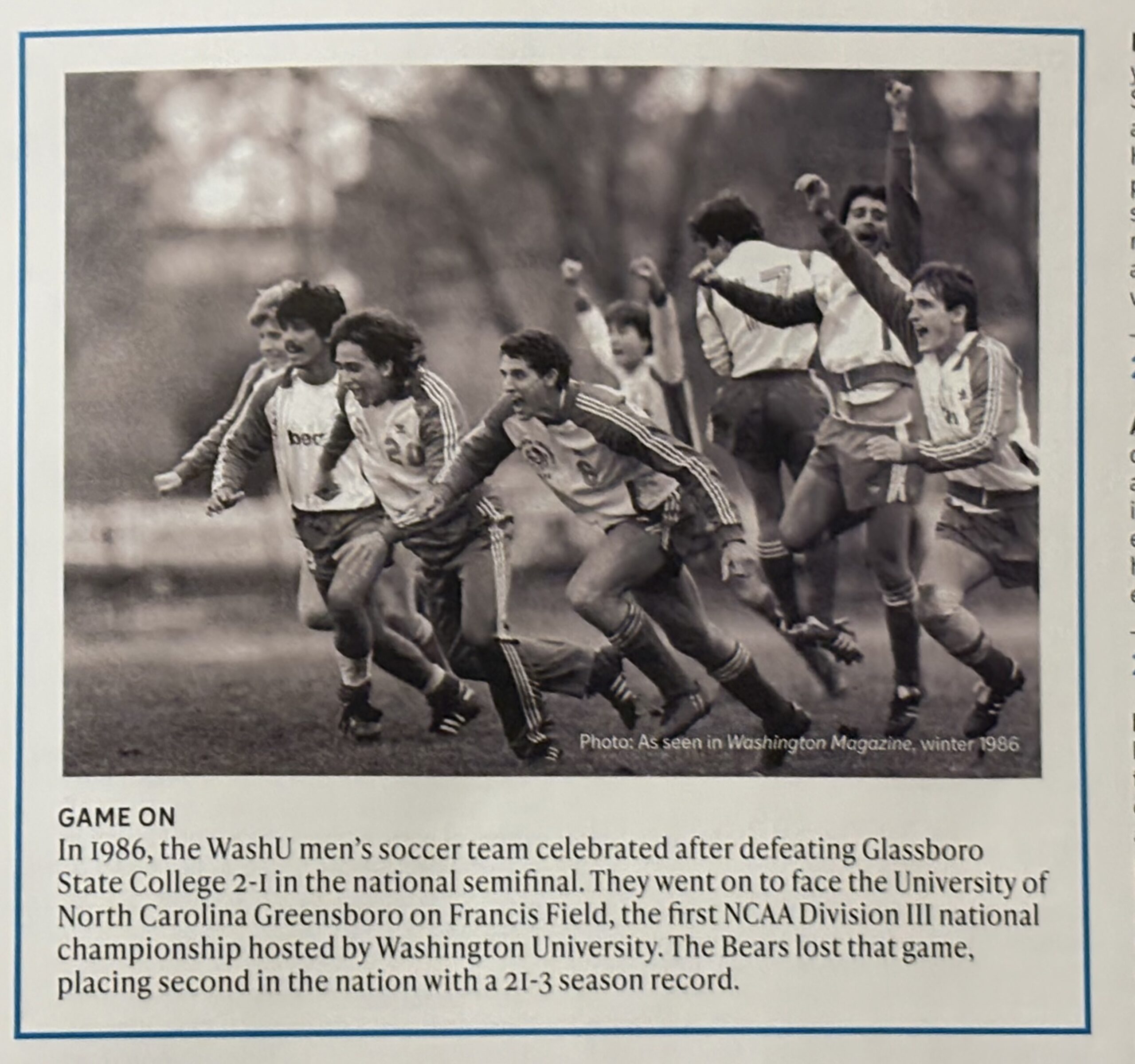
One of these small children was a neighbor to two other boys I babysat in Ladue one summer when I was studying at Washington University in St. Louis. Now that I think of it, the neighbor boy was basically getting a free babysitter out of me, or at least his parents were, but my employers never told me that I could not supervise and entertain the neighbor. This boy could be good company and provide a useful foil played against the two brothers, who were close enough in age to be competitive.
The neighbor boy was significantly younger than the brothers, by the standards of young children, and as such he was at a critical disadvantage in any game of even rudimentary skill we played. I enjoyed enlisting the boys in helping me build an ambitious miniature golf course that snaked throughout every level of the house, into the garage, and out into the backyard. On a good day, between setup, competition, and teardown, the miniature golf project could devour an entire shift, after meals and snacks.
The neighbor boy was especially feeble at playing miniature golf. I did not want to exclude him, but including him was not really doing him any favors either. I will never forget the day, after yet another weak putt in yet another disastrous performance of miniature golf, the neighbor boy suddenly dropped his putter and said with all deadly seriousness, “I’m not very happy now.”
I have thought about that raw, primal report very often in recent months. Every time I experience any national news, I think, “I am not very happy now.” It also seems that certain national leaders have not evolved very far beyond focusing on their own preferences and happiness in the moment than this child.
My dear friend and gal pal now works in early childhood education professionally. At a previous worksite, there was a boy who played too rough with the other children. He did reckless and possibly incipient-sociopath-adjacent things like throw toy trucks at other children with no concern about inflicting pain on them. The trucks were not big, hard, or pointy enough to maim another child, but it certainly hurt to get hit with one. The offending boy was put on a lesson plan to address this troubling behavior.
This was not part of that lesson plan, but one day, one of this boy’s innocent victims picked up a toy truck and threw it right back at him, hitting the initial aggressor pretty square. The boy who liked to throw trucks at his fellows stood in abject terror at the sudden and unwelcome experience of pain. “Hurt,” he said, helplessly. “Hurt.”
I find this relatable. Anytime I see the national news, all I can think is “hurt. Hurt.” And I wish many actors on the national stage would ascend even to this small child’s primitive level of awareness that inflicting pain hurts other people so maybe it is not such a great idea to do it.
This same early childhood educator now works at a new center and has new students. As always happens in her classrooms, one of her students has grown very attached to her in a way that is remarked upon by observers due to its intensity and, at times, amusing level of active fantasy. For example, the boy sometimes relates to his mother the adventures of his day, as if it were just his teacher and himself going through these enriching activities. The group classroom context including other children disappears in his stories.
His mother always picks up the boy right on time or even early, so he always leaves the classroom before his new teacher. However, on one particular day, his teacher was finished with her work day at the center just before the boy’s mother arrived, so the teacher packed up her stuff to go home. The boy looked at her in disbelief and horror, not understanding what he was experiencing.
His teacher explained that it was time for her to go to her home now, and that his mother would be along soon to take him to his home. The boy shook his head in disbelief and dismay. He said, in protest, “But I’m still here.”
That strikes me as the primal voice of abandonment. You thought you were in this thing together, and there was a certain rhythm and rules to the relationship, but now suddenly and with no explanation you are leaving while I am still here.
It is impossible not to feel abandoned these days by many of the institutions we have built together with certain values and expectations. I think primarily of the whiplash from the extortion-esque national attacks around implementing the basic ideas of diversity, inclusion, and equity—which seems the proper chronological order for the three terms in this much-abused list that is typically stated as diversity, equity, and inclusion (or reduced to a three-letter acronym, DEI, that helps prevent one from thinking through what these concepts mean).
You start with diversity, which is different kinds of people all in one place. I would not get too excited about diversity as a stand-alone value. Many horrible workplaces and institution—even antebellum slave plantations—can be diverse. Having different kinds of people all in one place only presents an opportunity to develop positive relationships between them. A diverse institution or society may then evolve to inclusion, which is where all these different kinds of people are allowed to participate fully in the institution or society.
You might even next pursue equity, which is where historical advantages and disadvantages are taken into account in deciding how future opportunities are to be distributed. This introduces the difficult goal of addressing historical patterns of privilege and discrimination in an effort to even out the equality of opportunities. The basic idea here is that we are all equal and, as such, should be equally endowed with certain opportunities, such as (three of my personal favorites) life, liberty, and the pursuit of happiness.
I can hear the voices sounding in my heart and my head. Diversity, inclusion, and the pursuit of equity may be on the run in the 2020s, but I look around this campus, this city, and this country, and I can see that a lot of different kinds of people are still here. I am still here. We are still here. What now?