Has Style Any Substance?
December 2, 2025
Humiliating as this is, I fell for it. In the video ad, a woman of my certain age, aglow with enthusiasm, confided that she had discovered her Fashion Archetype. Before I could stop myself, I clicked the quiz link. What might my Archetype be? Bold? Romantic? Early jumble, I suspected. A little of the tailored, classic, almost severe look my mother stressed. A little from my college years, when we needlepointed belts for boyfriends who wore pink and lime green. Zero from high school’s navy drop-waist pleated jumper. Perhaps too much from my arty bohemian twenties.
Style is an elusive entity. We all want to have one, yet most of us copy trends to get there, which scotches the project altogether. Even my mother, an elegant tomboy who could look put-together on a tennis court, had more a sense of fashion than of style. She stitched up replicas of what she saw Doris Day or Audrey Hepburn wearing in the movies; the thought of exploring what she might want to wear never occurred to her. She did, however, recoil from what was not her style, as do we all. Reading a fawning fashion blurb about someone with a “magpie blend of ’50s and ’60s glamour, ’90s grunge, and aughts sleaze,” I shudder. Good for her; never for me.
The question of “style” haunts writers, and for good reason: The word itself began with the Latin stilus, which is a pointed writing instrument—or, aptly, a stake, upon which one impales one’s head if its brain has not produced sentences of sufficient style. Over time, the word expanded to fashion, and then to any mode of expression that was distinctive. Teaching style, painting style, styles of interior design, styles of typography….
The two that plagued me, though, were the originals. Some years back, when the new owner of the newspaper that employed me remarked to my editor that my style was “facile,” I was furious. “Appearing neat and comprehensive only by ignoring the true complexities of an issue; superficial”—that was the definition I knew, and I spent too many hours digging into stuff to find this off-the-cuff comment fair.
“No, no,” my editor said, hurriedly soothing me. “‘Facile’ can also mean fluent and effortless.” Whatever. I still suspected that Mike Lacey, a tough, red-cheeked Irishman fond of fisticuffs and contrarian polemic, meant I had no balls. Which was literally true, but still. As a reporter, I thought it virtuous to adapt the prose to the subject. I was startled—and both glad and disappointed—when friends knew I had written an unsigned piece. Was a recognizable style good or bad? Tom Wolfe went to the extreme in both categories, and his white suits did so much for his celebrity, I was glad his writing justified the attention. Bartenders who rock a fedora, lawyers who wear a signature piece of jewelry—though I envy their flair, I have never been able to stick with any particular look or locket. I am, after all, facile.
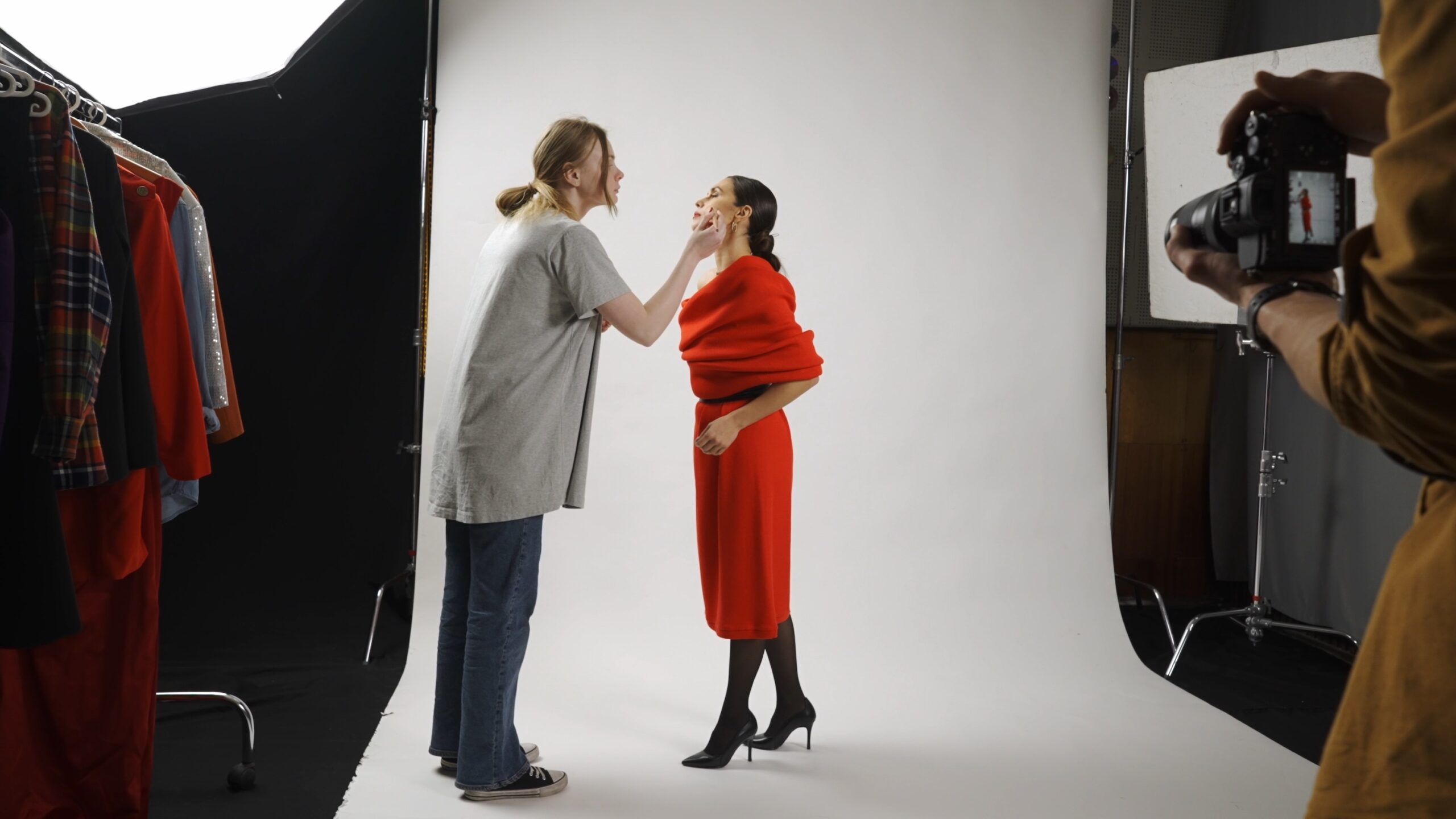
Besides, when I scroll through those Best-Dressed Lists, I remember all too well how that particular sausage is made, even at a little Midwestern city magazine. The desperate scrounging for names, the personal bias that overreaches to flatter a friend, the mean arguments (Her?) and ruthless winnowing. And styling photo shoots? Oh my God. If you have never endured one, you cannot imagine what a persnickety but truly artful process that is, how much effort is required for an image to look effortless. Even with most of the doctoring done post-production, stylists are still dabbing, moistening, rearranging, wielding giant safety pins and props you are sure will be ridiculous until you see the finished product and bow down low.
Such style eludes most of us. Even dictionaries are confused; one tells me that personal style can refer to “taste, social belonging, and individuality,” forgetting that the last two terms contradict each other. An honest mistake, given that influencers of all sorts use “style” to urge conformity. Yet real style is inimitable. It reveals us. I wonder, can it also change us? Would my friend’s parents, whose entire house was done in shades of brown with the drapes closed tight, have been lighter and more accepting if they had lived with light and color? Only if they chose the change, I suspect. If you take a woman who lives in beige and pale blue and dress her in scarlet or flaming orange, with lip gloss to match, she will blink, acknowledge the effect, then go home and change (back). Even those of us who have never managed to create our own style know what feels wrong. We gravitate to the colors and shapes that make us comfortable. Better to explore that zone, ideally at its margins, than to impose some radically different “look” that will only be a costume.
GQ included King Charles III in its recent list of the fifty most stylish people alive. If you did not immediately recognize his photo, you would guess he sold insurance. Quality insurance. Fifty years ago. I say this to my husband, who is a bit of a monarchist, delighted by stability without corruption and fond of the notion that you can insure quality. “That’s how he is supposed to look,” my husband retorts. Come to think of it, the royals who make radical fashion statements tend to wind up dead or banished. Style is self-expression. The obligation of royalty is to place tradition above self.
If you live only for yourself, though, without a plural “we” to express your opinions, you are most certainly allowed a style. As long as you know the difference between your style and being “in style.” Reach deep into the past and pluck out something moth-eaten and colorful, I would tell someone just entering adulthood. Sketch a new idea and have someone sew it for you. Pay attention to what feels like you. If that never changes, you will be lucky. We will all have a way to come to know you—or at least the you that feels safe to display.
But what about those of us who change affinities and moods too often to stick with anything? The only consistent likes and dislikes I can muster are tied to my body’s shape and color, nothing more. Even that stupid online quiz floundered; my answers were scattered across all the categories. I kept talking back to the screen: “Depends on what mood I’m in.” “Depends on the mood of the party.” “Depends on the season.” Thinking back on the vague Archetype I was awarded, a terrible thought comes to me: Were I a sofa, I would be Transitional. I never check “Transitional” when I am shopping online; it will be bland and indeterminate. How depressing, to feel there is not enough pattern to my personality.
But maybe the problem is that we only recognize personality when it is fixed? We love being able to recognize someone: Ah, there’s Tom, in his white suit. There’s Diane Keaton, God rest, in her hat and menswear jacket. And this novel with the cover torn off has to be Hemingway; nobody else writes sentences that terse. We apply style sheets, with their consistent formatting, to our perceptions, just as we do with cruder stereotyping.
If we look beneath the props and quirks, we will find plenty of personalities harder to sum up and label. They take inspiration from a changing succession of influences, moods, and playful ideas. But because we have no way to categorize them, they are unlikely to make a Best Dressed list. And they will never make it into a quiz.