Time is the Book That Lets Us Endure Our Fate
As with our lives, we must savor the enduring, through time.
As with our lives, we must savor the enduring, through time.
If fate gave me a job so well-fitted that when I take time off I do most of what I would do anyway, why bother with vacation?

None of us, including Newt’s owners, really knew how much he got around until he got us all talking about him. People said they had seen him in the night by headlight; he roamed far wider than we thought. One woman had taken him on a five-mile bike ride; Newt was equanimous as always, it seems. The comic surprise that lined the grief was that hundreds of us thought of him as our own.
In my day we said we were “going to go do something.” You felt like seeing a movie, you went to see a movie. People now talking about how they feel weird reading a book alone in a restaurant. Pfffft. I determined to show myself a real good time.
The new documentary ‘Taking Venice,’ directed by Amei Wallach, tells the story of that intrigue with original footage, recent interviews, some recreations, and a snappy jazz-funk soundtrack à la ‘Ocean’s Eleven.’
William H. Gass was, as everyone notes, known more widely as a novelist and essayist than a philosopher, but his literary prose showed analytic philosophy’s interest in language, image, and metaphor, which he made cool.
The reporter was the same height as John Malkovich, and baldheaded, and got a similar pissy look on his face when he was tired. (Malkovich grew up 15 miles from where the reporter grew up.) The reporter felt as if he looked like John Malkovich in that movie where he was walking through the crowd in a station, trying to look normal, but doing it so obviously that Bruce Willis just had to laugh.
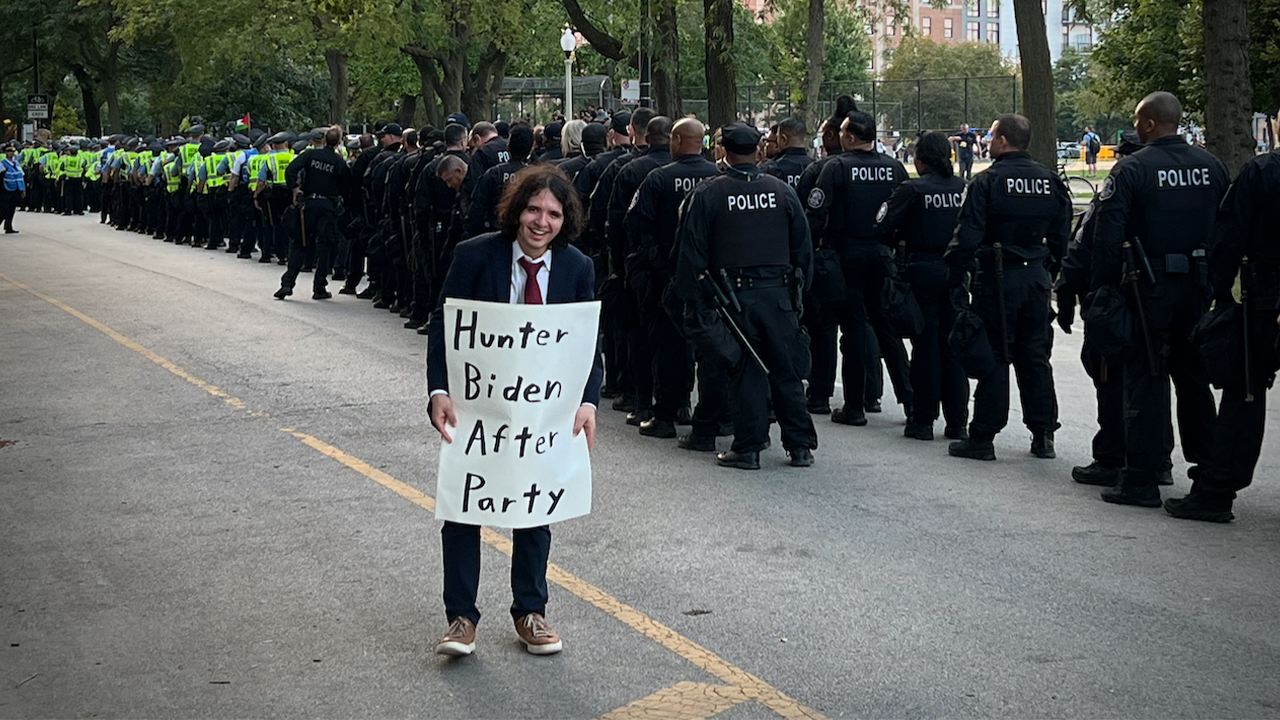
Chicago hosted the Democratic National Convention again in August 2024, and if one were going to connect city and convention in some essential way as Mailer intended, an updated metaphor would be needed. Forty-five-year-old Norman Mailer would have hated the choice of something “corporate,” for its connotations: intangibility, unaccountability, absence, abstraction, hiddenness, hardly a way to know where the heart even sits.
The young man talked another 40 minutes. The bus crawled through rush hour and the security perimeter at the United Center, where Harris would make her speech. There was no bathroom or water on the bus, and no exiting it.
If visual-textual AI literacy is this bad, what (else) will Americans believe about, say, politics, based on social media posts with altered or fictional material? I think we know but pretend not to.
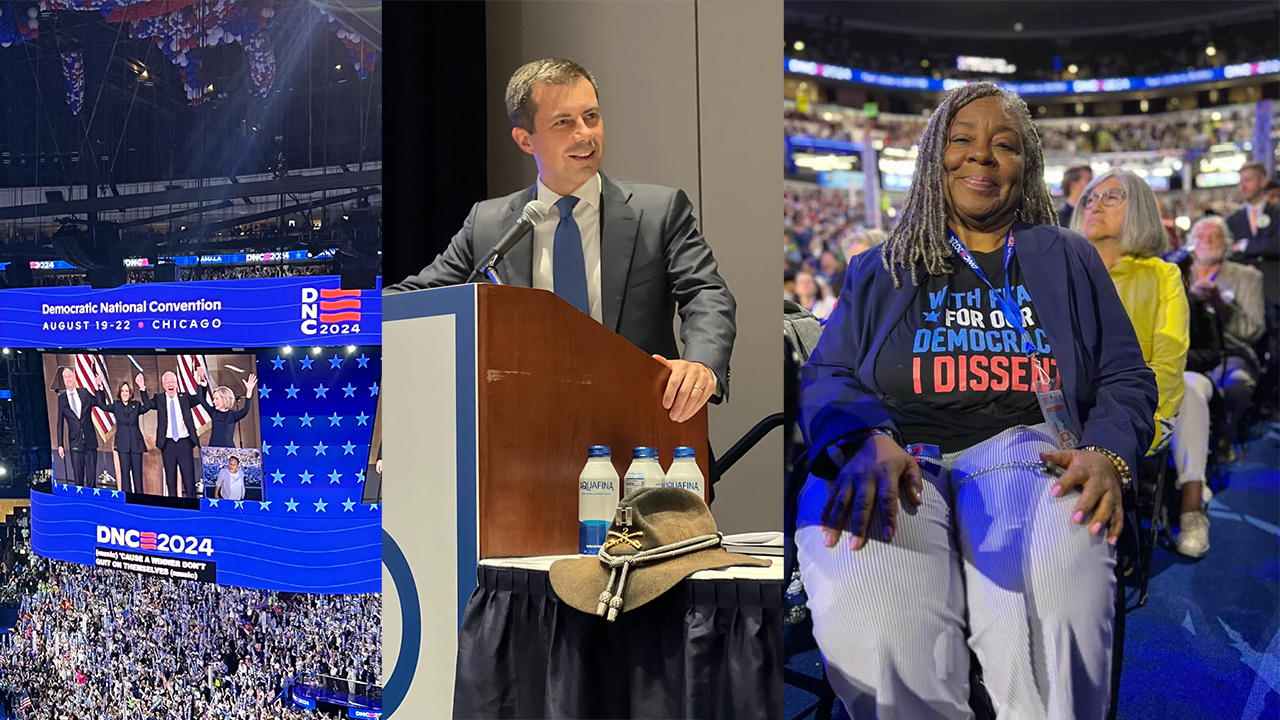
The Common Reader goes to Chicago to check in with the Democratic Party.
Despite political rhetoric slung to get elected, no party can take care of all people and all problems at once, and resources and time are limited. This was tacitly acknowledged by the DNC when they tried to quash the Poverty Council.