“Best in Show” at “Art in Bloom”
March 9, 2026
I had never seen a crowd at the St. Louis Art Museum like the one there last weekend, but then I had not been to Art in Bloom before. SLAM’s Art in Bloom, now in its twentieth year, is the museum’s most popular event, a long weekend of activities centering around the pairing of specific works of art in the galleries with flower arrangements, which reimagine them, by mostly professional floral designers and garden club members. In 2026, there were thirty pairings that included works by Matisse, Max Beckmann, Gerhard Richter, architect Louis Sullivan, and artisans from Teotihuacan, ancient China, and elsewhere. The flowers were towering, diminutive, colorful, muted, and in dozens of species I had never imagined.
An “interdepartmental group” at the museum works for a year on the event. Art is chosen by its location in the museum, accessibility by large groups, and diversity, as well as for a mix of “new on view” and visitor favorites. “Some are chosen to offer creative challenges for the floral designers,” the museum says.
In the fall, there is an open call for floral arrangers who might wish to participate and a blind review of applications. Those chosen face not only the surprise of which piece of art they must work with but also a four-page list of design policies that prioritize the safety of the art and the museum’s visitors. It includes “strict stipulations on containers, water, and materials—for example, stamens must be removed from pollen-heavy flowers; no soil is permitted; no fresh fruits, nuts, seeds, or vegetables of any kind are allowed; and water usage in the galleries is closely monitored and limited. Florists are required to replenish the arrangements each morning of the festival to keep the flowers looking fresh all weekend.”
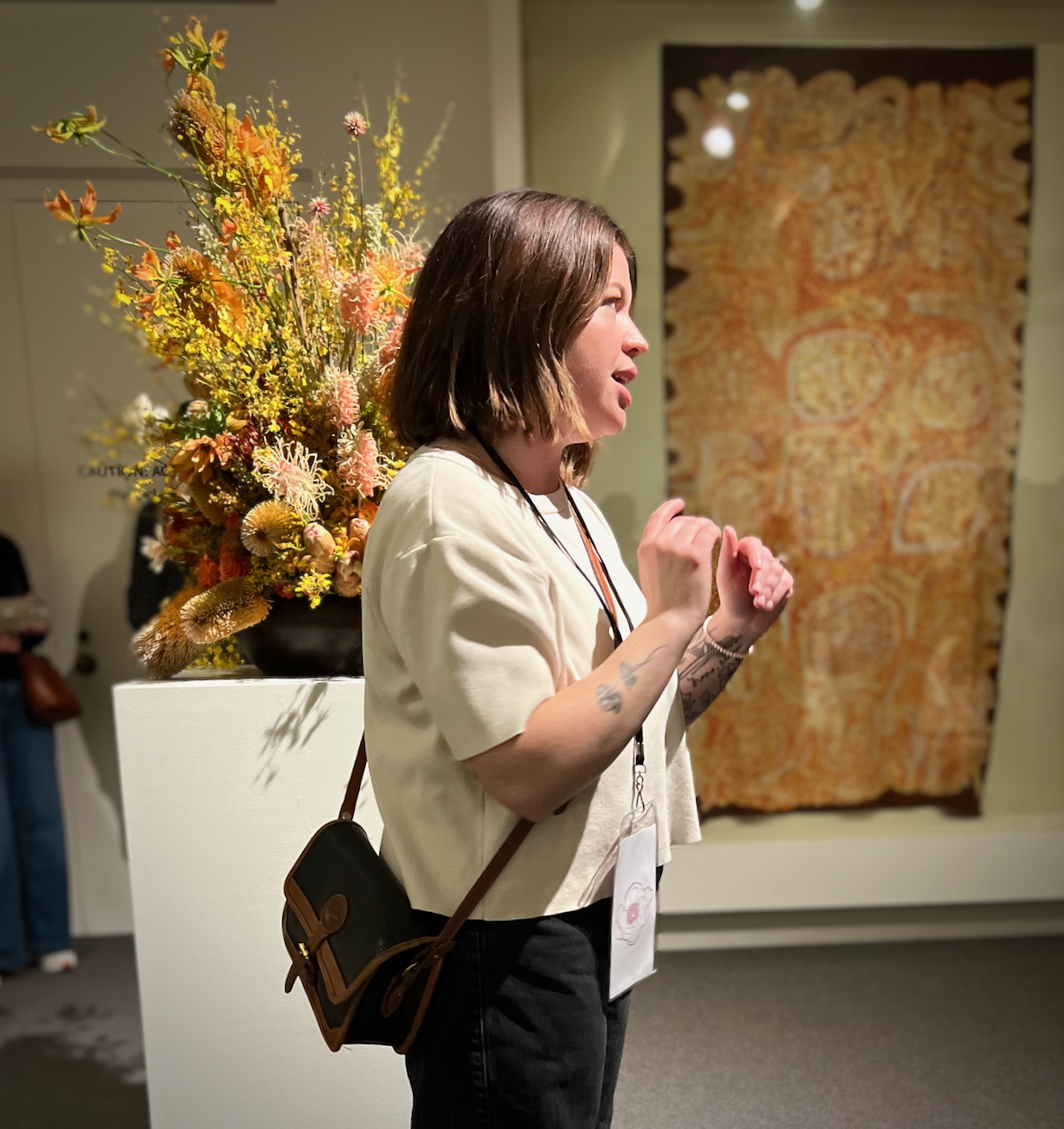
Because the museum was so busy, my son and I entered a different door than we normally use, and by chance walked first through the gallery with the Judges’ Best in Show arrangement, which was paired with an Australian Aboriginal, batik tapestry on silk. Kelsey Caldwell, one of the team at Roses & Mint Florals, a regional wedding and events company, was explaining to the crowd that the batik had been “created by women for pure enjoyment, using the beauty that surrounded them,” and that this was an inspiration to their all-woman business to do the same.
The arrangement used native Australian Banksia, Protea, and Kangaroo Paw; Waxflower connected with the batik’s wax-relief method; Flowering Grevillea, Heliconia, Daffodils, and Oncidium and Phalaenopsis orchids highlighted shapes in the design of the tapestry.
Later, Kelsey told me that chosen florists met at the museum in early January. After orientation, they drew numbers for the order in which they would pick rolled-up scrolls from a basket, telling them the work of art they would reimagine. (A video of Roses & Mint’s pick is on their Instagram.) Kelsey said she and the team (Carly Bohmer, Cynthia Ryan, Sheri Burke, Lois Cassimatis, and Kira Mulvany) experienced “pure delight” at the pairing. But it was important to them not just to design something that “looked like” the art, she said. They wanted the flowers to tell a story and “need[ed] to know the story first,” so they did research in SLAM’s library before beginning their design process.
This was Roses & Mint’s fifth year participating in Art in Bloom, and first Best in Show award. The company says on social media that the event is their “favorite community event of the year,” because it “solidifies that flowers are not simply decorative. They are expressive, narrative, and powerful. They are connection.”
“We create in community with one another. We create with purpose, and we create because the act itself is meaningful.”
“The intersection of art and fresh flowers is a place we’ll delight in, always,” Kelsey Caldwell told me.