
Tales of The Flight Attendant
Page Barrera got her first job as a flight attendant eight years ago, and she says she just might keep it until she retires.
Page Barrera got her first job as a flight attendant eight years ago, and she says she just might keep it until she retires.

Flight, with its intoxicating blend of graceful beauty and adrenalizing daredevilry, was custom-made for cinema, which exults in movement—they are called motion pictures—and delights in vicariously transporting audiences to seemingly unreachable places.

Duane Huelsmann opened federal screening operations at two JFK terminals and one at Raleigh-Durham, then came home to St. Louis to do the same here. As deputy security director for the TSA, he now oversees screening operations across the state of Missouri.
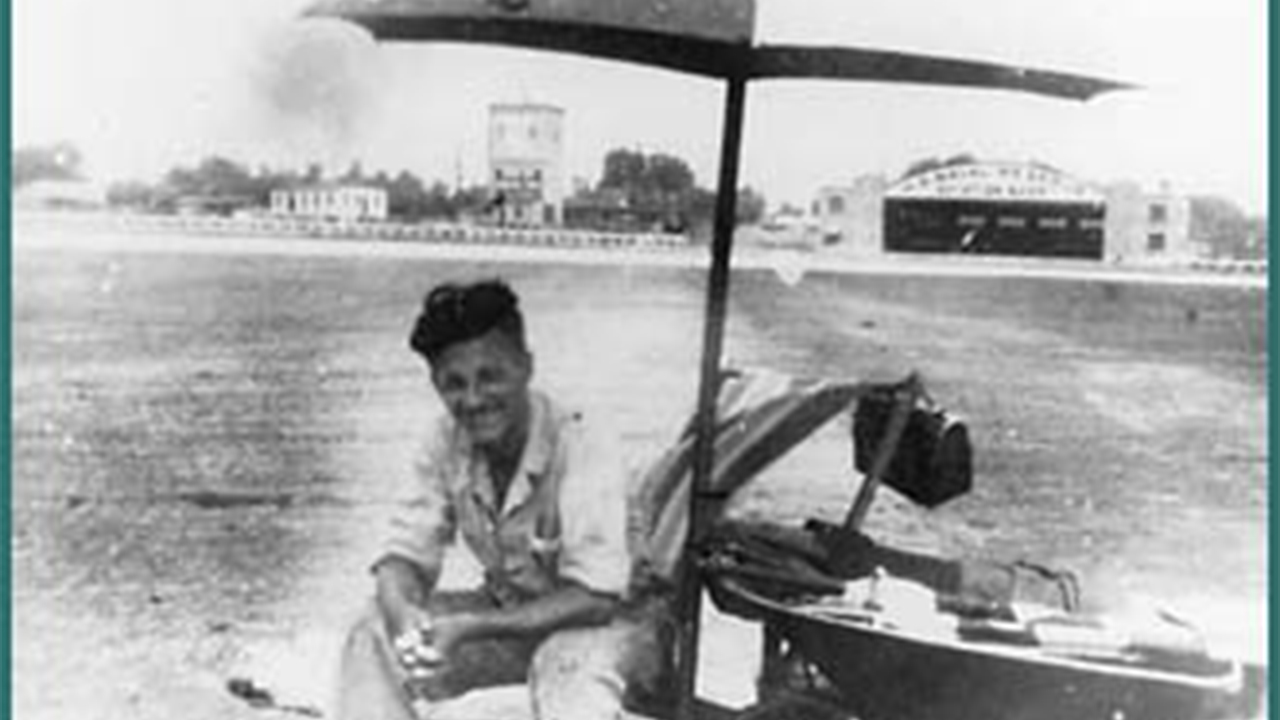
By 1929, though, Archie League had crossed over to safety’s side and taken a job with St. Louis’s nine-year-old airport. Every day, he walked to the end of the Lambert Field runway with a wheelbarrow that held a deck chair, a beach umbrella for summer heat, a notepad, his lunch and, most important, two flags.

She floated, so to speak, on the higher echelons of fame and she had fun. In fact, her second book, written after her solo transatlantic flight, was called The Fun of It.

It was all safe as houses, and twice as fun—an opportunity of a lifetime, and powerful enough an experience that I still have a hard time overlaying it on my childhood dreams of flying in a Jenny. For now, let me say that on this day a complicated little freedom machine called the Jenny—built to aid warfare, at once fragile and powerful in its utility, and as beautiful as a moth in the daylight—transported me through time and space and let me return to people I love.

Before taking charge at Lambert, Rhonda Hamm-Niebruegge held management positions with its later deserters, American Airlines and Trans World Airlines. Thus she has spent most of her career in St. Louis, riding the city’s swings between Midwestern pride and a Midwestern inferiority complex.
Orgasm is a little more specific than laughter, which is definitely contagious. But both topple the boundaries, letting us inside the mind and body of another human being. As we listen, we, too, lose a little of our habitual control.
Luxury matched its dictionary definition: “the state of great comfort and extravagant living.”Now, guided by social media, ads, fashion magazines, and influencers, we grab at the tiniest extravagance.
In the slog of cleaning out the most intimate possessions of someone you loved, you remember who they were, what habits anchored them, what delighted them, what mattered to them.