The Common Reader’s “Lucky 13” From a Troubled, Turbulent 2020
Thirteen of the journal's best essays, "Dispatch" blog posts, and reviews as chosen by staff, internet analytic "pageviews," and defiant relevance.
Thirteen of the journal's best essays, "Dispatch" blog posts, and reviews as chosen by staff, internet analytic "pageviews," and defiant relevance.
Most of us do not live in "The Twilight Zone," where we could literally poison our beloved. Yet we begin a relationship convinced that we can, and should, change them.
Season's readings, and a 2020 roundup, for a year that could never end too soon.

It was Christmas and Bobby was a good boy and we worked hard for our money. All of that must mean something. What is the point of a God and His Son if this hardship does not mean anything, you know, the hardship of this life, the grinding of it cannot be pointless, can it?
When did food move from sustenance, holiday ritual, and occasional treats to a consuming avocation with its own vocabulary, gear, techniques, and media? There are more devotees than most religions can attract, and their rituals are charged with significance.
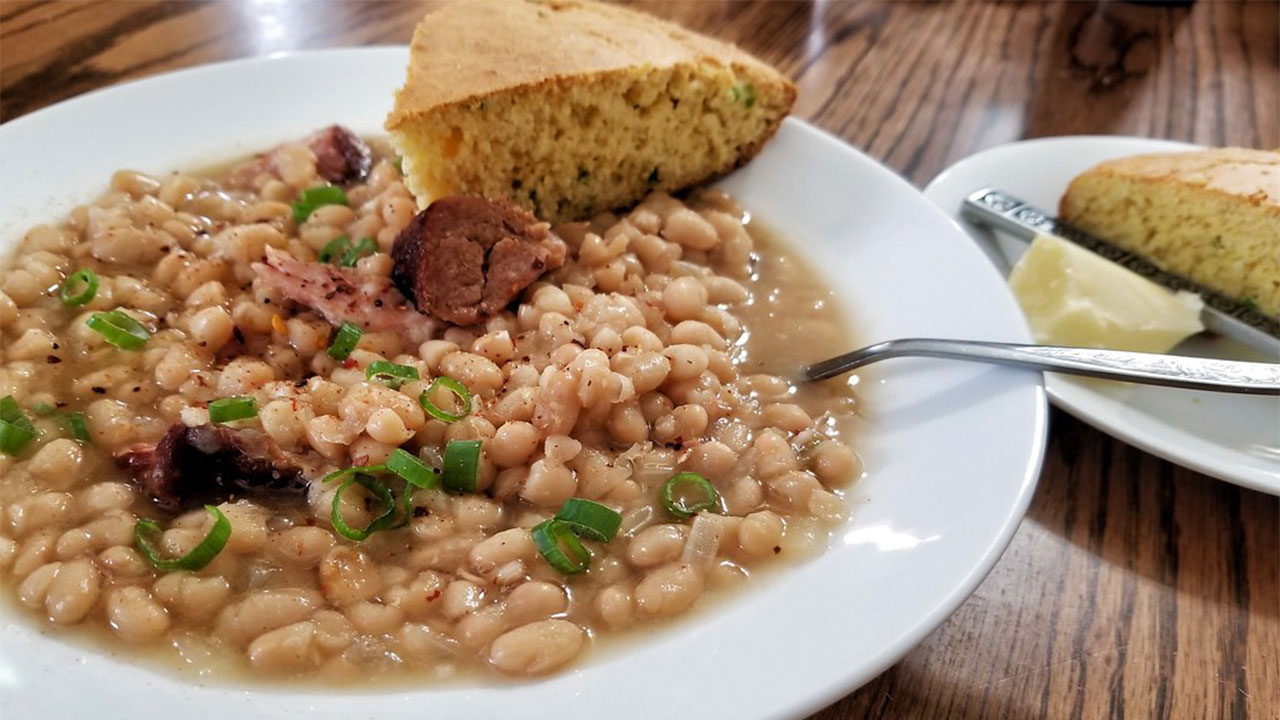
Never pin your financial hopes on a legume. Ham and beans is really about making use of what one already has at hand, driving one’s own good luck by not wasting opportunities, such as a few handfuls of hard beans and the inedible shank of a pig left over from Christmas dinner.

James Monroe is no fawning celebration of its subject, but it comes from a tradition in which authors went through all sorts of intellectual gymnastics to prove that their subjects were responding to the needs of the public rather than their own desires.

This biography does not address the low opinion many had of Gropius in that era, and it probably will not change some widespread perceptions of Gropius and modern architecture that have taken hold since his death in 1969. It does offer a readable and largely sympathetic account of the complicated personal history of this centrally important modern design educator and mentor.
Is it odd that people who make their living with the liquid authority of their voice all chose to pose in front of silent squiggles of ink? It is honest: These glamorous broadcast journalists have always relied on the printed word to background their stories. And the rumor of books’ death is obviously exaggerated, since anyone who wants to look smart still uses them as props.
Curious about the past year’s wrenching experiment, I asked on social: What will you miss when the pandemic is finally over? Some folks spat back “Nothing.” Others gave simple, practical answers: light traffic, a cheap gas bill. What struck me hardest about the replies, though, was how many of us had been living a social life that did not bring us joy.