Buddhaghosa Wants to Dissolve My Rage
June 11, 2026
Anger has never been my go-to. Now and then I fume, even simmer a while. But I recoil from rage; for me, it is far easier to find excuses or let slide.
Until now.
The Trump Administration has undone six decades of complacent serenity. No doubt its supporters would be thrilled to know this. Hear the snarky anger there? It is retaliatory, because so many of them seem to traffic in anger, thrill to its power, strike it and pour gas. Peaceable folk who have always preferred thoughtful debate are flaming into a parallel rage. Frustration is hardening the rhetoric. Comedy, song lyrics, art installations—undercurrents of anger animate them all. Justified, in my opinion. But still rage bait.
In Western society, we accept anger as the inevitable result of paying attention—and the necessary fuel for change. A fifth-century Buddhist scholar is still trying to set us straight. There is no context, he insists, in which anger is good or helpful.
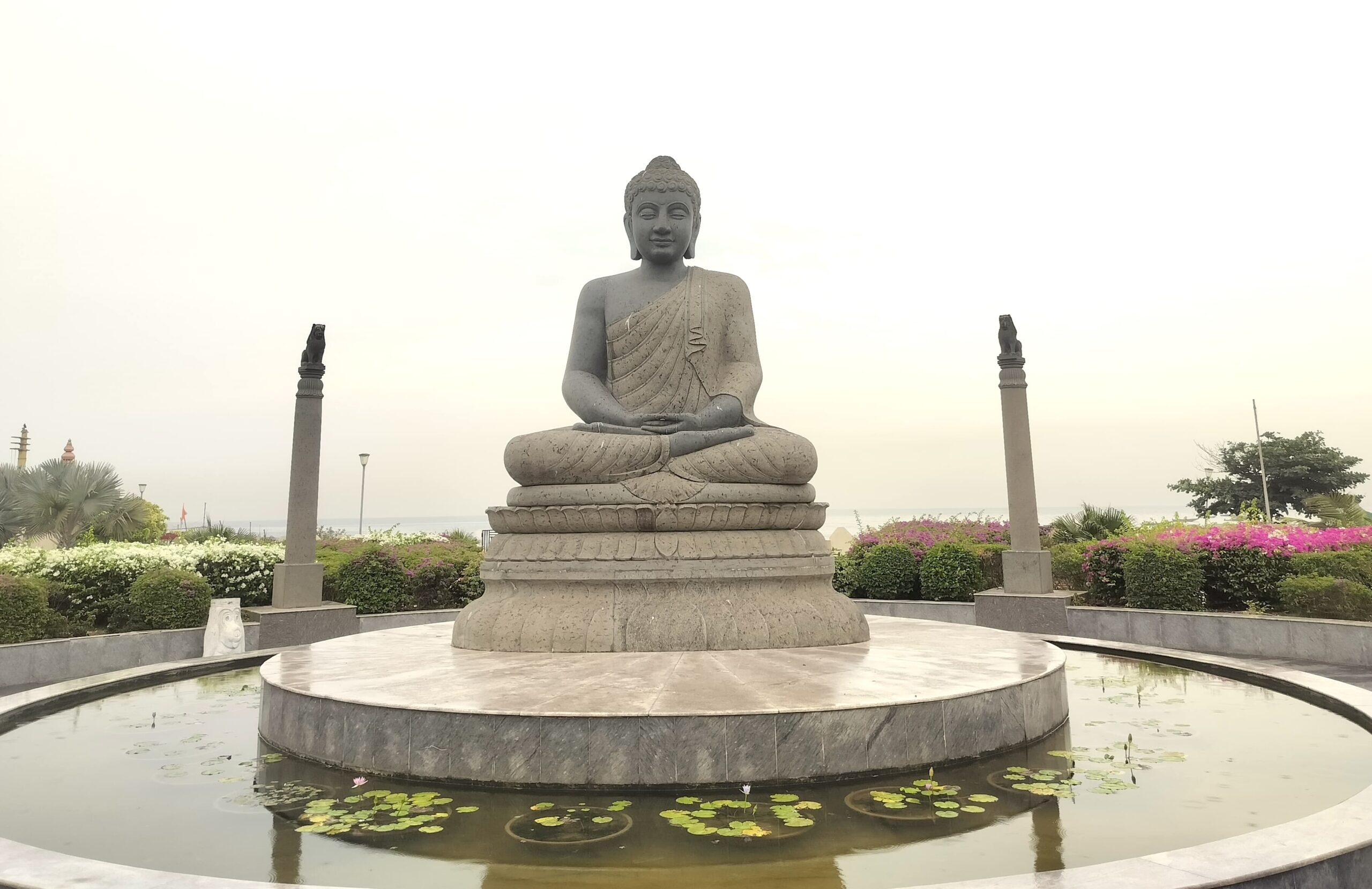
Buddhaghosa spent most of his life in steamy Sri Lanka, painstakingly editing and translating Theravada Buddhism’s famous Pali Canon. Along the way, he also wrote a meditation manual for his fellow monks: The Path of Purification. Perhaps because its wisdom is so unfortunately timely, Maria Heim, a distinguished professor of religion at Amherst College, chose its “Sublime Attitudes” chapter to edit and translate for How to Truly Love: An Ancient Guide to a Life of Kindness.
“When we are consumed with anger, we see the world aslant,” Heim writes in her introduction. “Even when we are angry because of genuine harm done to us or those we love, we are filled with a violent and toxic energy that keeps us from taking in the whole picture.” Act in anger, and we start a cycle of retaliation. Refrain from acting, and we seethe. Bury the anger, and it poisons our spirit, gnaws away our peace of mind.
There is hatred in anger; Buddhists have always known that. The Pali language uses the same word, dosa, for both anger and hate. The remedy, then? Hate’s opposite: love. Which sounds fatuous, but Buddhaghosa is an astute psychologist with a sense of humor, and he knows better than to suggest that this will be easy. Instead, he dangles a lure, pointing out that while anger enslaves us, love frees us—from constriction, distortion, and misery.
To make his case, Buddhaghosa uses the teaching of four “sublime attitudes”: lovingkindness, compassion, sympathetic joy, and equanimity. Four ways we can pay attention to one another. Four ways we can calm and collect our mind.
The first, lovingkindness, is simply friendliness toward others: noticing them, wishing them well-being and happiness. One casualty of choosing sides in our polarized times is that I almost feel wrong, wobbly in my own values and traitorous, when I am friendly to people whose mindset I find abhorrent. This book was a welcome correction, whether I can manage the shift or not.
The second sublime attitude, compassion, means being shaken by someone else’s distress and wishing to remove it. The third, sympathetic joy, fills us with delight and happiness, rather than envy, when someone has luck or success. And finally, there is equanimity, the ability to remain balanced and nonreactive, looking on with impartial calm. Buddhaghosa is well aware that this is the hardest attitude of all, and that it can come only after the first three attitudes are well practiced.
How are we to begin? With ourselves. Feeling lovingkindness toward one’s enemy is a stretch, but it is easy to long for your own happiness. “The idea is to get kindness flowing,” Heim explains, “for a mind full of kindness can’t at the same time hold hate or anger.” She also suspects a deeper psychological insight: if you do not feel lovingkindness for yourself, you will never truly love anyone else. “It may be that much hatred, cruelty, and apathy are, at bottom, the result of self-loathing.”
And so, we soften, become tender with ourselves. Then we move that lovingkindness to those we already love. Then we ease it toward strangers, and finally, toward those who infuriate us. We will need many techniques, Buddhaghosa warns, because we have been habituated to anger and hatred for so long. Some of us, for example, might be helped by thoughts of reincarnation: in a past life, our enemy could have been our sweet mother, rocking and feeding and kissing us. Others might welcome the Buddhist reminder that we are all in constant flux; there is no fixed self, so at whom are we angry?
Ah, I think, but there is enough consistency to keep that fire alive….
Stop right there, Buddaghosa would tell me, and go back to loving those who are easier to love. When your lovingkindness wells up again, shift it to your enemy and let its glow dissolve your anger. If that fails, memorize the Buddha’s observation: By not responding to anger with anger, one wins the hardest battle of all.
In case even the Buddha fails to persuade, Buddhaghosa adds a wily bit of strategy, pointing out that anger makes you angry and throws you off kilter, which gladdens the heart of your enemy!
He holds even more tricks in reserve. Let your mind dwell on a pure, fine quality of the person, until that peaceful acknowledgement dissolves your anger. Still upset? “Okay, let’s grant that the hater has caused suffering in their sphere of influence. But your mind is not part of their domain. Why let them cause suffering there?…. You nurture the anger that eradicates your precious virtue. Who else is that stupid?…. If hostile people set out on an angry and unhelpful path why on earth would you also get angry and follow their lead?”
After the harangue comes a stern reminder: “You are responsible for your actions, just as others are responsible for theirs.” The ominous implication? “You will experience the consequences of any action you perform.”
He quotes the Buddha again: “Like fine dust flung against the wind, evil rebounds to the fool who is hostile to someone who is pure, faultless, and free of hostility.” I am not sure who is the fool in that sentence, which should tell you how far I have not yet come. I prefer the boisterous approach Buddhaghosa takes next: “Hey you, monk! Your Teacher was once an unawakened bodhisatta fulfilling the perfections for four incalculable ages and a hundred thousand eons, and he never once entertained an angry thought even when his adversaries were trying to kill him.”
A high bar—which then softens into wheedling, as he lists the benefits of ridding yourself of anger: “One sleeps comfortably, wakes up with ease, is free of nightmares, is beloved by humans, and is beloved by nonhumans. The gods protect them, neither fire, poison, nor weapon can touch them, their minds can concentrate easily, their complexion becomes bright, they die unconfused….”
They would put our pharmaceutical industry out of business.
Buddhaghosa’s final advice? Give your enemy a present. “A gift has great delicacy in this way,” he says. “Giving tames the untamed…. With generosity and kind words, people incline upward and reach higher.”
Fine, a gift. Something gold, perhaps? Ah, there I go again. I hurry back to the text, which promises that each of the four attitudes will free us from its opposite. Lovingkindness wards off its distant enemy, ill will. Compassion lets us escape cruelty. Sympathetic joy erases discontent. Equanimity protects us from rash passions. All of this seems obvious enough for an Aesop fable. But more sophisticated nuance enters when Buddhaghosa explains that each attitude also has a near enemy, close enough in content to confuse us.
The near enemy of lovingkindness, for example, is passion, which loves with a desire born of our own wants. Rather than selflessly focusing on the other’s well-being and happiness, passion has its own agenda.
Compassion’s near enemy is sorrow. Care deeply about the world’s pain, and you can easily sink into grief. Grief exhausts and undoes us. Compassion longs for other people’s pain to end and gathers the energy to remove it. But compassion need not, should not, destroy joy.
Speaking of which, the near enemy of sympathetic joy is worldly excitement. An exhilarated Woohoo! when your pal wins the lottery. You are giddy because something desirable to all of us has occurred, not because you are selflessly rejoicing at your friend’s joy.
The near enemy of equanimity is unknowing: an indifference rooted in ignorance. As when I am calm because I have decided to ignore the news. Turns out this discipline I was so proud of is a dull, numbed response, a childish refusal to care. True equanimity is alert and aware; it clearly sees causes and conditions yet remains unshaken.
The four sublime attitudes are also called “the immeasurables,” because it is always possible to go deeper, to continue increasing love’s purity, frequency, and reach. If I use Buddaghosa’s techniques successfully, he promises, I will experience the world as more spacious and inhabit it with greater freedom. When we fully absorb the immeasurables, we are reborn into a new level, a realm he describes as heavenly.
“In this way, meditation maps onto cosmology,” Heim explains. “That the minds we make for ourselves here and now give us direct access to transcendent heavenly worlds is one of the most marvelous ideas in Buddhism: we create the minds we want to have in this life and so can experience heaven right here on earth.”
As spacious as that state of being is, it has no room for rage.