And if AI Writes a Good Parable?
March 6, 2026
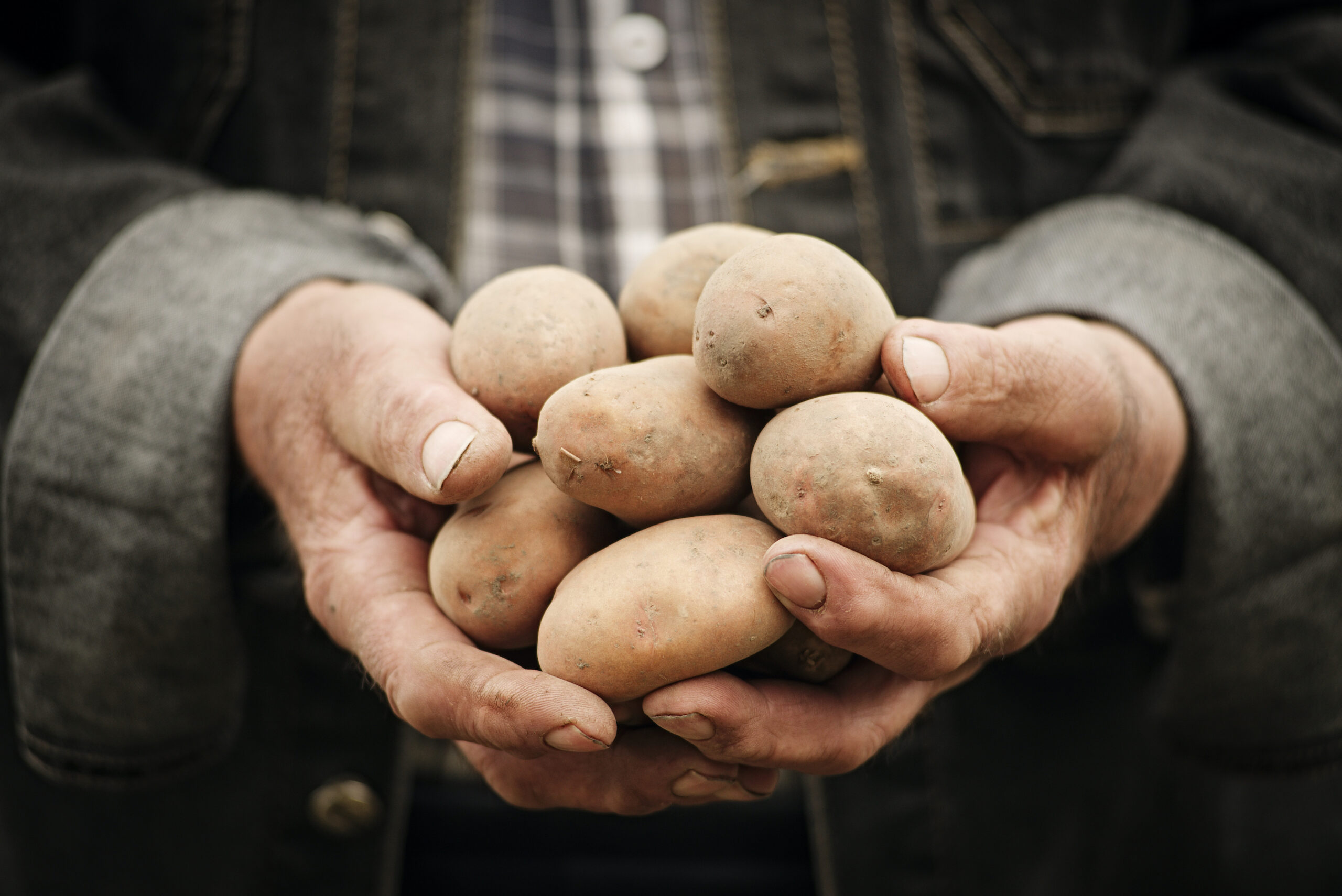
Last week, I read a delightful story on a friend’s Facebook page, full of specific details about a farmer who realized that someone was taking eggs and potatoes from his farm stand without plunking any money into the honor jar. She was hungry and broke—times were increasingly hard—and too proud to seek help. “You see that, Beau?” his neighbor yelled when she skidded off, kicking up gravel. “I told you! You gotta get cameras. Or shut it down. People today? No morals. They’ll bleed you dry.”
Instead of surveilling or shutting down, the farmer started putting out produce out with a sign that said it was damaged (it was not) and free for the taking. The woman took plenty—and now felt able to leave a few bucks in the honor jar. Others did the same, giving whatever they could.
“You’re letting them take advantage of you,” the neighbor warned.
“No, Frank,” the farmer said, “I’m letting them keep their pride.”
In the retelling, this sounds flat and trite, but in the moment, it struck me hard. “True community isn’t about watching your neighbor through a lens,” the farmer ended. “It’s about making sure their plate isn’t empty so they don’t have to steal to fill it.” He was naming, I thought, the decency, generosity, and respect we need to rebuild this country.
Scrolling through the comments, I saw one suggesting that it was only AI slop, another that it was “too long.” I shared it anyway, prefaced with: “Somebody questioned this story’s truth–as we all need to do all the time now. But no matter how it was ‘generated,’ the truth’s already there. Somebody else said it was too long, and nobody would read it. Yet he was taking time to scroll Facebook and attach a sarcastic meme to someone else’s reply…. Me, I hung on to every word.”
Who knows why I felt so defensive of this little story. When a fresh set of critical comments poured in, pointing out that it was obviously slop, and the photo AI-generated too, I felt like a worm. How often have I ranted about how “people” do not check sources or think before they share? Often enough to be humbled now.
Still, I was a worm with a warmed heart. Surely the point was the message, I ventured. Journalist friends slammed back, pointing out that I should be suspicious; that these inspirational homilies were showing up all over the internet (something else I had not realized); and that there were motives more sinister than feel-good life lessons.
Then I knew I was naïve, because I had not fathomed any possible fraud or gain to the posting. “Its primary purpose is to garner social media engagement,” a savvy friend explained, “and have an account that can make money.” Scams might follow.
An investigative reporter did a quick, reflexive search and validated the existence of the person from whose page I had shared the post, but that person was not the author. “The tale of generosity is almost certainly fictional,” my friend wrote, “given the lack of author credit.”
I sighed heavily. He was right; that seemed obvious now. But that story felt like a parable. Did it really matter who wrote it?
“In my value system,” he retorted, “it matters. A lot.”
I guess it should have mattered more to me, too. But there were also friends who reacted as I had: “AI or not, I want to believe because I need the message,” wrote one. Another said the authorship was irrelevant: “It just begs the questions we should all ask ourselves—do I have empathy for our neighbors who are in need and struggling?”
Even another journalist said, “I don’t care if it’s true or not…it’s a good story, well told.” A third volleyed back: “When did truth become irrelevant?”
“When they invented fiction!” he replied. “When somebody realized stories could be told.” I wanted to cheer—until his challenger pointed out that stories should be identified as fiction.
“When we share fake, AI generated stories we become part of the problem of online disinformation,” another woman wrote. “Plus, we are giving clicks and shares to fraudsters. It’s not a good thing to do. Why would you want to knowingly share a fake story?”
Should I admit I had not even felt sure it was fake? I had not seen this little story as disinformation or deception. It was only reminding us to be generous. Where was the gain? If it was definitely fake, surely it was, as someone else noted, “truthful fiction.”
It was also, another friend noted, “a reminder.” A prod “to continue doing good works, large and small, because that’s what our country needs right now. The farmer didn’t stop to ask her political affiliation or her religion, he just saw a neighbor in need and helped her. Getting back to where we all care about our neighbors and work together as a community.”
The woman stole because she was hungry; I grabbed words that might have been stolen because I, too, was hungry. Starved, in fact, for morality. For some common, decent values that did not arrive slicked up with political rhetoric or hawking a service or product. Those in power are so eager for the nation to be Christian that they forget what that would require.
Still, how crazy is it that AI’s deft spinning has me spreading, if not fake news, a fake parable? We warn children about “telling stories” and forget to differentiate between a story and a lie. Which was this? I am most impressed by the people who can hold both possibilities at once; who are smart about sources but still able to sift out virtue worth embracing. We need that double consciousness now, as more and more of the technological snake oil we call “content” is generated with a single prompt rather than a lived experience.
If I were deconstructing the parable for Sunday school, I might tell the kids that we need to be more like the farmer but a little bit like his suspicious neighbor, too. We need a new kind of awareness, openhearted and wary at once. Does this mean we are finally growing up? Or just giving up? I used to think we all needed to trust more readily. But now we can no longer trust even the simplest stories and images to be artisanal, handmade by people. Bits of our culture are coming to us from sources whose origin is hard to trace or fathom, instigated by humans but taking off from there.
Later that week, over coffee, a friend was talking about an entirely different topic, a possible ancestor it would be cool, and inspiring, for her to claim. “I’m lucky that I deal in the creative world,” she said, laughing, “because it doesn’t need to be solid. It’s where it takes me.”
We should, always, ask about provenance. But what also matters is what happens next. What a bot does with our attention—and what we do with its inspiration.