The United States is Not Modern Rome
October 23, 2026
Corruption, political instability, moral decay, and hordes of outsiders flooding across the border. And just like Rome, America will “fall” because of these and other ills. If I have heard this once, I have heard it a thousand times. After decades of studying history and giving thoughtful consideration, I must say that I disagree with the comparison. But I do have a historical parallel for those who want one.
The Hapsburg Monarchy of the nineteenth and early twentieth centuries might offer a glimpse into America’s future. The story is much less compelling than that of ancient Rome, and therefore much less satisfying. It is the story of the many attempts made by politicians and bureaucrats to reconcile the demands of different nationalities, religions, classes, and regions—and the ultimate failure of those attempts.
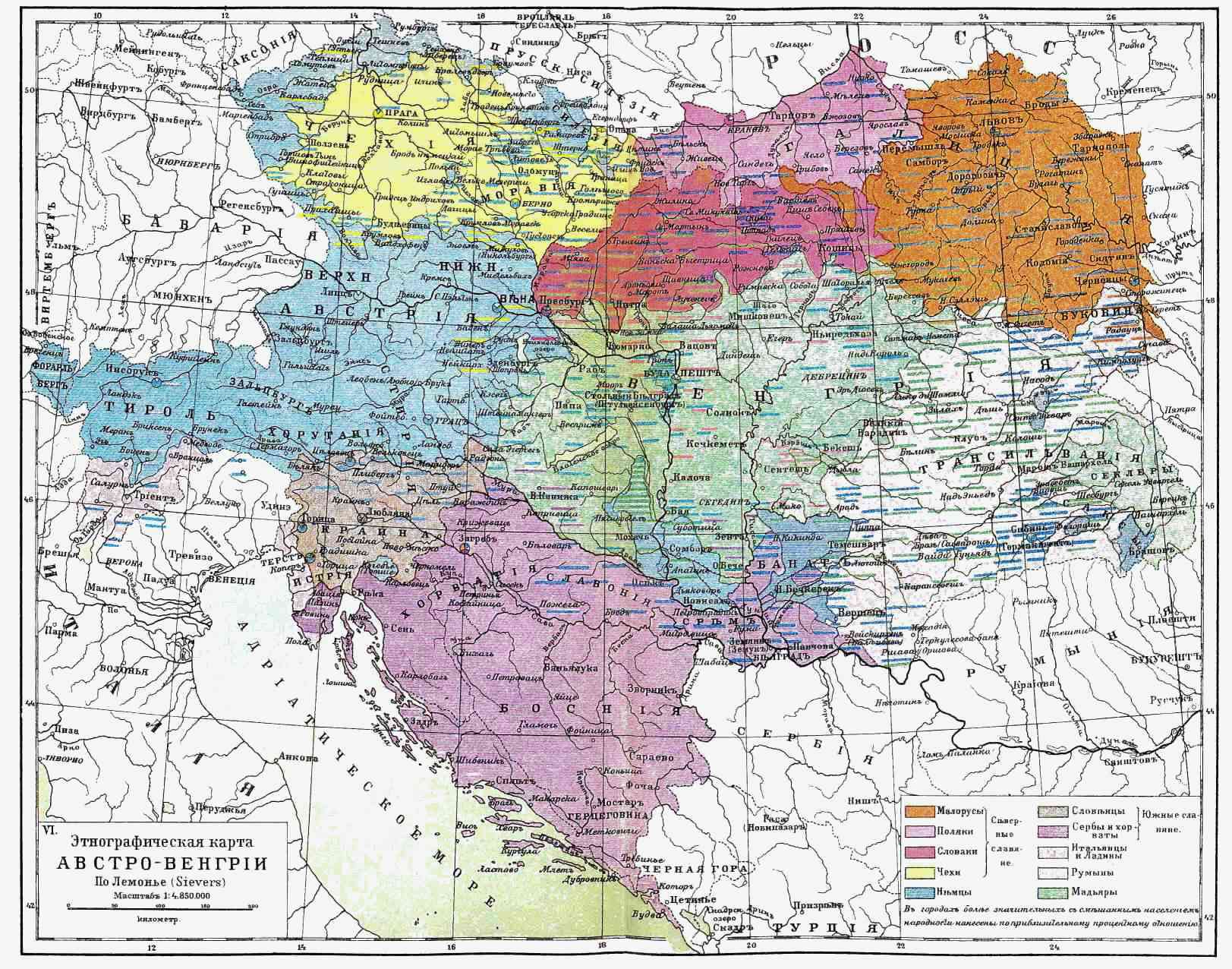
Like the United States, the Hapsburg Monarchy (the Austrian Empire) was diverse. It was composed of Germans, Magyars (Hungarians), Czechs, Slovaks, Poles, Ukrainians, Romanians, Serbs, Croats, Slovenes, and Italians—and those were just the different nationalities. Catholics (both Roman and Uniate), Protestants of different denominations, Orthodox Christians, Jews, and Muslims all lived within the Monarchy. The landed aristocracy and wealthy merchants, bankers, and industrialists dominated the socioeconomic order, while urban factory workers and the rural peasantry stood at the bottom. In between was a middle class that included a predominantly German civil service that administered the Monarchy. Primarily Catholic and wealthy German, Magyar, and Polish leaders dominated the politics of the Monarchy. These leaders had their own, and all too often conflicting, policy interests. Unfortunately for the Hapsburg state, these differences were matched by differences among the many other groups (national, religious, social, economic, regional, and political) who called the Monarchy home.
The Germans, especially the liberal German bureaucrats, favored a highly centralized government that enforced a German vision for the state. They opposed any meaningful concessions to the other national groups, lest the centralized state adopt a federal system. In addition, the liberal German bureaucrats insisted that the Church be subordinate to the state, which offended conservative Catholics of all nationalities as well as the Church authorities. The Magyar leadership wanted a Hungary tied to the rest of the Monarchy only in the person of the emperor. They also demanded continued domination over the Croats, Slovaks, Romanians, and Serbs (the latter two were Orthodox Christians) who lived within the borders of “Great Hungary.” The land-owning Polish aristocracy wanted a special status and complete internal autonomy for the Hapsburg province of Galicia, where they lived and which they dominated. They also wanted to prevent their workers, primarily Ukrainians (who were predominantly either Uniate or Orthodox), from having any real political or economic power.
Various attempts were made to placate each of these groups. A highly centralized administration for the entire Monarchy was created by German politicians and run by German bureaucrats. This ultimately failed, and a form of limited federalism was tried. But this too failed, largely because its base of support consisted primarily of academics and certain politicians. In 1867, agreements were reached with the Magyars and Poles. Hungary became a completely self-governing kingdom tied to the rest of the Monarchy by a common ruler, army, navy, and foreign ministry. The Magyars also retained control over the Croat, Slovak, Serb, and Romanian minorities who lived within the kingdom. However, even this generous agreement failed to satisfy many Magyar leaders, who continued to demand complete independence. Galicia was given considerable autonomy and a special place within the Monarchy, and the Polish landowners kept their political and economic supremacy. The Germans disliked Hungary’s virtual independence and Galicia’s special status. The Magyars disliked Galicia’s special status because it lessened—at least in their minds—their own unique position. The Poles were content with the agreement, but only in the short term. Their ultimate goal was for Galicia to become part of a reborn independent Poland sometime in the future. The aspirations of the minority groups that lived under German, Magyar, and Polish rule were all but ignored.
Attempts, however, were also made to reach an acceptable settlement with the Czechs. Each of these failed. The primary reason for these failures was the Germans’ refusal to share power with the Czechs. The Czech provinces of Bohemia and Moravia also had large German populations. And Germans throughout the Monarchy were adamantly opposed to any power-sharing agreement. This all-too-typical sentiment made meaningful compromises impossible. The end result was the failure to create a common consensus that would have united the various nations, regions, classes, and religions of the Monarchy into a state that they all agreed was indeed their state. Instead, these various groups vied with one another to squeeze as much out of the state for themselves as possible while at the same time denying as much as possible to all the others. It was a zero-sum game in which any gain for one group was automatically seen as a loss for another. Compromise and consensus became increasingly difficult and then nearly impossible.
By 1914, there was little holding the Hapsburg Monarchy together except a common ruler, Emperor Franz Joseph; a common army; and a stable, peaceful Europe. The outbreak of World War One ended that peace and degraded the common army. Many peoples of the Monarchy sided with its enemies: Czechs with the Russians, Italians with the Italians, and Romanians with the Romanians. The end came in 1918, not with a bang but with a whimper. When the new Emperor Charles left Vienna, his only remaining loyal subjects were a few palace servants and a few cadets from the military academy. In the new states of Austria and Hungary, different social, economic, and political factions continued to fight for power and position. The Slovenes and Croats joined a new state with the Serbs that was eventually called Yugoslavia, while Czechs and Slovaks united as Czechoslovakia. These two new multinational, multilinguistic, and multireligious states failed to learn the lessons provided by the Hapsburg Monarchy that they replaced and thus failed to survive the twentieth century.
This is not an anti-multiculturalism rant. It is instead a warning. States composed of different peoples do not fail because they are composed of different peoples. They fail because many of those different peoples refuse to equally share the benefits and the burdens of a common state. Then, because of that refusal, many of the other peoples do not see the value of being a part of that common state. All too often, political leaders use or even create divisions to enhance their own positions among “their” people. Acceptable common policies become impossible because compromise is seen as giving something up and not getting enough in return. Peoples see other peoples not as fellow citizens of a common state, but simply as other peoples. And that is not sustainable over the long term. The various peoples/classes/religions of a state must find ways to at least tolerate one another and to see each other as fellow citizens first and foremost. In an American context, “WE THE PEOPLE” must be more than words on paper if the United States is going to survive well into the future.