‘Sirāt’ Is a Film to Shake Us From the Dreams of a Good Time
By Ben Fulton
March 13, 2026
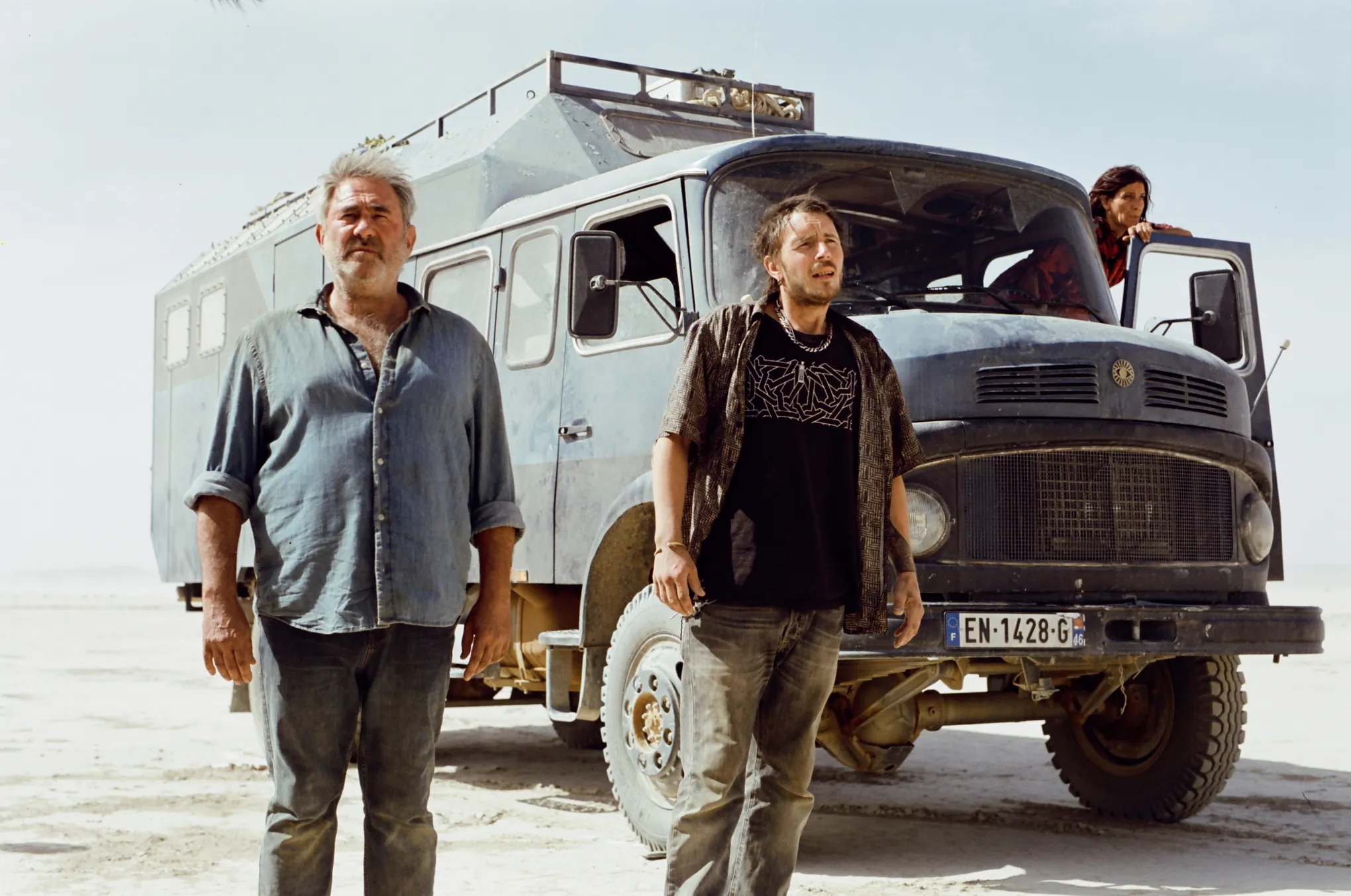
French-born Spanish film director Óliver Laxe’s 2025 film Sirāt introduces viewers to the meaning of its title before introducing the title itself, some thirty minutes after its opening scenes. It holds a great deal of its symbolism close to its vest, with the remainder of its visual clues hovering as obvious as clouds above the vast desert sky in Morocco, where events unfold. And it delivers its shocks in such a slow, yet intermittent and punishing sequence that you cannot help feeling that you, too, are among the cast’s rag-tag crew of ravers who find themselves aligned with a beleaguered father, young son in tow, in search of his wayward daughter.
Sirāt is that rare breed among so-called “art films.” It announces its seriousness upfront, but never taxes your senses or attention because its charm is gritty and compelling enough to pull you in from the start. Part of that charm is its alien atmosphere. The site of French and Spanish ravers churning away to thumping techno at the film’s opening is bound to intrigue anyone unfamiliar with the annual rite of Burning Man, but also versed in the aesthetic of the Mad Max film franchise. The main character Luis, played by Sergi López, in search of his daughter, will tug at the emotions of all but the most heartless parents. As such, Sirāt is an esoteric creation, but also universal to anyone who has experienced personal calamity, a devastating accident, or just withstood a disaster beyond their control.
Laxe’s film is one of five international titles nominated for the 98th Academy Awards, March 15, 2026. Film mavens traditionally focus their attention on the Best Picture nominees, almost always at the expense of the Best International Feature Film category. This always seemed a mistake, as international films arguably comprise the more competitive arena. Maybe you do not take the Academy nominations seriously. Most film critics with an eye to quality over commercial box-office acclaim do not. But there is no argument that nominees distill our limited attention toward worthy films. Sirāt is worth a film maven’s time because it spares no surprises, but also treats our heart and senses with respect.
The film opens with the stacking and assembly of huge loudspeakers to form a sort of horizontal battle line against the brutal natural backdrop of the Moroccan desert. Just as brutal, but beguiling, is the cracking thump and woof of techno music that fills in for the film’s most authentic atmosphere. The ravers before this cathedral of sound do not just rave. They submit themselves to the music’s relentless beat, as if submission to the music will reveal a secret set of beats, or even a key to the rhythm of the universe. Gliding in and out of the crowd is Luis, his young son Esteban (played by Bruno Arjona) in tow, distributing flyers adorned with his daughter’s face in hopes that revelers might recognize her from past raves. When armed conflict from neighboring North African countries bleeds into Morocco, troops break up the party, ravers disperse, and Luis ends up following two cargo vans worth of hippy ravers into jagged, treacherous mountain passes in hopes of finding another rave party where his daughter might be discovered. The road trip becomes a journey, the journey grows harrowing, and the “party”— or to use the language of the film’s characters, “fiesta”—turns into a trial of who can best walk the tightwire of cruel chance.
There are films easily ruined by spoiler details, and then there are films that sound almost like a joke when spoilers are revealed. Sirāt, whose title comes from the Arabic meaning “way,” or “path,” or the perilous connection between paradise and hell, is both. It balances tragedy alongside absurdity, just as it juxtaposes relief at a problem solved with a calamity that is sometimes never far behind.
A key exchange halfway through the film between Luis and a raver named Jade (played by Jade Oukid) approximates, arguably, every philosophical concern that holds Sirāt’s story intact. Holding her fingers across a speaker cone of the cargo van’s stereo system, she explains to Luis how she can alter the beat’s volume and timbre with a bit of pressure, but never alter its tempo or rhythm. The techno music favored by the people of her counter-cultured tribe is not for “listening,” as if such a quaint word is even worthy of respect, but for brute, savage “dancing.” Most of all, she tells Luis, “You never know from the last beat whether another beat will come.”
Laxe’s film respects the ravers as much as it respects the diligent, tireless parent in search of a lost child. But as calamity unfolds in the Moroccan desert, and ostensibly it seems by film’s end the entire world, Sirāt begins to make its loudest voice heard. There is nothing wrong with dancing all drugged out in the desert of life, the film seems to say. A life as brutally short as ours, and up against the infinity of the universe, deserves some fun. But if it is a clear path away from disaster we want, only wisdom won by a devastating loss can show the way forward.