How Frederick Wiseman Harnessed Reality to Give Us Other, Possible Worlds
By Ben Fulton
February 20, 2026
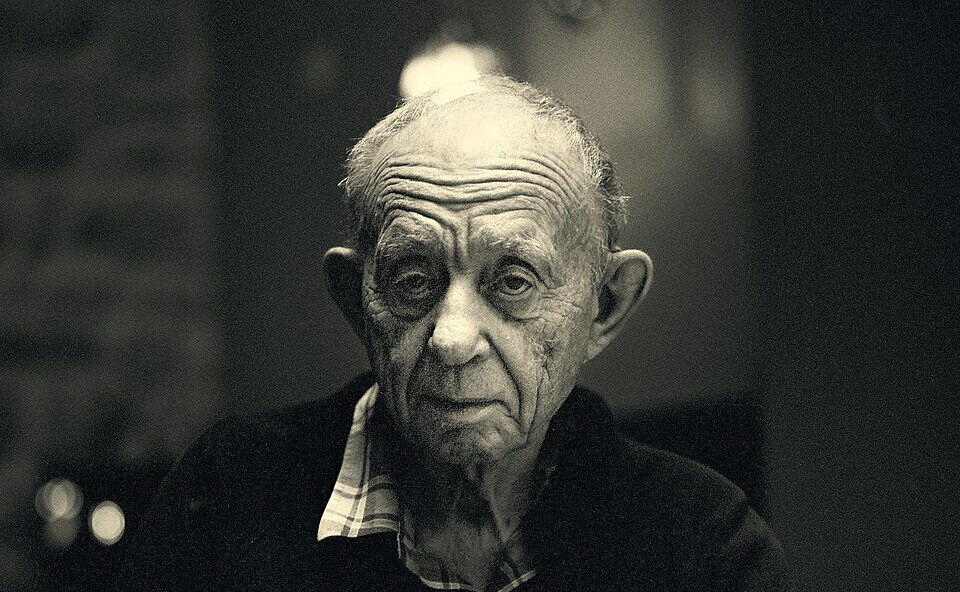
When documentary filmmakers give audiences an excess of reality —brokered in honesty, negotiated in responsibility—they open up whole new worlds. That, in a nutshell, but also so much more, was the working formula of Frederick Wiseman, who died early this week on Feb. 16.
In a paradox that marks so many great minds and artists, though, Wiseman had the courage to admit also that making documentary films through one set of eyes, the director’s, also made his many films subjective by default.
“My view is that these films [I directed] are biased, prejudiced, condensed, compressed, but fair. I think what I do is make movies that are not accurate in any objective sense, but accurate in the sense that I think they’re a fair account of the experience I’ve had in making the movie,” he said to Frank Spotnitz, producer of the TV series The X-Files and The Man in the High Castle, in a lengthy 1991 interview for the now defunct American Film.
Decades before TikTok and other internet visual creations timed below one minute swallowed our attention spans whole, Wiseman was crafting long-form documentaries that flattered anyone’s ability to stay focused for longer than 75 minutes (about the length of his 1968 film High School, which went deep into the bowels of secondary education in the United States) or lavished viewers with epic portrayals of whole institutions (City Hall, released 2020, lasted 300 minutes, with 1975’s Welfare clocking in at 167 minutes). If that sounds too brief, try his 1989 film Near Death, almost six hours of chronic patients at a Boston hospital. Wiseman wanted not just your attention, but perception as a kind of film marathon. As in, decide for yourself whether a high school teacher’s use of Simon & Garfunkel to teach adolescents poetry was useful or not. Does that sound too easy? Decide for yourself whether welfare recipients are deserving or not.
To compound obstacles to enjoying his work, Wiseman’s films were never easy to access. For years, interested film voyeurs could purchase his titles only through Wiseman’s distribution company, Zipporah Films, named after Wiseman’s wife. Only the French, so often the curators of the best in American culture that most Americans were happy to ignore, bothered in 2015 to compile Wiseman’s vast trove of complete documentary films in three, separately issued box sets. Before that, fans had to settle for DVD copies issued in exotic region codes that refused to play in conventional DVD players. Thankfully, his most vital works have since moved in and out of esoteric streaming vendors, eventually settling on (hopefully) a permanent home on kanopy.com.
My own “first Wiseman” film was his 1967 documentary Titicut Follies, about patients housed at Massachusetts’ Bridgewater State Hospital for the criminally insane. True to the format that marked almost all Wiseman’s films, it featured no music score, no narrator, and almost no compositional charm in its editing or camera angles. Instead, over more than 80 minutes we are treated to scenes as cold and clinical as the hospital itself as mentally ill patients are hosed with water in open stalls or, most harrowingly, force fed through the nose. Even film scholars with constitutions too delicate to watch it all the way through will leap at the chance to tell you Titicut Follies’ most distinguished element is that it was banned by the state of Massachusetts all the way up to the year 1991, not for its appalling revelations about how the mentally ill were treated, but for having allegedly invaded the privacy of men housed there. Documentary films are often siloed in the same crusading category as investigative journalism. Yet Wiseman himself was always quick to assert that documentary films had almost no power to change society or its institutions. That the very mental hospital he documented never approached the bar of reform until about 2017, or 50 years after his pioneering film, redeems Wiseman’s assertion. It is also redeemed by the long arc of Wiseman’s film works themselves, in which he increasingly distanced himself from people and institutions in need of reform and more toward immersive, composite portraits of the people who comprise institutions. Both National Gallery, his 2015 exploration of London’s great public art museum, and 2017’s Ex Libris: The New York Public Library take us so deep into the inner workings of both that we are left feeling that we know both London’s great art museum and New York City’s largest public library better than most members of our family. No other filmmaker, documentary or otherwise, makes us feel not just that we were there, but that we are there every time we watch these films. That assessment sounds cliché, but when discussing Wiseman, even terms such as verisimilitude fall short.
The death of almost every talent who pioneered a genre or form comes with inevitable recurring phrases or plot points of the artists’ lives. With Wiseman, we learn from almost every appreciation published since his death that he preferred his works be called “films,” as he disliked the term “documentary.” He called his hand-held camera technique “wobblyscope.” We learn that before discovering the endeavor of film, he studied and even taught law. Most telling of all, we learn that, in order to give his students a taste of law’s real-world consequences, he took them on “field trips” outside the lecture hall to see for themselves the consequences of law on hospitals, prisons, and other government institutions. This was Wiseman’s nod to the fact that while such excursions are typically spent on elementary school children, it is adults who are most in need of having the scales drop from their eyes. As adults, we like to harbor the belief that we have learned more since childhood, when in fact we always have more to learn. Wiseman’s unique oeuvre takes us to those learning places, and with intensity and grace to spare.