The Work That Holds the World Together
By Wen Gao
September 30, 2025
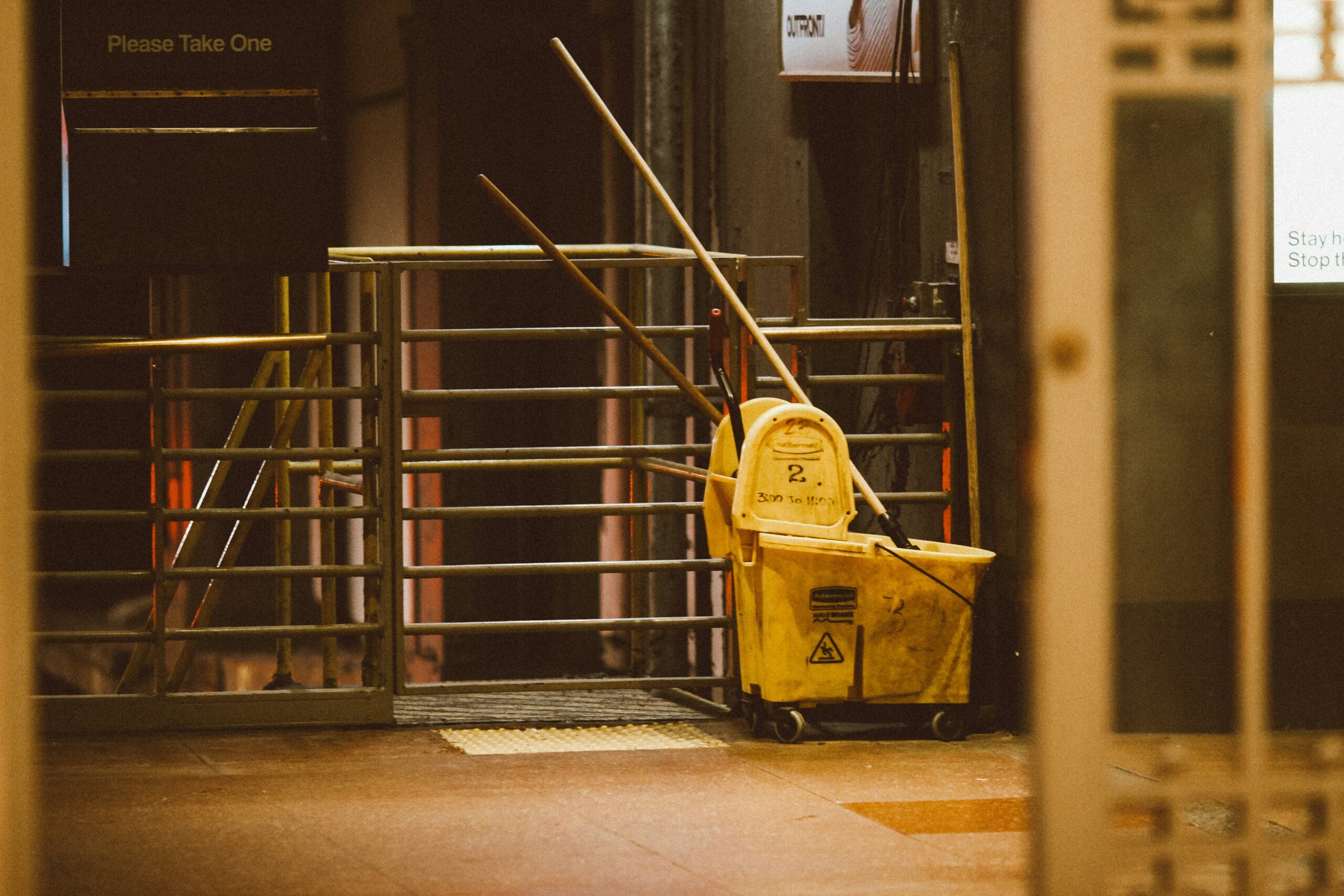
I saw Joe1 almost every day. In the gym lobby, behind his cart; at the classroom door, sweeping; on the stairs, pausing for breath. A familiar figure, though never more than that. Joe, a janitor who works in our university. I did not know his background, his job conditions, or whether he worked for the university or was a contractor.
One Monday morning, I was sick and threw up in the hallway. Ashamed, I froze, wanting to make it right, but not knowing how. Joe appeared, without any anger, and began to clean. It felt as if the mess no longer belonged to me. I kept apologizing, again and again. Joe only said it was part of his job, nothing unusual. He said I needed to sit down and have a rest while waiting for the emergency medical services team. For the first time, I asked his name.
A week later, after a seminar, I carried an extra box lunch back with me. I handed it to him as a gesture of thanks. It was not even something I had bought myself; it was left over from the meeting.
I thought I had changed: I had started talking to Joe, the guy on the margins. I had asked his name and even brought him lunch. For a moment, I patted myself on the back, sure I was not one of the “cold ones.” On the way home, though, something felt off. The lunch was a leftover. My gratitude came secondhand. It was not about money, to be honest. It was that I had not thought of him in advance. My thanks came late and out of convenience, not from real seeing.
After that small accident, I started to pay attention to the people who live just outside the frame of campus life. At 5 a.m., the gym floor is newly mopped; at noon, grounds crews pace the lawns under a hard sun; a restroom is nasty one period and, by the next, reset and bright.
If I were a janitor, I might feel frustrated when people treated the space carelessly. Maybe I would come home and tell my partner that people seemed to forget there was someone behind the clean floors and empty trash cans. Joe simply said, “It is my job.” He showed tolerance for the dirty parts of his work more than I could. Sometimes I think about how easily I get upset when I see an empty drink left on a table, even though the trash can is just a few steps away. I would feel disregarded. I want my own work to be seen. I hope that what I do will not be taken for granted. Maybe that is why Joe’s words move me so deeply. For so long, my comfort and his labor were part of the same world, which I did not fully understand.
Sometimes I think of Joe as a kind of Sisyphus. Every morning, he begins again, pushing against the same mess that will return by nightfall. His work has no final victory, yet it holds the world steady for one more day. Camus wrote that “one must imagine Sisyphus happy.” Maybe Joe, too, finds a quiet contentment in repair: even though nothing stays clean forever, it is still worth cleaning.
Many of these workers have unions, stable pay, even tips from time to time. Their rights might be formally recognized, yet I still wonder if that is the same as being respected. Policy can protect their income, but not necessarily their dignity. Recognition written on paper cannot replace the feeling of being seen.
I have always admired the strong: the ones who could change things, lead others, and leave visible marks on the world. Their power seemed noble, purposeful. In contrast, I thought of those who maintain the world as doing something ordinary, a simple job that anyone could do.
I was tired of my job, of the sameness that filled each day. I wanted movement, purpose, something that felt alive. But now, watching Joe, I wonder if meaning can also be found in staying, in showing up again and again for the same task.
I grew up in an economy of attention. I mistook visibility for worth. If something did not leave a mark, I assumed it left no meaning. But Joe’s work showed me another logic of value: he built meaning by preventing collapse, by restoring what others “damaged,” by keeping the world livable.
I still want to do something that matters. That part of me has not changed. When I went back to school at 28, it was because I wanted to change my life. I was tired of my job, of the sameness that filled each day. I wanted movement, purpose, something that felt alive. But now, watching Joe, I wonder if meaning can also be found in staying, in showing up again and again for the same task. Maybe what makes life meaningful is not how different each day looks, but how we meet what repeats.
I do not know the answer yet. A part of me is still restless, still wants something bigger. But Joe does not rush anywhere. He does not talk about goals or success. He just shows up, does his work, and does it well. There is something steady about that, something I used to overlook. It makes me wonder if a good life is not always about going higher, but about staying close to what is in front of you and doing it with care.
Joe thanked me for the lunch, but I was the one who owed him thanks. I thought I was being kind, but maybe I just wanted to feel kind. The truth is, it was his work, not my gesture, that made my days easier, cleaner, more comfortable. My small act of gratitude did not balance anything; it only reminded me how much I had overlooked. I used to think I was the giver. Now I see I have been receiving all along.
I still work at the gym, and I still see Joe almost every day. But now, when I see him, I also see myself.
1 Name and identifying details changed for privacy.