Villain or Visionary: How Great was Herod?
The murderous monarch of the Book of Matthew was also Rome’s great Jewish client-king.
By Gerald Early
May 30, 2025
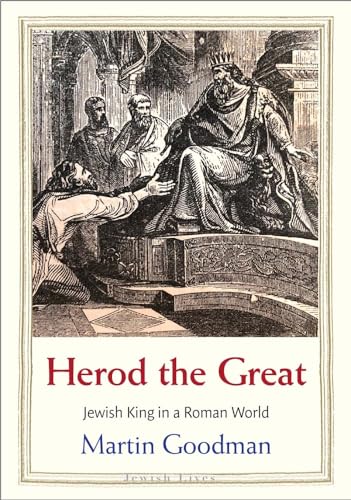
Herod the Great: Jewish King in a Roman World
Hurston’s Herod
In January of this year, I reviewed Zora Neale Hurston’s newly published last novel, Herod the Great, for The Washington Post. There is nothing especially noteworthy in that. I am an expert, or at least pass myself off as such, in African American literature. Zora Neale Hurston was an important Black author and a remarkable woman, colorful, one might say with (no) pun intended. I was, in some respects, lucky to be able to review it for an important newspaper or what was an important paper in some circles. I had always been curious about this book. For years, I had thought that she had never started writing and had just planned to do so before she died. Or that the book had been destroyed in a fire. I misremembered her biography. I was wrong on both counts. She has written but not finished the novel and the manuscript had only been partly destroyed in a fire. But why did she want to write a historical novel about Herod?
At first, novelist/anthropologist Zora Neale Hurston intended to write a history of “the 3,000 years struggle of the Jewish Peoples for democracy and the rights of man,” as she put it to her friend, writer and photographer Carl Van Vechten in a 1945 letter.1 She saw it as a story about the struggle of the Jewish people against the authority of their priestly caste. King Herod the Great was to occupy one chapter of this massive opus. In the outline she submitted to Scribner’s, she wrote that Herod “made friends and matched wits with Pompey, Crassus, Marc Antony, Julius Caesar and Augustus Caesar and never came off second best.”2 And her fascination with Herod, the fangirl crush, became an obsession, and the book project morphed into a biography, a biographical novel, in fact, about Herod himself, as this individual Jew struck her as more interesting than talking about Jews as a collective. A true novelist would feel exactly that way, the imaginative compulsion of the synecdochic. She even hoped that director Cecil B. DeMille might be interested in Herod: “handsome, dashing, a great soldier, a great statesman, a great lover,”3 she exclaimed to her agent.
Why not? The 1950s, when she was working on the book, gave us such films as The Robe (1953), The Ten Commandments (1956), Day of Triumph (1954), Ben-Hur (1959), Solomon and Sheba (1959), David and Bathsheba (1951), Demetrius and the Gladiators (1954), Samson and Delilah (1949), and Slaves of Babylon (1953). Indeed, there was an Italian-French production, Herod the Great, released in 1959, one year before Hurston’s death. The film starred Edmund Purdom, who was the central character in The Egyptian (1954), and who had the task of mouthing Mario Lanza’s tenor singing in The Student Prince (1954), and Sylvia Lopez, who looked and acted exactly like the character she played in Hercules Unchained (1959), the sequel to the highly successful Hercules (1958), that made a star of bodybuilder Steve Reeves. The less said about the cinematic Herod the Great, the better. (A bad but not entirely unwatchable print can be found here.) If Hurston saw it, she was probably heartbroken as it depicted Herod in precisely the way she abhorred: a tyrant and a villain, a characterization where Herod, in the words of Hamlet, “out-Herods Herod.”
Zora Neale Hurston’s fascination with Herod, the fangirl crush, became an obsession, and the book project morphed into a biography, a biographical novel, in fact, about Herod himself, as this individual Jew struck her as more interesting than talking about Jews as a collective.
Hurston worked on the novel for over ten years. For reasons ranging from inadequacies in her manuscript, not so severe as to be insurmountable, to a general lack of interest in a king who, according the Gospel of Matthew, the most blatantly antisemitic of the four, slaughtered babies in his hunt for the newborn Jesus, Hurston’s effort never came close to being published while she was alive. It is good that the novel, whatever its limitations, has been published now.
The quest for the historical Herod
What made reviewing Hurston’s book odd for me was that at the time I was asked to do it I was reading Martin Goodman’s Herod the Great: Jewish King in a Roman World, one of the many volumes comprising Yale University Press’s Jewish Lives Series. I was not reading Goodman’s biography as part of any particular writing project. I did not know that Hurston’s manuscript was being published or that it was even publishable. It was one of life’s strange, minor coincidences that might incline a person to think there is some secret plan guiding everyone’s life.
But Hurston’s interest, and perhaps that of everyone who has ever written about Herod, including Goodman, centers on identity. Goodman asks, “. . . is it right to consider Herod’s a Jewish life? …. How did the cities, palaces, pagan temples, and fortresses on which Herod expended so much of his wealth reflect his life as a Jewish king? Was he even Jewish?” (5)
By his opponents, Herod was called “a half-Jew” because, as Goodman writes, “Herod’s father was an Idumaean and his mother a Nabataean Arab.” (20) Herod had no claims to Judaism on his mother’s side; his Idumaean father was a descendant of the Idumaean people, a distinct group from the Judeans whose border towns, during the Maccabean Revolt, were conquered by the Judas Maccabaeus of the Hasmonaean Dynasty, who purified the Second Temple in Jerusalem in 164 BCE by destroying everything in it that was Greek. Fifty years later, the Judeans, under John Hyrcanus I conquered Idumaean towns. The Idumaeans forcibly converted to Judaism. The Judeans had always hated the Idumaeans and thus did not seem to accept them as authentically Jewish as themselves. As Michael Grant, another Herod biographer, put it, “… the prejudice against the Idumaeans evidently died hard.”4 Herod, although he came from a renowned family, and his father was an accomplished political operator among the Jewish priestly elite, the Hasmonaeans, would not have been considered a likely candidate to become the king of Judea. His Jewish heritage was insufficiently impressive because he was not of priestly descent and could never take on the role of high priest. Of course, there are scholars who dispute all of this: the Idumaeans (Edomites) did not convert through force; the Idumaeans voluntarily aligned themselves with the Judeans. Some scholars believe that Idumaea was never annexed by Judea. Who knows about history that is two thousand years old? I wonder what scholars will be saying about Trump and Biden two thousand years from now.
Hurston admits she was struck by Herod the underdog’s ability to match wits and keep his throne against some of the most powerful figures of his time. But more, for her as a Black American, Herod raised the question of what is a Jew and how did such an assimilated Jew as Herod with his Roman patronage and Hellenistic tendencies, with his murky genealogical background, manage to keep power against the claims of inauthenticity from within his group or the group he claimed as his. A Black person delving into Herod’s life could think of the issue of identity and authenticity, identity and fakery, as related to his or her own situation. What makes me authentic as a Black person? What makes me a fake? How assimilated am I as I speak a White person’s language, likely practice a White person’s religion, was educated in a White person’s values and philosophy, have a fate that is inextricably bound with the Whites among whom I live? Is being Black a kind of ethnic obstinacy expressed chauvinistically? Was Herod passing as a Jew just as Freud said that Moses was? What makes a person a Jew? Goodman notes that Herod made little effort to promote the welfare of diaspora Jews, did not reach out to large Jewish populations of Alexandria or Cyrene and, by the end of his life, was absolutely despised by the Jews in Rome. (109) But after a point in his reign, Herod began to represent himself to the Romans “as a patron of Jews wherever they lived,” as it was a way to make himself important and necessary to Roman leadership. It enhanced his influence with his Roman overlords, as it also enhanced his influence with Jews. (107) It was a leadership trick that Booker T. Washington would use centuries later as a way to exercise power. The thought may even have occurred to Hurston. The fact that Herod was both an outsider and an insider might have made him fascinating to the aging Black writer, fast fading, looking for that one big book to seal her reputation.
Goodman asks, “. . . is it right to consider Herod’s a Jewish life? …. How did the cities, palaces, pagan temples, and fortresses on which Herod expended so much of his wealth reflect his life as a Jewish king? Was he even Jewish?”
Herod’s reputation is that of a cruel tyrant, but he was king of Judea from 40 BCE to 4 BCE, a long reign for the time. He would not have kept power for 37 years merely being cruel, although he was certainly willing to kill to maintain his kingship including a wife (he had several), a mother-in-law, two of his own sons and their uncle, among others. Family members were among the most likely to be plotting against a king’s reign. And under the political rules of the time, Herod was probably right to kill them because they were all plotting to supplant him as king, which meant assassination, not involuntary retirement. He was not unusual in that regard. Politics was a bloody business, wars were unceasing, colonization was common, alliances came and went, palace intrigue was thick, relentless, and lethal. Antipater, Herod’s father’s, was assassinated by a political rival in 43 BCE. Herod took revenge, with the help of Roman general Cassius, and had his father’s assassin murdered while he was on his way to have dinner with Herod. (34) Nothing showed more clearly that Herod had the strong support of Rome than the fact that Rome assisted in Herod’s murder of his father’s murderer. Seven years after his father acquired Roman citizenship, Herod became king of Judea. Cruelty was necessary but insufficient by itself. And Herod was clearly dangerously paranoid, but crushing or co-opting critics was not the result of delusion. One had to be clever too.
Herod was that, as well as a steadfast warrior. He had the air of command. He showed this early in his career when, at the age of twenty-five, Antipater made him governor of Galilee. As Goodman writes, “In Herod’s time this was not an unusual age for an ambitious politician to take on such military and administrative responsibilities … [but] youth and inexperience may provide the most plausible explanation for his ordering the summary execution of some bandits he captured rather than bringing them before a court for trial. Such energetic ruthlessness was popular with the local settled population, but there was an outcry from the mothers of the men he had executed without due legal process.” (29-30) But Hezekiah and the other men Herod killed without court sanction were not necessarily universally viewed as criminals. Hezekiah, Michael Grant suggests, may have been “a nationalistic, underground, political agitator, and in some circles a national hero in the tradition of Judas Maccabaeus himself.”5 One person’s gangster or terrorist is another person’s freedom fighter. When Herod arrived in Jerusalem, summoned by the high priest’s court to face a charge of murder, he “elected to respond with defiance.” Goodman continues, “Abjuring the black mourning attire expected for a defendant, he appeared instead clothed in purple with his hair carefully coiffed. Ominously, he was accompanied by a military posse. The Roman governor of Syria, Sextus, ordered Hyrcanus [Jewish high priest] to acquit Herod of the charge, threatening dire consequences if his wishes were ignored.” (30) They were not and the trial was suspended. Whether Herod was “fronting,” as the kids today would say, scared and insecure beneath it all and hoping no one would call his bluff, or whether he was actually fearless, arrogant, and dared the court to do anything to him and pay the price, this act became the stuff of Herodian legend. By all accounts, Herod was a physical specimen, swaggeringly brave but calculating.
Herod was not unique as a client king of Rome, but his ability to move with the tide of Roman politics and various Roman leaders—from Julius Caesar to Marc Antony to Octavian—in the emergence of imperial Rome, a time of considerable turbulence, reveals a man of no little political acumen. Herod expected the support, military and economic, of Rome but Rome expected Herod to maintain peace within his borders by any means necessary; he was expected to pay tribute to Rome, provide gifts to the emperors, support the emperor with troops to assist Rome’s in its wars, which were tricky for Herod when they were civil wars. But Herod did all of this well. He was an amazingly efficient and harsh fund-raiser (tax collector), a brave, hard-fighting warrior, and a builder of great public works.
A Black person delving into Herod’s life could think of the issue of identity and authenticity, identity and fakery, as related to his or her own situation. What makes me authentic as a Black person? What makes me a fake?
Indeed, Peter Richardson and Amy Marie Fisher in Herod: King of the Jews and Friend of the Romans provide an imaginary list of Herod’s accomplishments during his reign, imaginary not in the sense that Herod did not do them but that they were ever publicly compiled by Herod. They include:
- “When earthquakes, famines, or plagues shook the nation, I provided supplies of grain, tax relief, and support for the elderly and infirm.”
- “I improved social justice with new laws while encouraging observance of Torah.”
- “I secured for Jews living abroad in the Diaspora freedom to worship the God of Israel, to live where they wished, to follow the dietary laws, to keep the Sabbath holy, to send the temple tax to Jerusalem, and to be free from service in Rome’s army.”
- “I rebuilt the walls and defensive towers of Jerusalem for the security of the people, I expanded the city with new streets and houses, and I enhanced the city with palaces and public buildings including a theater and an amphitheater with shops and aqueducts and cisterns.”
- “New cities were built on my instructions at Phaselis near Jericho, Antipatris, Agrippias, Pente Komai, Gaba, Bathyra, and Heshbon. I settled veterans on allotments of land that I paid for from my own resources.”
- “Samaritis was reincorporated into Judea; I rebuilt the city of Samaria and renamed it Sebaste to mark my friendship with Caesar Augustus, providing it with walls, towers, stoas, temples, aqueducts, a theater, and a stadium.”6
On it goes like this for more than three pages. If Herod had composed such a list it could have ended it as T. E. Lawrence ends his opening to Seven Pillars of Wisdom (1926) about launching the Arab revolt: “This I did.”
As Richardson and Fisher note: “The dominant modern portrait [of Herod] has been dark, gloomy, and foreboding: Christian perspectives have taken their cue from the brief account in Matthew 2:16-18, with Herod as the killer of innocent children in Bethlehem, while Jewish approaches see him as an oppressor of his people and the cruel usurper of the legitimate position of the Hasmonean rulers.”7 In this regard, Hurston’s post-World War II novel about Herod can be seen as part of a movement to reinterpret and reimagine Herod. And her place in that movement has been ignored, neglected, or unacknowledged until now with her book’s posthumous publication. That in itself justifies the book’s release far more than the concerns about its unfinished, “broken” condition may speak against it.
Goodman notes that Herod made little effort to promote the welfare of diaspora Jews, did not reach out to large Jewish populations of Alexandria or Cyrene and, by the end of his life, was absolutely despised by the Jews in Rome. But after a point in his reign, Herod began to represent himself to the Romans “as a patron of Jews wherever they lived,” as it was a way to make himself important and necessary to Roman leadership.
Goodman writes, “Herod’s last days were spent in terrible pain. His suffering might be construed as a just penalty for his impiety, but it is unlikely that Herod felt regret for his compromises with the Torah such as donations to pagan temples, which he argued had been necessary to ingratiate himself with his Roman friends, or that he indulged in introspection about the many victims of his rule—the bandits killed without trial in Galilee at the beginning of his career, the rival politicians liquidated at the start of his reign, the drowning of Jonathan Aristobulus, [the teenage claimant to the high priesthood, brother of his wife, Mariamme, and threat to Herod’s reign, who died in a swimming ‘accident’ that made Alexandra, Herod’s mother-in-law, an implacable and ruthless foe], the suppression of demonstrators against the [Olympic] games he had initiated in Jerusalem and the eagle he had set up in the Temple, all those who had been tortured and executed on suspicion of treason. For Herod, these deaths were an inevitable result of statecraft…”(145)
Goodman absolves Herod of the murder of the innocents in the hunt for the baby messiah Jesus. He thinks Herod was likely dead when Jesus was born. (Michael Grant disagrees with the idea that Herod was dead when Jesus was born but views the Massacre of the Innocents as “myth or folk-lore.”8) Goodman also notes that the story is not in any of the other Gospels, not mentioned anywhere else in the New Testament, and is not in Josephus’s account of Herod’s reign, the single most important and complete primary document about Herod’s life. (159-160) Herod probably did not kill the Jewish innocents but what is unsettling about the man, his indomitable will, his swagger, and his ferocious “statecraft,” is that he was probably, at that stage in his life, quite capable of ordering it done.
1 Robert E. Hemenway, Zora Neale Hurston: A Literary Biography, (Urbana: University of Illinois Press, 1980), 343.
2 Ibid, 343.
3 Ibid, 343-344.
4 Michael Grant, Herod the Great, (New York: American Heritage Press, 1971), 21.
5 Ibid, 38.
6 Peter Richardson and Amy Marie Fisher, Herod: King of the Jews and Friend of the Romans, (New York: Routledge, 2nd edition, 2018), 2-3.
7 Ibid, 4.
8 Michael Grant, Herod the Great, 12.