The Populism of Art
Why does art ease our minds? I think because it takes us away from words. It lets us express what words cannot. There is mischief in creation, after all. You are plotting and scheming, not mindlessly obeying.
No one had explained what extras could do (choose their own movements to some extent) or could not do (complain or speak to the big names). No one ever said not to look into a camera lens or try to steal a scene. (Of course I knew better than that.) I did not know that most of the main actors were on site. I did not know what determined the length of workdays, or how often water or pee breaks might happen. I did not know yet the tricks some extras used to get on set when it was not their turn, or how many took leftover meals and crafty snacks home to live on as part of their pay.
Seneca said we each dwell in two communities: the place of our birth, and the community that “is truly great and truly common, in which we look neither to this corner nor to that, but measure the boundaries of our nation by the sun.” I would far rather be a citizen of the world than, by accident of birth, an American. I feel disloyal writing this.
Everything about Mark Twain, Ron Chernow shows us, is writ large, heartbreak and loss a constant redundancy, his explosive fits of anger and condemnation, his repeated lapses into sentimentality, a reiteration of public complaints somehow enabled rather than contradicted by his wondrous humor, a wit at once profound and outrageous. But Twain’s is merely an exaggeration of our existence, its pain and its joy, our past, and our culture, inescapably our Americanness.
Everyone past the age of reason carries an internal model of the nation where they live. The model describes, with varying complexity and correspondence to reality, the landscape, climate, cultures, history, vibes, and human possibilities and dangers, including what that person believes they can be in relation to their country, and their expectations for treatment by the government and fellow citizens. If enough people talk about their overlapping models, you might get political parties, widespread patriotism, rebellion, nationalism, or talk of a zeitgeist.
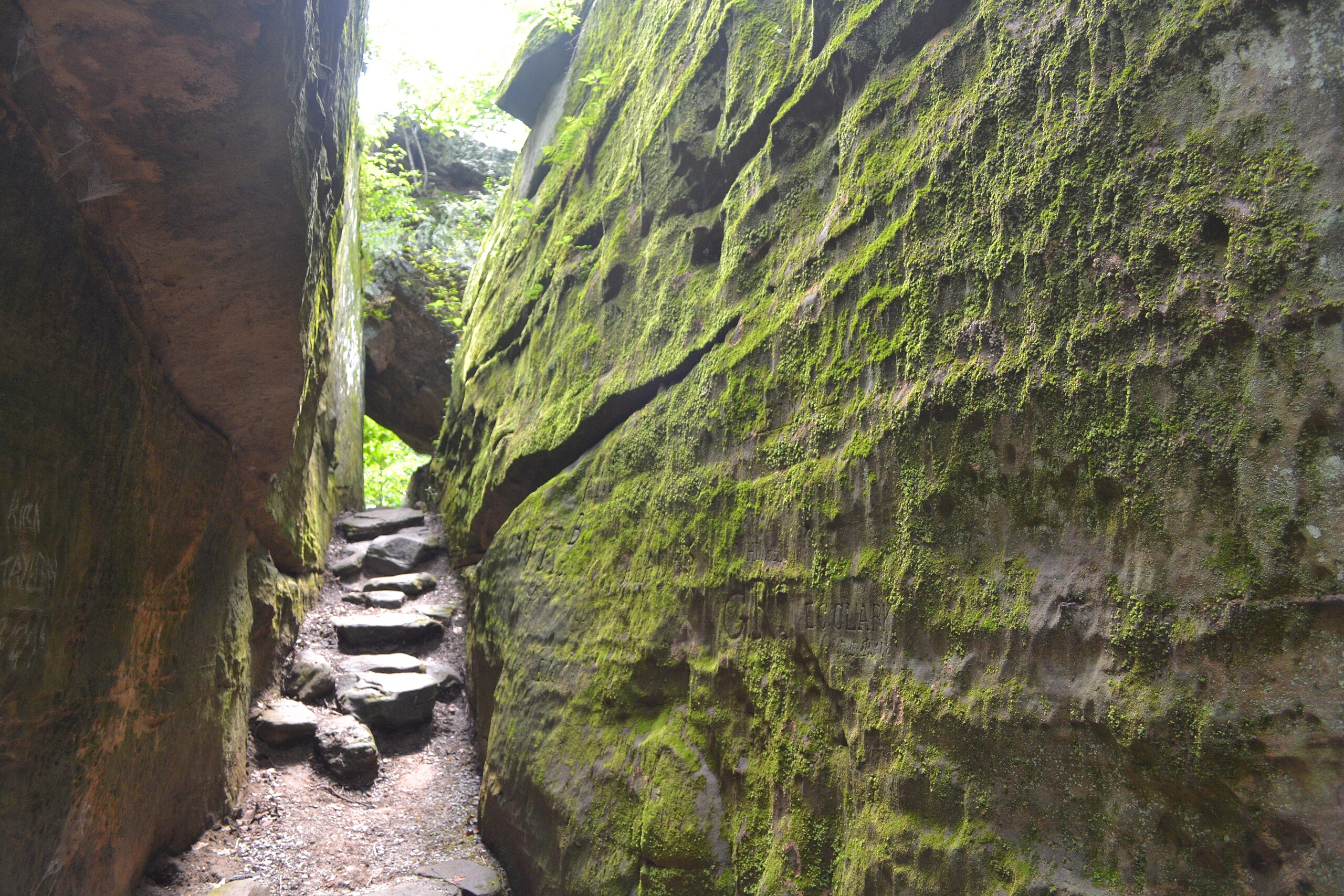
Sam Stearns is a rascal who has seen lively times. Some of those have been while working with other environmentalists—for almost four decades without pay and at significant personal risk—in defense of southeastern Illinois’s Shawnee National Forest, which they hope will become a National Park and the world’s first climate preserve.
Qusay Hussein Al-Mamari gives advice regularly: so much was so hard for him, and he knows how to make it easier for other people. “Whatever you are going through, say, ‘Everything has an ending.’ We have a date to die, our food expires, a building will one day collapse. So whatever situation you’re in, it will have an ending. One day, it will be over. So there is no need to stress about life. And for any person who does not see that life is beautiful, please do not make it hard on other people.”
If someone you love dies, there will be nothing more tenderly, heartbreakingly intimate than their oldest pair of sneakers. Shoes that dashed them through rainstorms, won and lost games, bounced with eager impatience, knotted stubborn in airport security lines. They have been stretched and pounded into a shape no manufacturer ever envisioned. They smell of sweat and earth and freedom.
The project is so daft it is touching: an attempt at nothing less than a comprehensive visual catalog of the entire material culture and socio-familial life of the Vietnamese as they were then, an attempt initiated by a young man in the colonizing machinery meant to drag the Vietnamese into a Western conception of modernity.
Some people (though not many) still read the recommendations and restaurant guides that Sauce and Feast put out. And it may be hard to come by in this city, but in the cracks of the journalism industry, readers can still find restaurant criticism… somewhere.