The Psychological Beatitudes
October 2, 2025

My to-do lists jumble silly trivia, big daunting projects, and everyday chores—and I refuse to sort and prioritize. All those bright new time-management systems that roll out yet another way to triage? They endanger us. The little things are big, I have realized, nearly as big as the biggest. Set up a hierarchy, and that little task at the bottom, the message I keep wanting to send, the whim I want to research, will never get done. I will keep focusing on what is Most Important. Yet how can I know what will, in the end, prove most important?
All the big changes of my life have been shaped by coincidence—casual gestures, spontaneous impulses, small acts of caring, a chance phrase blurted at a significant moment. The world, I was taught, is linear and logical, proceeding along straight lines of cause and effect. Yet the curves and detours and winding back roads turned out to be the real route. I have landed jobs not by résumé but because of something I wrote years earlier, unselfconsciously, for other reasons. Relationships have flowered from a phrase; whole projects have sprung from a casual question.
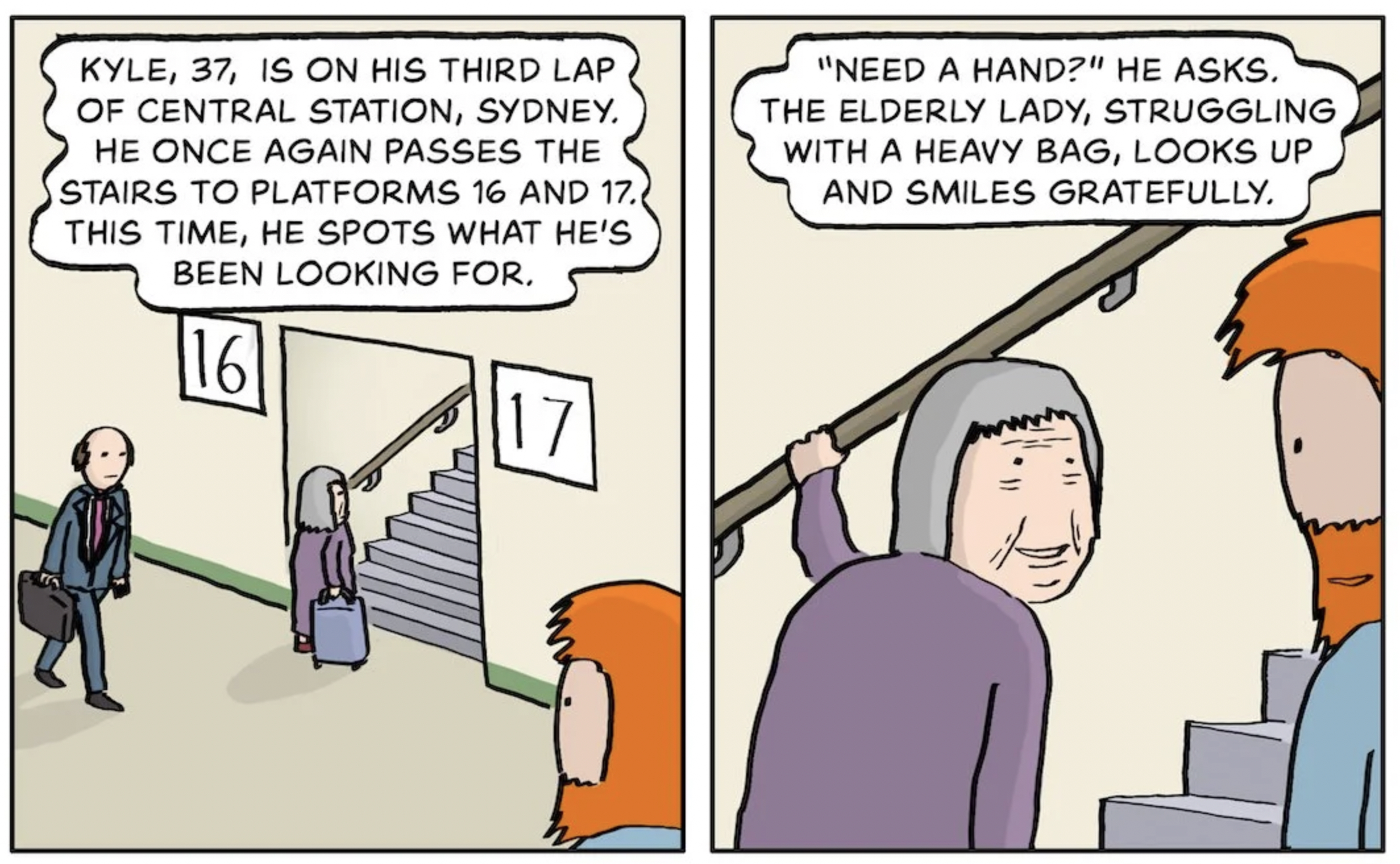
We need a psychological version of the beatitudes: Blessed are the small, humble, trivial acts of everyday life. We help others along, break their fall, by little acts we do not plan or notice. A chance remark to a stranger can stop a suicide. Karma comes in to play, here: once we figure out how to give freely, without expectation, rewards wait at our doorstep the next morning. As long as we did not wait up for them the night before. Once I mentioned this trick of the universe to a friend, and he said, “Exactly! But the minute you even think it—” and we both broke off, laughing. Expect it, and you jinx it.
The converse is even trickier: try too hard, and your efforts will come to naught. Which does not mean you must not try, only that you must not expect. The bigger, more forceful efforts are still necessary, but they do not yield the result. They build a framework in which what is small and easy can work.
In the novel I just finished reading, a slender, unguarded story called The Anthropologists, Ayşegül Savaş’s main character remarks, “My grandmother had a way of confusing perspectives during conversations, the small and the big, the faraway and close by. She might not know the new developments in our lives—that I had received a grant, that we were looking for an apartment to buy—but she would ask what we’d made for dinner the previous day or whether I had taken down my winter clothes already, with the cooling weather.”
Once I would have commiserated, exasperated by elderly relatives’ focus on the mundane. Now I see the grandmother’s point. How can she share in the news of a grant, beyond saying congratulations? How can she, far away, help them find an apartment? During life’s big transitions, nobody can do much for us except say yay or sorry. But the little stuff? That, we hold in common. We experience it together, even at a distance.
This is one reason, it occurs to me, that the death of a beloved dog is so damned hard. Those who have not lived with a dog will privately mock your grief. But that dog has been at your side for years, barking at your doorbell, angling for a bite of your favorite foods, watching your movies flicker, cuddling against you on cold nights. What human being has ever been that intimate a part of your everyday life, that loyal to your slightest shift?
I am thinking about all this when I open—one of those important little tasks I do not let myself put off—Oliver Burkeman’s newsletter, The Imperfectionist. In this one, he quotes advice from a Zen monk, Paul Loomans, about dealing with the world’s big, grim news by spending every day “threading beads onto a string.” Each day’s beads vary: some are big and round and heavy, hand-painted, important. Others are bright but tiny, or pastel and oddly shaped, or wooden…. No matter. One by one, you thread them, paying the same attention to each one. Because “when viewed from the broad perspective of time, all beads are equally important. They’re all pieces of our lives.”
Once equally weighted, every act will benefit from our attention. And karma will send that benefit back to us. When I get too soaked in the world’s problems, I begin to feel helpless, swept along by abstract forces and global trends I have no hope of affecting. “The result,” Burkeman warns, “is an antsy, frustrated and disembodied way of being that somehow never quite makes contact with reality.” I am operating at the wrong level, focusing so hard on what is big and abstract that I am paralyzed, stuck, depressed. But if I move back to the concrete, bead-stringing level at which earlier generations operated, I might volunteer or donate or write a letter to the editor—and then move on, baking a birthday cake or watering the delphiniums or inventing a new device that sucks up microplastics.
That last is not as far-fetched as it sounds: we have Velcro because a hiker noticed how the cockleburs stuck to his dog’s fur; matchsticks because a chemist dragged a stick coated in chemicals across his hearth tile; dry cleaning because a maid spilled kerosene on a tablecloth; cornflakes because the Kellogg brothers left their dough out too long. Who knows what a small act can reveal?
Making the little matter as much as the big pushes us back into our own concrete reality—which has a calming effect. We end each day knowing we have done what we could; honored the tiny details that sustain, and sometimes can change, a life. If we attempt to triage all that, we will be frantic just trying to decide what is most important. Mix in the little stuff, so it does not nag or fall through the cracks, and adrenaline will make sure the big stuff gets done too.
Besides, attending to the small and everyday leaves less room for worry. All this seems obvious, but its simplicity is deceptive. Burkeman brings up the bead game because “adding a bead to a string is something that can only happen here and now — so the image helps me let go of the future, and the anxiety that attends it.” Anxiety spins versions of a future it cannot predict, which is why anxiety can never be assuaged. But if we just keep threading all those different sorts of beads, one at a time, we begin to realize that we are capable of threading any bead that comes our way.
What if, the pessimist in me objects, a bead comes along that is simply too heavy? No problem. By then I will be so used to stringing various sizes and shapes that I will recognize the problem right away—before that string can snap.