The Price of the Athlete and the Roar of the Crowd
By Tolu Daniel
February 28, 2026
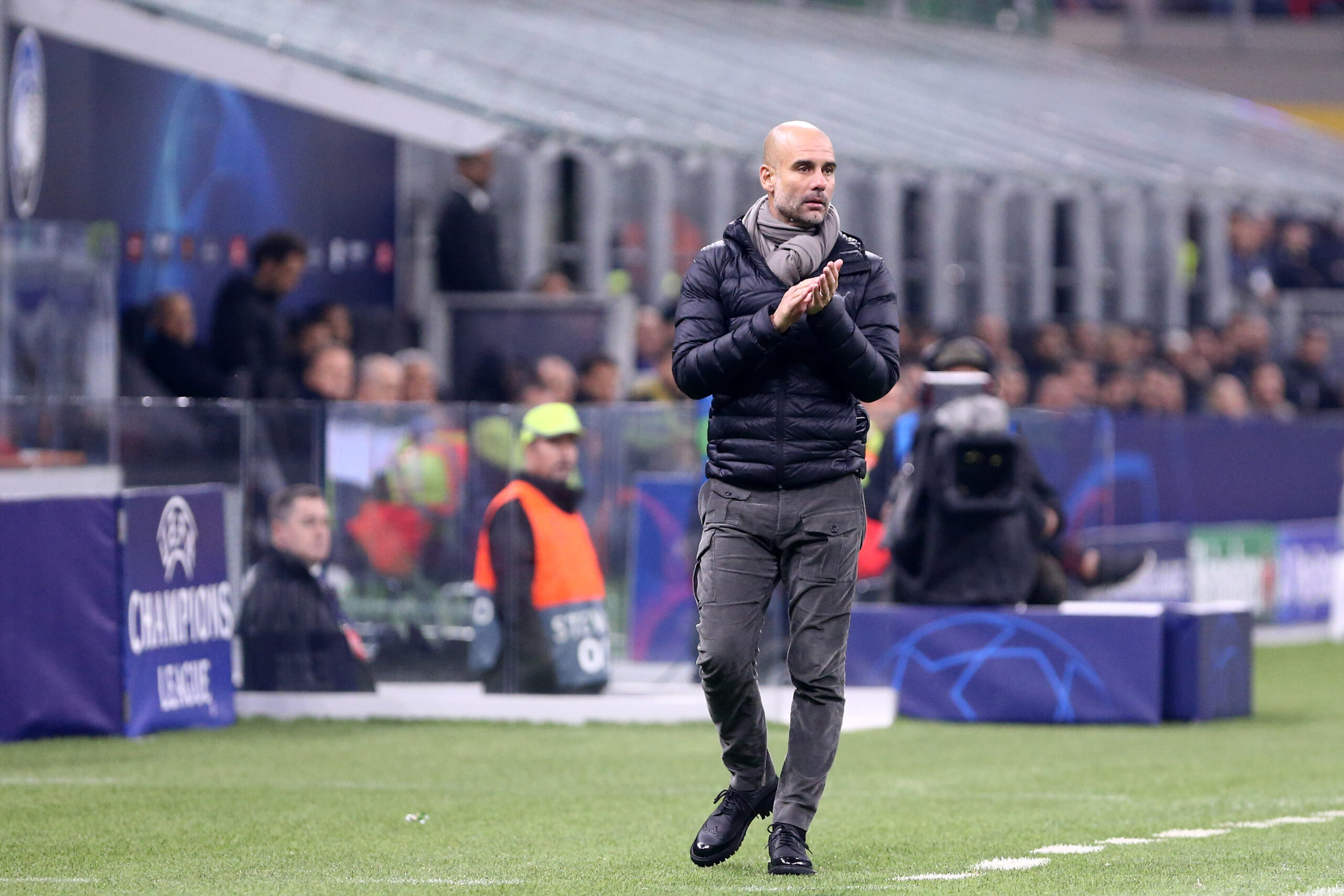
A few weeks ago, Josep “Pep” Guardiola Sala, manager of the English Premier League football club Manchester City, did something managers are not paid to do. In a press conference meant to preview a visit to their archrivals in the league, Liverpool F.C., he let the world in. He spoke about violence unfolding across continents. He spoke about governments asking citizens to deny the evidence of their eyes. The ritual of the conference demanded news about formations, injury updates, a word about the opposition’s pressing structure. Instead, he offered a meditation on truth.
There is always a faint tremor when sport forgets to be only sport. For years, I have been thinking about this tremor. It began in a small conversation. In my early days in the United States while trying to make friends, I asked a classmate if he liked sports. I was seeking common ground in our individual experiences, since he was American and I being fresh off the boat. He looked at me with something like pity and said, “Isn’t sport an invention of the bourgeoisie, a way to sublimate violence so that the social order can continue undisturbed?” He paused briefly and then continued. “Stadiums as pressure valves. Ninety minutes to expend what might otherwise become revolt.”
At the time, I dismissed the claim as clever cynicism. The wording seemed clever enough, but the general thought about this quiet tremor lingered. If sport is a rehearsal for violence, what happens when the script falters? What happens when the player refuses to move as choreographed? What happens when the player realizes that they are more than the choreography? That they too, are human more than the sum of what they do? So, I began collecting moments of refusal as I could find them. Muhammad Ali declining the draft, risking prison rather than lend his body to a war he did not believe in. Colin Kaepernick lowering himself to one knee and discovering that a gesture so slight could rupture an entire league. Mesut Özil speaking about the persecution of Uyghur Muslims and learning that global capital has a long memory and a short temper. Even more recently, Vlad Heraskevych getting disqualified from the ongoing winter Olympics for wearing a helmet with images of people killed in the war in his home country of Ukraine. There are so many others whose names I cannot remember now but each time, the pattern is almost liturgical. The athlete speaks. The institution pauses. Sponsors assess risk. Commentators warn against distraction. The phrase arrives, polished and reasonable: focus on the game. Focus on football. Focus on boxing. Focus on bobsleighing.
The command is portable. It travels easily from the pitch to the lecture hall. In Europe, Black footballers endure racial abuse so routine that it has acquired a rhythm of inevitability. Even in Mexico, the French footballer Allan Saint-Maximin had to request a transfer request from his team, Club American, because of what he described as racial abuses suffered by his children in the school around the city of the club side he played for. Banter, some call it. Only occasionally do sanctions arrive with any weight. Fines are levied. Statements are released. The next weekend, the chants return. The wheel continues its rotation. It is not that the institutions are unaware. It is that they are invested in continuity. Football is an economy before it is a morality play. The English Premier League is broadcast into living rooms across the world, its images lacquered and exported. To admit that the spectacle is stained is to risk the market. So the corrective is managed, diluted, postponed. The irony is that sports has never been apolitical. As historians of sport such as C. L. R. James have shown, the game has long been entangled with empire, labor, race. In Beyond a Boundary (1963), James writes that what do they know of cricket who only cricket know. The sentence hovers over football as well. What do they know of football who only football know. Stadiums were built in industrial cities. Clubs were attached to churches, factories, and neighborhoods. The game carried the scent of class from its inception.
If sport is a rehearsal for violence, what happens when the script falters? What happens when the player refuses to move as choreographed? What happens when the player realizes that they are more than the choreography?
And yet we are asked, repeatedly, to pretend that politics arrives from outside, like bad weather. When the former NFL quarterback, Colin Kaepernick knelt, the protest was quiet enough to be mistaken for prayer. A single knee on grass. No slogans. No megaphones. And still, the reaction was volcanic. He was told to respect the flag, to respect the troops, to respect the sanctity of the sport. The demand was not merely for silence. It was for gratitude. Play the game. Take the salary. Leave the rest to those in charge. The same script unfurled around a former World Cup winner, the German football star, Mesut Özil. Pundits insisted he should concentrate on football. That politics was not his domain. That he was, after all, a guest of the nation whose jersey he wore—a reminder that he was the son of migrants. Beneath the civility of the critique was a reminder: you belong here conditionally.
Guardiola’s recent remarks sit within this lineage. He did not stage a protest. He did not refuse to manage. He simply spoke. Yet even that modest act unsettles the choreography. Managers are expected to be technicians, not witnesses. Their job is to optimize performance, not to comment on the moral weather. Why does the speaking feel transgressive? The sociologist Pierre Bourdieu gives us a language for understanding this discomfort. In Outline of a Theory of Practice (1972) and some of his later essays on cultural production, he describes social life as organized into what he calls fields, structured spaces of positions and power in which agents struggle over legitimacy. Within each field operates a doxa, the realm of what goes without saying because it comes without saying, the assumptions so taken for granted that they rarely appear as assumptions at all. In professional sport, one such assumption is the belief in the game’s autonomy, the conviction that football exists apart from politics, history, or moral dispute. That belief is not neutral. It safeguards the internal logic of the field. To question it is not simply to offer an opinion but to unsettle the very terms by which the field recognizes itself. The response, then, is often defensive. Something similar operates within universities.
I have watched colleagues measure their sentences with care during class discourse. I have heard professors lower their voices when discussing issues that might be construed as controversial. Tenure is supposed to guarantee freedom. In practice, freedom is negotiated. Administrations speak of brand management. Donors have expectations. Boards have sensitivities. The university, like the football club, is an institution with budgets, reputations, and markets. The quiet instruction is familiar: focus on your research. Publish your articles. Teach your classes. Do not wander into that territory.
The irony is painful. The university presents itself as a space of inquiry, a sanctuary for dissent. Yet dissent is often tolerated only when it is decorous, abstract, and safely archived in journals that few outside the field will read. To speak in ways that might trouble the administration, or the state, or powerful benefactors, is to risk subtle consequences. A contract not renewed. A promotion delayed. A grant reconsidered. This is how power often works. Not through overt prohibition, but through atmosphere. A climate of caution. A whisper that says survival requires docility. The temptation to comply is strong. Silence can feel like strategy. If I remain quiet, I tell myself, I can continue my work. I can build my career. I can position myself to effect change later. There is always a later in which courage will be more convenient. But history suggests that silence rarely protects in the way we imagine.
… the pattern is almost liturgical. The athlete speaks. The institution pauses. Sponsors assess risk. Commentators warn against distraction. The phrase arrives, polished and reasonable: focus on the game.
Consider the athletes whose names now circulate as emblems. Muhammad Ali was stripped of his title. Kaepernick has not played in the NFL since his protest in 2016. Özil found himself increasingly isolated until his retirement from the game. In each case, there were commentators who insisted that prudence would have preserved their careers. That they should have waited. That they should have calculated. Perhaps calculation would have extended their tenure. But it would not have altered the structure that made their speech necessary. There is a cruel paradox here. Silence may extend survival. It may protect one’s positionality for a season. But it does not resolve the problem. The structure remains, patient and intact. And sometimes, while one is busy preserving privilege, the structure shifts anyway.
The belief that privilege will insulate is a fragile faith. History is littered with stories of individuals who assumed that their proximity to power would secure them. Then, abruptly, something changes. A regime hardens. A policy is enacted. A scapegoat is needed. The insulation thins. I think of the countless names that surface in moments of crisis. Individuals whose lives are reduced to hashtags, to cautionary tales, to rallying cries. In the final moments of their lives, they were not symbols. They were simply human beings, bewildered by the speed with which the ordinary can become fatal. Begging for a life they never imagined could be lost.
The transformation from person to martyr is almost always retrospective. We narrate their courage. We analyze their significance. We fold them into movements. But in the moment, they were navigating the same calculations as the rest of us. How much can I say. How far can I go. Who will stand with me. This is why Guardiola’s small deviation matters. Not because it will topple governments. Not because it will purify football. But because it interrupts the fiction that sport is sealed off from the world. It reminds us that the pitch is not a vacuum. It is a stage upon which the dramas of race, nation, capital, and power are constantly rehearsed. The same is true of the university. The lecture hall is not outside history. It is shaped by funding structures, immigration policies, political climates. To pretend otherwise is to participate in denial.
What unsettles me is not that institutions resist change. That is their nature. What unsettles me is the consistency of the resistance. The way each generation seems to rediscover the cost of speech. The way the script repeats with minor variations. Athlete speaks. Professor writes. Institution cautions. Public debates. Time passes. The structure endures. And yet, despite this endurance, something accumulates. Each act of refusal leaves a trace. Ali’s stance reshaped how we understand the relationship between Black athletes and the state. Kaepernick’s kneeling seeded a broader conversation about policing and patriotism. Özil’s comments exposed the global entanglement of sport and geopolitics.
Silence can feel like strategy. If I remain quiet, I tell myself, I can continue my work. I can build my career. I can position myself to effect change later. There is always a later in which courage will be more convenient. But history suggests that silence rarely protects in the way we imagine.
Perhaps the question is not whether speech immediately transforms the institution. Perhaps the question is what kind of life is possible without it. To live permanently in calculation is to inhabit a narrowed existence. To weigh every sentence against potential repercussions is to internalize the logic of the institution. One begins to censor oneself preemptively. The silence becomes habitual. There is a cost to that habit. It dulls the moral reflex. It teaches us to look away. Guardiola’s remarks may fade from the news cycle. The match was played and his team Manchester City won. The table was updated. Analysts returned to their analysis of expected goals and defensive lines. But for a brief moment, the press room held something else. An acknowledgment that the world presses in.
Sport, like the university, like any institution, is a human construction. It reflects the fears and desires of those who manage it. To demand that it remain apolitical is to demand that it remain unexamined. What would it mean to refuse that demand consistently? To accept that the game is never only a game. That the lecture is never only a lecture. That silence is not neutrality but a position with consequences. I do not romanticize martyrdom. I do not imagine that everyone must speak at every moment. Courage is unevenly distributed, and the risks are not equal. A tenured professor occupies a different terrain than an adjunct or even a graduate student. A superstar athlete has a different cushion than a rookie on a short contract. But the myth that silence will save us deserves scrutiny.
It may buy time. It may smooth a path. It may protect a salary. Yet it does not guarantee immunity. And when the structures we declined to challenge eventually turn their gaze toward us, we may discover that our quiet offered no shield. In the end, perhaps the most unsettling truth is this: the people whose stories we invoke as lessons were once ordinary, like us. They did not wake intending to become symbols. They responded to what they saw. They refused to deny the evidence of their eyes. The rest of us watch, calculate, and hope that the storm will pass over our particular roof. But storms do not consult our calculations. They arrive according to logics larger than individual prudence. And when they do, the question will not be whether we focused on football, or on our research, or on our career. The question will be whether we recognized the world we were living in, and whether, at some point, we chose to speak.