Keep Singing
December 11, 2025
Driving down the highway, I heard a favorite song come on and opened my mouth wide. The froggy expression was appropriate; only a croak came out. How long had it been since I even tried to sing? At birthday parties, I lip sync; it is the only way for me to stay on key. When the national anthem plays now, I feel too sad to sing along. But I used to sing in all the safe places: the shower, the car, walking the dog at midnight.
Apparently I had better begin again.
Remember how delightful it was, in the bleak months of lockdown, when Italians sang arias from their balconies? Singing is joyful. In movies, the young woman who is about to be raped or murdered is often shown singing in the car as she drives home alone in the dark. That carefree innocence heightens the awfulness of the crime that follows.
Singing is brave, too. We meet with a group of friends every month to eat, drink, and read Shakespeare aloud, and last time, someone new to the group was reading aloud, reached a song, mustered his nerve, and sang it. Which proved delightful, not only because he had taken the risk with people he barely knew but because the singing elevated the experience. Is there anything flatter than reading lyrics aloud as prose? Most sound idiotic. Sung, they gather power.
Shortly after his inauguration, Pope Leo XIV chanted, rather than recite, the noontime prayer. That simple act caused yet another resurgence of affection for Gregorian chant. (Last time, the monks were practically pop stars, which was awkward for them.) Leo’s singing surprised us all, but Elinor Harrison took special note. A singer, dancer, and movement scientist in the philosophy-neuroscience-psychology program here at WashU, she has “spent the past decade developing therapeutic techniques involving singing and dancing to help people with neurological disorders.”
Singing does more than lower stress and jack up our sense of well-being, Harrison knows. It lights up both sides of our brain, and it also shoots more oxygen into our blood, calms our heart rate and blood pressure, shores up our immune system (it can even increase levels of immunoglobulin A), and sets a rhythm for our bodies.
Though singing in the shower is fun—all that resonance from the wet tile—singing is mainly a social act. And when we sing together, extra serotonin, dopamine, and oxytocin wash through our bodies, bonding us to one another. We breathe together, and our brain waves and heart rates sync up. Finally, I begin to see the appeal of all those choirs, glee clubs, and chorales my voice never let me join.
Once, writing about a Waldorf school for little ones, I watched in amazement as the teacher gathered a playground of rowdy, scattered kids into an instant, orderly line simply by starting a song they all began to sing with her. March songs keep grown-up soldiers trudging along in step, too. National anthems do this for entire countries. (Perhaps part of our problem is that ours is virtually unsingable?)
In church, my mom used to harmonize instead of singing in the same key as everybody else, and while it was pretty, it made me nervous. I think I knew then that she was secretly rebelling, and I was still earnest and thoroughly conformist. The group must sing as one! It would be another decade until we both left the church, impatient with the cruelty of its social teachings and the dogmatic expectation of obeisance. “Singing from the same hymnal” is more than a cliché.
Making sounds in unison tells the world we are united; it reminds us of what we share, not where we differ. It also releases enough endorphins to smooth over any doubts. Also, a recent study found that focusing on controlling your rate of breathing—which you must do to sing, especially in unison—activates parts of the brain that are linked to emotion. Making music is irrational in the best sense, letting us feel more than we can explain.
Sarah Wilson is a clinical neuropsychologist at the University of Melbourne, where she is exploring how music creates this sense of unity. Rather than reduce the feeling to neurochemicals, she speaks of “kama muta,” a Sanskrit phrase meaning “moved by love.”
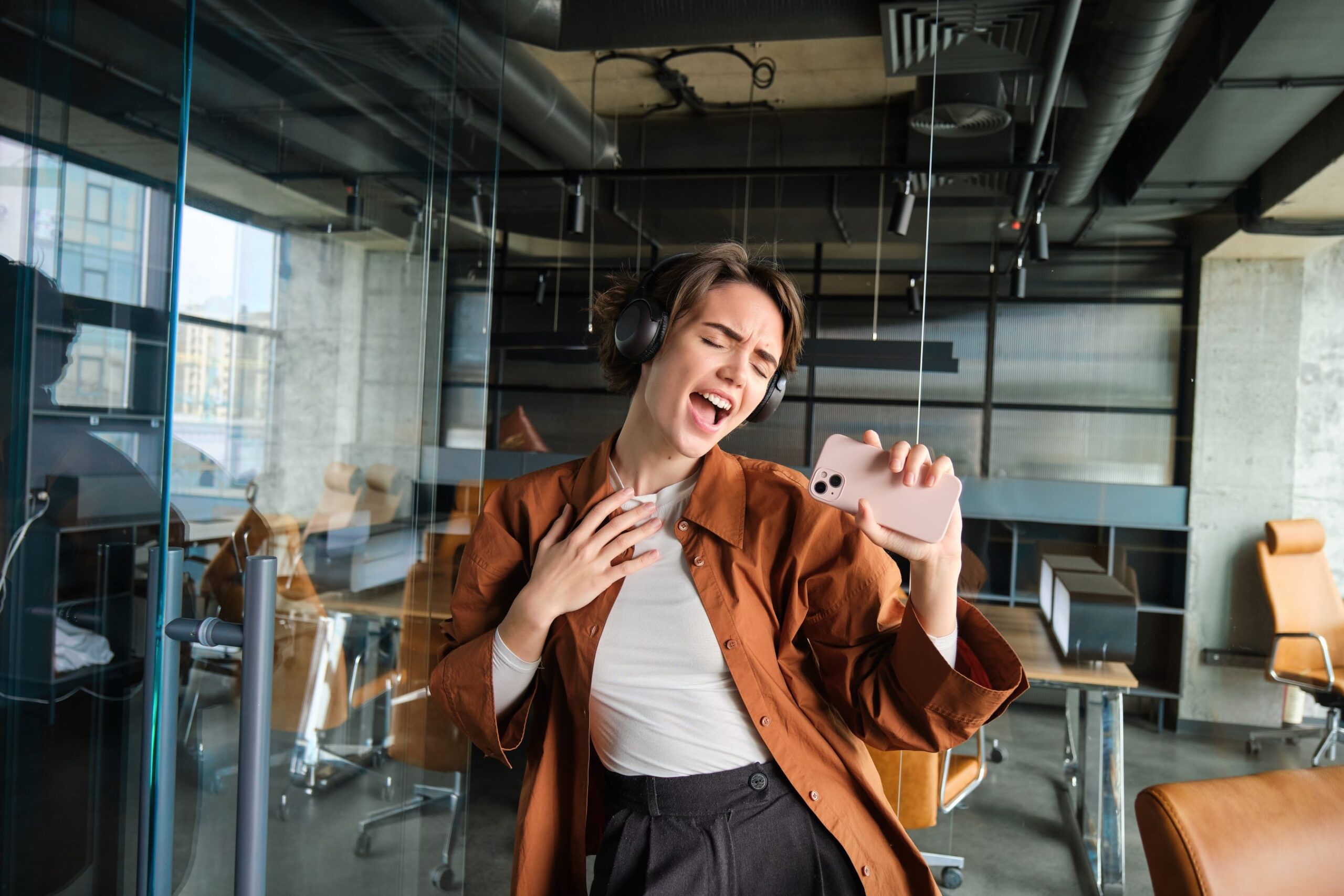
That experience happens less and less; we are a suspicious, cynical lot, these days. I suspect we all sing less often. When I turned to Shutterstock to find an image for this post, it took forever. Christmas carolers! I thought, but the best shot of carolers was AI generated; the singers in the few real shots looked cold and dutiful. An only child, I so envied those big musical families who gathered ’round the piano—but the keyword “singalong” yielded nothing. The rest of the images were karaoke, or church, or obviously staged Happy Family Singing in Car and Happy Couple Singing in the Kitchen.
I did notice something, though. People look happy when they sing. In most of the images, the singers could have been smiling or laughing just as easily. You can look agonized if you sing something loud and intense, but you cannot look sad. Frowning and pouting move our lips into places from which it is impossible to sing.
Which should have been a clue.