Dreamworks: Manipulating Our Deepest Secrets
April 8, 2026
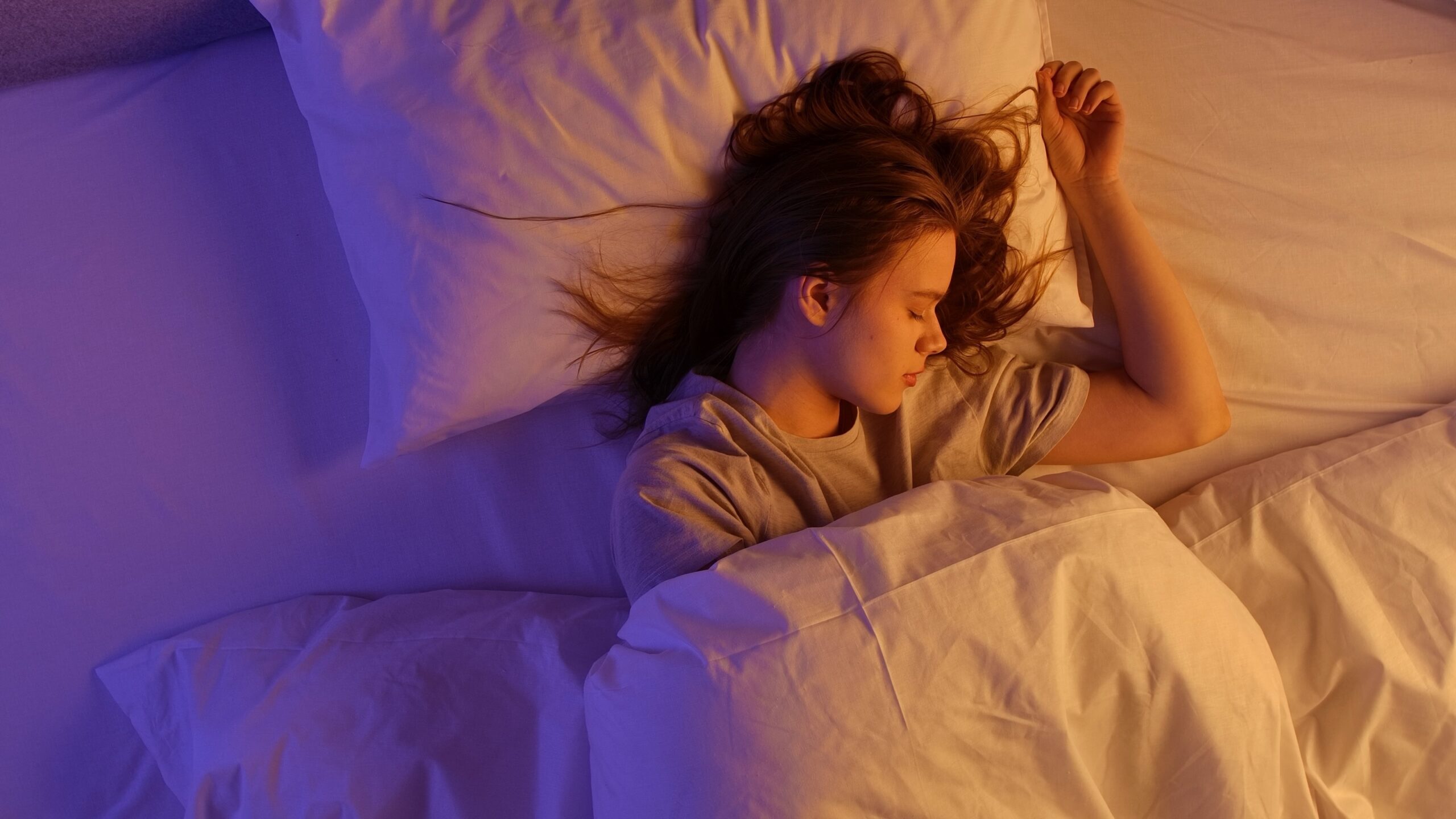
Fragmented sleep might not be restful, but I love it, because I can finally remember what I dreamt. The stories play like movies, colors saturated, plots full of twists. Some are spun from trivia; others are Hitchcockian, suspenseful and complex. Who writes these scripts? Who does that weird and sometimes disconcerting casting? Dreams feel like a gift from the depths, a funny or terrifying vignette pieced together from scraps, as though someone is quilting my life.
Do I want these dreams engineered?
Technology is boring into our private nighttime tales, insisting it can help us sleep better, forget trauma, improve our memory. Engineering dreams can fast-track the emotional healing, researchers say, or jack up creativity. And dreams can be revised to make them less troublesome. Sensory stimuli—sounds, scents, or light—can nudge dreams in certain directions. Wearable devices invade that delicious twilight just before sleep, drumming in certain messages or influences or muscle activation.
If someone is haunted by recurring nightmares, I can understand a little engineering, altering or blunting the nightmare to take away its power. But does that also steal its power to heal us? The body can be an overprotective mother, making everything worse with its attempt to make us better. In PTSD, the nightmares become a symptom; the healing process has shattered, and the repetition only serves to torment us. With other kinds of trauma, nightmares reprocess what was painful in a safer way, without the chemical release of stress hormones. Or they abstract the feeling of fear or helplessness and give it a new story. The trauma begins to soften, the dreams become more ordinary, and the mind grows flexible and calm again. Which is rather miraculous, so of course companies want to exploit it.
Another engineering goal is to enhance creativity. Who would not want their ideas sharper or richer? Who would not want to remember better and learn more? Researchers are studying motor learning, information processing, and memory consolidation—not simply to understand them better, which would be wonderful, but to see how they can be manipulated. Sleep-learning, forming new memories while asleep, is fertile ground. I can imagine DARPA wanting soldiers to learn while they sleep, and the corporate world wanting employees to need less sleep….
We all crave better sleep. Hence our willingness to be tucked in wearing sensors that work like AI baby monitors, tracking our brain wave activity, heart rate, oxygen saturation, body temperature, respiration rate, and muscle movement. TMI, I would say, but its scientific name is polysomnography. What do all these discrete measurements do for us, except make us obsessive? There are too many variables and intersections for any single measurement to mean much, and if you are watching for patterns, they will have as many interpretations as the dreams themselves. Yet wearers check their stats every morning, as worried and eager as diligent dieters climbing on the scale.
The numbers reveal very little. And sure, you can immerse us in virtual reality before sleep, and we will dream about whatever bit of VR caught our attention, or maybe about the parts that did not, so we can remove them from long-term memory. Dreaming is still a bit mysterious, but yes, we are suggestible. Does that mean we can be changed in any significant and lasting way by manipulated dreams? I doubt it.
The insight that our bodies influence our dreams, though—that feels important. Symptoms linked to anxiety can make us think we are anxious even if they have an entirely different cause. States in the body are bound to influence our mind as it is dreaming. Asleep, we register noises and draft them to serve in our dreams; the fire engine wailing outside our window becomes a siren signaling the end of the world, or a muezzin’s call to prayer, or a teacher yelling at us in a high-pitched voice. Like artists who use found objects, we integrate whatever is presented to us as we create.
But that does not mean our body should be reduced to the role of interface, used “to increase the immersion of virtual environments by engineering multi-modal devices that can simulate haptic sensations such as touch, temperature, and inertial forces as well as audio-visual or olfactory sensations.” That sentence alone, written by researchers into Human-Computer Interaction, should worry us. The computers are winning.
Even without cybertech, though, humans have a long history of getting sleep wrong. Sleep paralysis, for example, can make someone briefly unable to speak or move. Apparently you feel a weight on your chest and sense a threatening presence in the room. In Newfoundland folklore, this is the Old Hag, a withered, witchy old woman who plops herself down on your chest. In China, it is ghost oppression. Here in the U.S., it has conjured tales of alien abduction. But really? REM sleep makes your breathing shallow and stills your muscles, so if you get stuck in that stage as you wake, you will feel pressure on your chest and a frozen, panicky helplessness.
Humans also have a long history of trying to influence dreams. We want them to summon God or our beloved dead, solve anguishing problems, make decisions for us, or offer prophecy. The engineering tech is new, but back in 1350 BCE, the method outlined on papyrus was to draw on your hand, then cover that hand and your neck in black cloth and fall asleep. Thus would you gain access to the wisdom of Besa, a pot-bellied, leonine dwarf deity responsible for bringing merriment to your household and guarding you from evil.
I would not mind a little help from Besa. So why do I recoil from more sophisticated engineering? Because it is potentially far more powerful, easily coopted to nudge us in whatever direction society wishes. A word in one of the descriptions of memory consolidation stops me cold: sound cues can be used, it says, “to trigger, bias, or strengthen memories during sleep.” Bias our memories? Maybe I am paranoid; surely they want to bias us away from our fears. But any attempt at mind control makes me nervous. When societal values are powerful and pervasive, we neither resist nor interrogate them. Think of all the emphasis on fitness and weight loss, all the drugs people now rush to take regardless of side effects. Would we bother with any of that, even the guilt of not doing it, in a society where ample flesh meant prosperity? Surely not. But I can readily imagine a commercial market for dream tech that targets appetite and food choice. I can also imagine a hacker altering dream-control interfaces, or a gaslighting husband deliberately inducing nightmares. When are we more vulnerable than when we sleep?
Yet the engineers’ promises are so tempting. They could dissolve fears and phobias, researchers say, by giving us associated sounds or smells while we sleep. For me, that would mean falling asleep expecting to smell vomit, and I am not sure I want to go there. Saving my Spanish memorization for late at night is the extent of my willingness to engineer my dreams.
I thought the point was to learn from our dreams. They scrape up the bits of our life and amuse us by sticking them together wrong. They find what we tried to ignore and magnify its terror, forcing us to pay attention. They comb through unconscious wisdom for insight and solve problems in ways our anxious brain could not. They are elusive, intriguing, intimately our own. And I like seeing what my mind comes up with to surprise me.
Do we have to control everything?