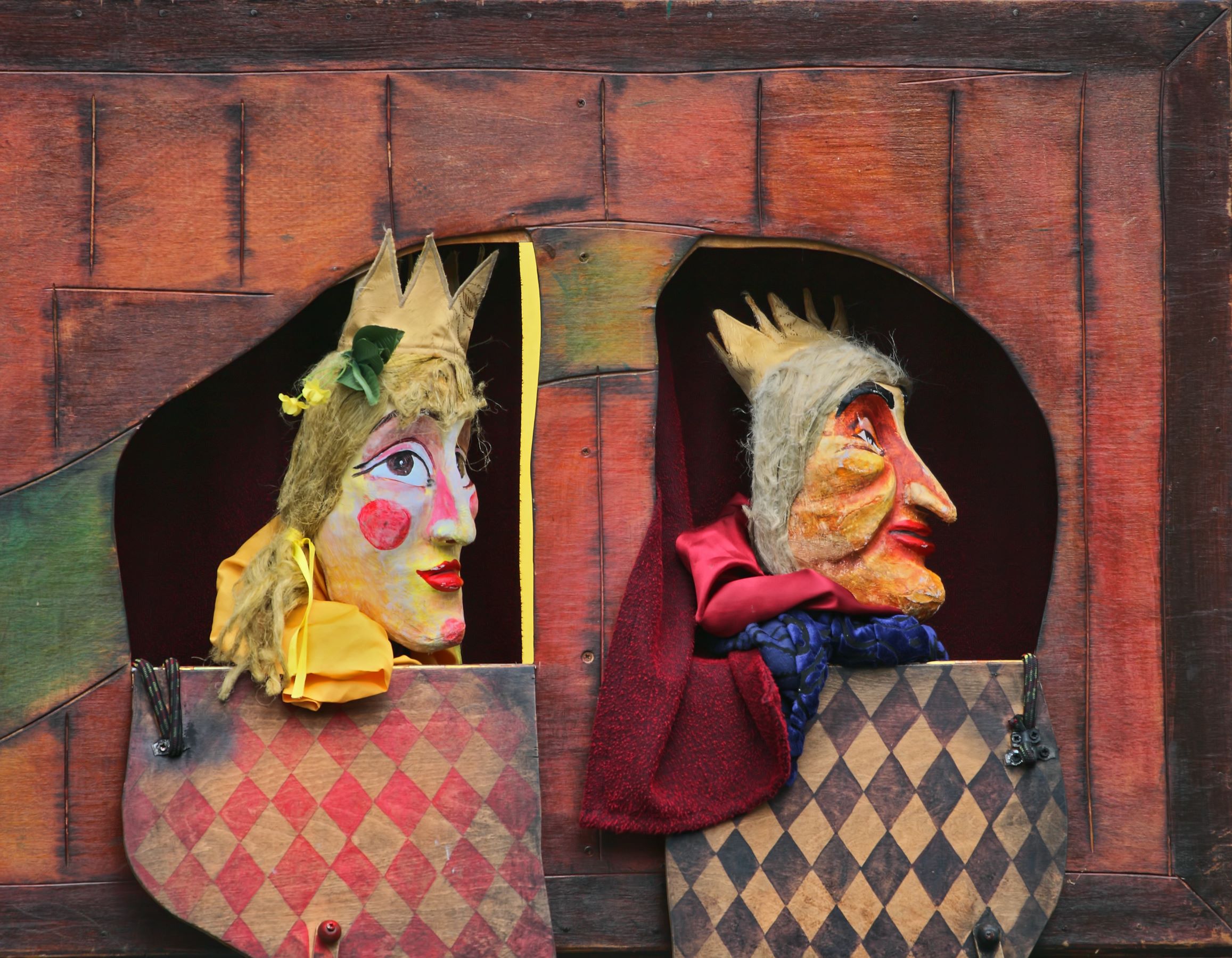
The Doting Baby Book Kept by Robert Louis Stevenson’s Mom
A quirky kid, Robert Louis Stevenson had a mum who watched over him tenderly and noted each illness in his baby book
Lynette Ballard first read Eliot as a sophomore at a small rural high school in Dixon, Missouri. “Oh, my goodness,” she remembers thinking. Modern poetry went straight to the core of her. By the time T.S. Eliot died, she was a freshman at Mizzou, planning to become an English professor.
Why is it unthinkable to design a laptop with a glossy enameled black surround, brass edges, beautiful keys, an elegantly framed monitor? Because we want no friction, no weight, no reminders.
Jerry Springer deliberately performed a public service (an admittedly lucrative one) by reminding those of us he shocked that people behave in ways that make us cringe
We are creatures whose machines overpower them, and we want the machines’ clarity, information, and ease because we are soft-bellied, emotion-ridden creatures. The division is internal, not civil.
Agree or disagree, there is literal truth in his quote. Our nation’s capital was built on swampland.
For Millstone, an engineer of buildings, highways, intelligent communities, and equitable social policy, 102 did seem a reasonable cutoff.
I have no problem with fictional deaths that are random, senseless, and perpetrated only for shock value. A lot of death is random, senseless, and shocking. The problem is how many directors are doing it just because they can.
When we kiss, the world drops away. We are warm lips and darting tongues, soft cheeks or stubble, arched necks, wrapped arms, tingling pressure, tenderness and hunger. We drown in a good kiss, suffocate and come up gasping for air and do not care, because such a kiss insists that we are loved and wanted. Our breath intermingles. For the time it takes a cloud to pass the sun, our souls join.
The more I learn about trees, the guiltier I feel to not know their names. So I press Stan Braude, professor of practice in biology and curator of the university arboretum, into making a few introductions.
I have been under the impression that checks and forms only need to be postmarked by Tax Day, the day I used to tsk at all the people interviewed by news crews as they stood in line at the post office. Karma is now charging me for every smug second.
I loved John Singer Sargent’s Portrait of Madame X the instant I saw it. The subject, I imagined as a coolly aristocratic Frenchwoman in her early thirties. The artist was a man half in love with her—and half in hate.