Henry Wallace, the Progressive Few People Remember
A new biography recounts the rise and fall of a third-party challenge by the outsider who was also inside.
By Gerald Early
August 31, 2025
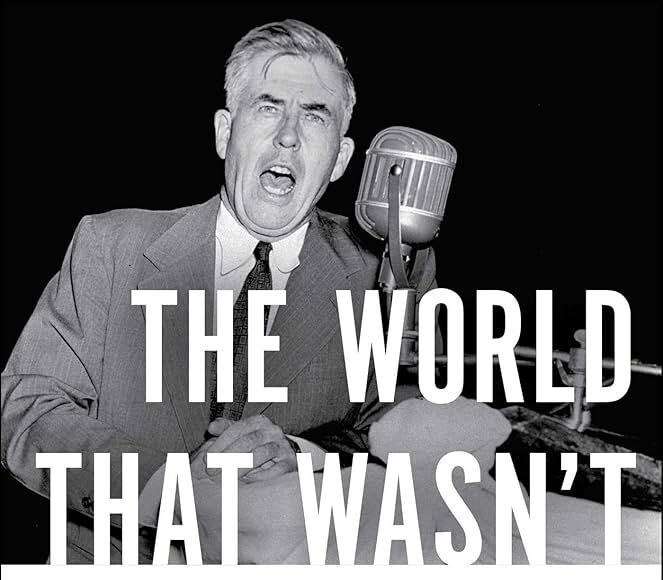
The World That Wasn’t: Henry Wallace and the Fate of the American Century
The ambiguity of dead presidents
There has been a fierce debate among scholars since John F. Kennedy’s assassination in 1963, whether he would have escalated the war in Vietnam or pulled the plug on our intervention as the misbegotten misadventure it ultimately turned out to be. Did Vice President Lyndon Johnson follow Kennedy’s wishes and intentions by committing U.S. combat troops to shore up South Vietnam militarily? On the one hand, Kennedy did withdraw 1,000 military advisors (there were 16,000 total in Vietnam at the time) in October 1963, which might indicate that he was going to withdraw the U.S. military presence entirely. He and Defense Secretary Robert McNamara had doubts about the military and political viability of South Vietnam, about Americans supporting our intervention for very long. The Korean War had been quite unpopular. On the other hand, Kennedy did not want to seem “soft” on communist aggression, which meant honoring some kind of red line somewhere. Just a few weeks before Kennedy was assassinated in Dallas, Ngô Đình Diệm, the devoutly Catholic, monkish, chain-smoking, fiercely anti-communist, third way-seeking prime minister of South Vietnam, was assassinated in an American-instigated and supported coup. (No more recalcitrant, bullheaded Asian strong men like Syngman Rhee of South Korea during the Korean War, was one way for American policy makers to see Diệm’s death, “our miracle man in Vietnam,” as Diệm had been called in palmier days.) How could Kennedy withdraw when his intelligence apparatus was implicated in killing a foreign leader that we were supposed to be backing? Were we not committed for at least the foreseeable future to stabilizing the country? But who can say what Kennedy would have done? Dead politicians with ambiguous policy behavior can do anything the living imagines they would do, or would have liked for them to have done.
• • •
Did Abraham Lincoln intend for a lenient Reconstruction after the Civil War that would have permitted the Southern rebels to return to the Union with a simple pledge of loyalty, welcomed back like wayward children, forgiven like prodigal sons by a loving father? Andrew Johnson, who succeeded Lincoln after his assassination, certainly thought so and acted on that assumption (and his own White Supremacism, Southern desires), redeeming Southern states with White-rule governments that denied Blacks the right to vote, even the right to leave the state, while forbidding federal intervention under the banner of states’ rights. Southern potboiler novelist Thomas Dixon Jr. certainly thought so as he made clear in his notoriously racist novel, The Clansman (1905), the source for D. W. Griffith’s epic 1915 film, Birth of a Nation, and even more blatantly so in The Southerner or A Romance of the Real Lincoln (1913). Jefferson Davis thought Lincoln’s death was “a great misfortune to the South.” The White Southern politicians who published Why the Solid South or Reconstruction and its Results in 1890, brought sufficient evidence of Lincoln’s lenient intention in the first chapter of their lengthy book, and believed it too. Never was Lincoln so loved by White Southerners until he was dead.
Dead politicians with ambiguous policy behavior can do anything the living imagines they would do, or would have liked for them to have done.
On the other hand, Radical Republicans thought and acted in a diametrically opposite way with federal military occupation and the Freedmen’s Bureau, and yet thought they too were doing what Lincoln intended. Frederick Douglass was convinced that had Lincoln lived, he would have granted and protected Black voting rights, at least for educated Blacks and those who served in the Union army, and would have tried to shape gradually and cautiously a new multi-racial South. Douglass, who had gotten to know Lincoln a bit, felt that the president had grown in his views during his years in the White House. For instance, Lincoln knew how important and impressive Black troops had been for the Union cause. Historian LaWanda Cox was convinced that Reconstruction would have gone differently from Andrew Johnson’s notion had Lincoln lived. First, there would not have been the chasm between Congress and the presidency as occurred with Johnson. Second, Lincoln was not afraid to use federal power to enforce aspects of Reconstruction, if he found that necessary. “. . . unlike [Andrew] Johnson and the Democrats, Lincoln indicated no aversion to the use of consitutional amendment to change the historic division of powers between state and federal government.” (LaWanda Cox, Lincoln and Black Freedom: A Study in Presidential Leadership, University of South Carolina Press, 1981, 151) But who can say what Lincoln would have done? Everyone needed their own Lincoln for the Reconstruction they desired.
• • •
I am not a deep thinker like you are.
—Harry Truman to Henry Wallace, after Truman won the Democratic vice-presidential nomination in 1944
When Franklin D. Roosevelt died in April 1945, it was unclear to people precisely what his policy might have been toward the Soviet Union, as, after all, they were still our allies in an unfinished war. In Curtis D. MacDougall’s three-volume monumental study of the rise and fall of the Progressive Party of 1948, Gideon’s Army (1965), Harry Truman is presented as betraying Roosevelt’s intention, apparently laid out at the February 1945 Yalta conference, that the United States would follow a conciliatory approach to the Russians, not the “Get tough because that is the only thing the Russkies understand” policy of the Missouri haberdasher. But what could one expect from an unimaginative political hack like Truman, as Truman’s liberal enemies saw him? As far as the Progressives were concerned, Henry A. Wallace was Roosevelt’s true successor, a true dyed-in-the-wool New Dealer, a United Nations, One World idealist, a believer in peace, prosperity, international agricultural advancement, and 60 million American jobs that could only be accomplished by cooperating with Russia.
And he would have literally succeeded Roosevelt in 1945 had he remained on the Democratic ticket as vice president. But Roosevelt insisted that Wallace, his secretary of agriculture, be on the ticket in 1940, partly as a sop to the liberals, but also because Roosevelt was comfortable with him. “I like him. He’s the kind of fellow I want around. He’s honest. He thinks right. He’s a digger,” Roosevelt said to his postmaster general. (John C. Culver and John Hyde, American Dreamer: The Life and Times of Henry A. Wallace, Norton, 2000, 218) Perhaps “digger” is the right word: Iowan Henry A. Wallace, son of Henry C., who was secretary of agriculture under Warren G. Harding, also known as the boy wonder of corn, the editor of his family’s famous farm journal, an ungraceful if effective tennis player, the capacious reader, walker, and seeker of the perfect diet and deity. Yes, Wallace was a digger.
As far as the Progressives were concerned, Henry A. Wallace, was Roosevelt’s true successor, a true dyed-in-the-wool New Dealer, a United Nations, One World idealist, a believer in peace, prosperity, international agricultural advancement, and 60 million American jobs that could only be accomplished by cooperating with Russia.
“Notwithstanding conspicuous differences in their approaches to politics,” writes Benn Steil in The World That Wasn’t: Henry Wallace and the Fate of the American Century, “Wallace and Roosevelt esteemed each other’s open and curious minds. Both men were Freemasons. The most tangible surviving evidence of their mutual interests is the one-dollar bill, whose Masonic Eye of Providence at the apex of the Great Pyramid was the product, in 1934, of Wallace’s inspiration and Roosevelt’s design. The Latin phrase beneath the Pyramid, Novus Ordo Seclorum (New Order of the Ages), signified for Wallace the spirit of the New Deal—a suggestion which delighted the president.” (65) Now we know why Roosevelt dug diggers.
But Roosevelt’s choice was so unpopular with many of the party faithful that a humiliated Wallace could not give his acceptance speech at the convention, as the party could not afford to have its vice-presidential choice booed by the people who had just “chosen” him. The next day, when asked about the ruckus, Wallace simply said, “It was a Democratic convention.” (Culver and Hyde, American Dreamer, 225) And so Roosevelt disingenuously misdirected Wallace from the ticket in 1944 by vaguely supporting him as well as former South Carolina Senator Jimmy Byrnes and Missouri Senator Truman. Once again, Wallace was humiliated at the national convention as he, a sitting vice president, had to endure being on the convention floor for his demise when Truman got the vice-presidential nomination.

Roosevelt’s death created a Shakespearean scenario: Truman is the crafty usurper; Wallace the true heir denied the throne, not because Roosevelt did not want him again as vice president, but because self-serving party functionaries manipulated Roosevelt to choose Truman, motivated by their hatred of Wallace because he was a Progressive. In this sense, Wallace was not just the rightful heir to the leadership of the party but a martyr for the liberal cause as well, as the Wall Streeters took over from the New Dealers under Truman. The rise of Truman was all about purging the visionary New Dealers for second-rate, hardline so-called realists, influenced by British imperialist Winston Churchill. This might indicate how Wallace felt about Churchill: During a wartime meeting, when Wallace responded to Churchill’s advocating “for unity between English-speaking people” by saying that he desired a closer relationship between North and South America, Churchill remarked, “I am not just a government leader, I am also a painter, and I tell you that when you mix colors you get only a dirty brown.” Wallace diligently studied and occasionally spoke Spanish. This was one of Wallace’s favorite stories. (MacDougall, Gideon’s Army, 34-35) As Benn Steil writes in The World That Wasn’t, “. . . Wallace abominated European—particularly British—imperialism, seeing the continent’s far-flung colonies as victims in much the same way that he saw Midwestern farmers as victims of greedy Northern industrialists.” (38)
Roosevelt’s death created a Shakespearean scenario: Truman is the crafty usurper; Wallace the true heir denied the throne, not because Roosevelt did not want him again as vice president, but because self-serving party functionaries manipulated Roosevelt to choose Truman, motivated by their hatred of Wallace because he was a Progressive.
But how could anyone take seriously the policy ideas about the Soviet Union formed by the fatally ill, visibly weakened, and disengaged Roosevelt at Yalta? But then again, why not? They seemed consistent with Roosevelt’s overall postwar vision. Truman kept Wallace on as his secretary of commerce after Roosevelt’s death, but was forced to fire him when Wallace persistently and publicly criticized Truman’s foreign policy as a dangerous and unjustified departure from what Roosevelt wanted. This led to Wallace’s determination to challenge Truman, not from within the Democratic Party, where he had no chance against the establishment, but outside of it, where he thought he could break the “get tough with Russia” guys.
The certainty of rebels
I told him so all the time. He should never have done it.
—A weeping Ilo Wallace, wife of Henry Wallace, as the election returns from the 1948 presidential election came in showing Wallace doing even worse than anyone imagined, making clear that voters overwhelmingly rejected Wallace’s campaign and party
Benn Steil’s The World That Wasn’t, in its title, for many readers, makes clear its difference from Culver and Hyde’s American Dreamer. The latter title offers an account of someone visionary and idealistic; the former suggests someone delusional or willfully misleading. It is simplistic to contrast the books in this way, as both are far more nuanced than that. Yet it is useful in some measure to understand the subtle difference between a quixotic endeavor and a fool’s errand.
Both books tell the reader that Wallace was, so to speak, to the manor born, winding up with a career in agriculture. Both his grandfather and his father were farmers and wound up editing one of the most popular farm journals in Iowa. His family was industrious and religious. At the age of four, Wallace went on long walks with the great Black botanist George Washington Carver, who at the time was a faculty member at Iowa State. “In my early life,” Wallace stated, “I thought completely in terms of seeds, plants, and farming.” (Steil, 10) He learned high-level math so he could better produce data about yields. He experimented early and often. He might have, in some respects, been better off had he been a scientist instead of winding up in politics, but his approach to politics was somehow an extension of his scientific interest. He saw the world as a divide between agriculture and big business. The latter he felt had destroyed rural America and destroyed the “moral fabric of society.” (Steil, 34) Wallace would always be an interesting blend of the curious and the dogmatic. Despite his education, Wallace was essentially an autodidact. He wanted to understand a subject, life itself, on his own terms.
Wallace broke with his family by voting for a Democrat, Roosevelt, in 1932. There was no way he would have voted for Herbert Hoover, whom he despised, a symbol of everything he hated about big business, and the man he felt destroyed his father’s health when both worked in Harding’s cabinet and clashed bitterly. Under Wallace, the Department of Agriculture was the place for young New Dealers to be, because Wallace was open to trying things. It became the largest department in the federal government, growing from 40,000 to 146,000 under Wallace’s leadership. Steil does not think much of Wallace’s administrative or managerial skills (Steil, 29), but Wallace did not need personally to possess such skills, if he recognized them in other people. Clearly, people wanted to work for him.
He saw the world as a divide between agriculture and big business. The latter he felt had destroyed rural America and destroyed the “moral fabric of society.” Wallace would always be an interesting blend of the curious and the dogmatic. Despite his education, Wallace was essentially an autodidact. He wanted to understand a subject, life itself, on his own terms.
Steil provides a longer, more detailed account of Wallace’s interactions with a bald Russian artist and mystic named Nicholas Roerich than does Culver and Hyde, although both tell the same story. Wallace, always subject to mystical leanings, fell under the spell of Roerich and his entourage. This did not happen out of the blue. Wallace had been attracted to theosophy and was always something of a religious seeker. “I know that I’m often called a mystic,” he said about himself in later life, “and in the years following my leaving the United Presbyterian Church, I would say I was probably a practical mystic. I’ve always believed that if you envision something that hasn’t been, that can be, and bring it into being, that is a tremendously worthwhile thing to do. I’d go this far—I’d say I was a mystic in the same sense that George [Washington] Carver was, who believed that God was in everything, and therefore, that if you went to God, you could find the answers.” (Culver and Hyde, 78)
Wallace was attracted to Roerich to such an extent that he funded, using taxpayer money, Roerich’s journey through Central Asia, ostensibly to get desert grass seeds that could be used in the United States, but, as Steil writes, actually to seek and find a place called Shambhala, “a onetime earthly Tibetan-Buddhist paradise that now existed as a heavenly vision of perfection. . .” (Steil, 56) The letters that he wrote to Roerich and Florence Grant, part of Roerich’s inner circle, using a discipleship name, Galahad, and referring to Roosevelt as “the Flaming One,” would come back to haunt Wallace during the 1940 campaign when he would deny having ever written them. Wallace not only underwrote this expedition with government money but with his own money as well. (Steil, 81) He even went against his own employees when they opposed funding Roerich and even demoted one of them. When the Roerich expedition blew up, as Roerich was seen in various countries as an agent trying to establish his own settlement in China, hoping for help from the Japanese, Wallace denounced Roerich and denied any knowledge of Roerich’s political activity. In swearing allegiance to Roerich above the interest of his own government, Wallace came perilously close to treason. It was probably the most dishonorable episode of his career.
Wallace seems at times a political ingenue, a pose, in some ways, Wallace liked to adopt to play up his innocence; at other times, he is as an unpretentious, tattered, if absent-minded, scientist and author (he wrote a lot of books); at others, the raw-boned, hiking, plant-obsessed Midwesterner; and at still others, a mystic (the most common word used by his enemies to describe him). The combination of these personae was, taken together, something like the common man, which Wallace both advocated for and embodied authentically and as a kind of act. It is this last, the act, that Steil distrusts, the pose as the guileless man of integrity and duty. In this way, he seems more suspicious of Wallace than Culver and Hyde.
In swearing allegiance to Nicholas Roerich above the interest of his own government, Wallace came perilously close to treason. It was probably the most dishonorable episode of his career.
Steil uses the phrase “The World That Wasn’t” twice toward the end of the book. First, about Wallace’s difficult tour of the South during his presidential campaign, Steil writes, “As with Stalin’s Russia, Wallace was navigating the Jim Crow South with a mental map that bore little relation to reality. It was yet another instance of The World That Wasn’t. The Common Man of his imagination needed only leaders devoted to peace and planning in order to thrive beside his neighbor, a neighbor whom he, the noble commoner, mistakenly considered the alien ‘other’—thanks only to the evil of corporate-induced false consciousness. Racism, like anti-Communism, was, for Wallace, a political disease, yet one reliably cured through the patient provision of jobs and Christian goodwill.” (Steil, 477) Second, when Steil sums up Wallace’s fight against the idea of a Cold War: “The chaotic 1944 Democratic convention provided the perfect backdrop for the tragic narrative of The World That Wasn’t—the narrative that the cold war had been brought on by a corrupt coterie of party oligarchs who bribed delegates with sinecures and ambassadorships. It is a narrative contradicted by the evidence. . . but one which has endured thanks to its usefulness in delegitimizing the presidency of Harry Truman.” (Steil, 511) Here, the author swipes the two pillars of the Wallace legend as Progressivism’s profile in courage—his stand against racism by confronting White southerners, and his stand against conventional, postwar anticommunist politics that valorize the idea that the Cold War was inevitable and Russia’s fault. But the fact that both southern racism and Cold War anticommunism were such bedrocks of the establishment at the time meant it took more than a little courage to challenge them, even if aspects of his stance, clumsily assumed, he later repudiated. But opposition (resistance as it is called these days) by itself is not enough because opposition is not inherently right for its own sake. As Wallace observed in a letter to a friend, “[I] don’t like the spirit of many of the socialists. It seems to me that they derive their strength too much by mere opposition to the existing order.” (Culver and Hyde, 94)
Steil’s book provides much more information about the number of secret Soviet sympathizers and operators who clustered around Wallace, using new information from previously unavailable archives. Wallace was a tool, to be sure, but that he was unaware of being used is not entirely believable. He seemed as capable a judge of human nature as anyone else. So, he chose not to believe he was a tool. He was as subject to flattery and huge cheering crowds as any candidate for president, and the communists connected to the Progressive Party were able to supply him with adoration. But those blandishments were not enough by themselves. It was the egotism of the cause, the self-justification of his rebellion, the certainty that he was right.
Wallace, of course, wrecked his political career with his run for the presidency in 1948. His biggest mistake was not quitting the government when Roosevelt was in his final weeks to take over the leadership of the liberals, as Eleanor Roosevelt begged him to. But perhaps he knew he would wreck his career. Perhaps he wanted to, as, after all, he did not really have the makeup to be a successful politician. But he was one of the most important political figures of his time. And that he believed so deeply and sincerely in the New Deal, a policy meant to enact our better angels, because he risked so much to defend it, is important as one partisan’s commitment to his side in our country’s eternal civil war over our American Dream.