Slow Birding

Bask in a sunny garden and watch the birds. Hike slowly through the woods and listen for their calls. Pull up the new, free Merlin app to find out which bird sings that song. Gradually, you will learn intimate details about the lives of these “winged dinosaurs that have given up stored fat, hollowed their bones,” to fly.

Wakanda Forever is a Bad Film but an Important One

One of the ironies of Afrofuturism is that it is less concerned with the future than it is the mythological reconstruction of a past that would enable Blacks to see themselves differently in the present. Whether the idealizations of Wakanda are ultimately debilitating or liberating for the Black mind and its struggles with persistent racial persecution and the enfeebling belief in Black inferiority is open to debate.

Putting on Superman’s Cape

The idea of CPAC made me sore afraid, so of course I wanted to go. I felt like the boy in the daguerreotype who has climbed a tree in order to better view the state funeral cortege.

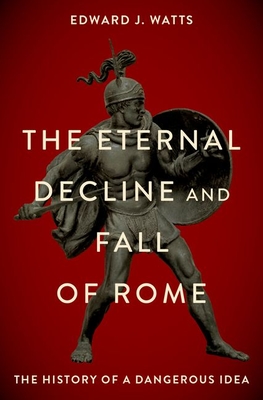
The Roots and Persistence of the Idea of Decline

Watts’s lucid history of Rome’s “dangerous idea” makes clear that the problem is not so much that we do not remember the past, but that we remember the wrong things.

Thoughts on The End and How We Go On

Dying is something we all do. Saints, film stars, Olympic athletes, con artists. I feel calmer every time another cool friend pulls it off; if all these smart, funny people have managed to die, could it be so awful to share their fate? Yet much of what we call culture is created to deny death, or at least distract us from it.

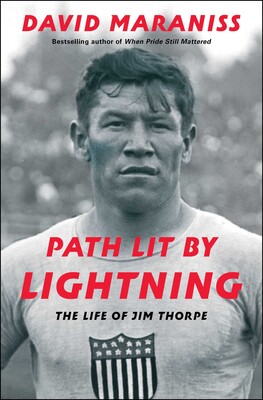
Remembering “The Poor Indian”

With his new biography of Jim Thorpe, David Maraniss has once more written a book about a seemingly transcendent sports figure. Thorpe is widely recognized as one of, if not the, greatest athlete of the twentieth century.

Interesting Things I Found on the Internet, November Edition

Blacks got syphilis and Whites got polio, or so it was said. Naturally, the racist practices of the White medical establishment led to polio being underdiagnosed and undetected among Blacks. The differential susceptibility theory was, in part, a way to flatter Whites—more advanced races got polio—and to justify the unequal distribution of medical resources.

The Possibility of Joy

Ross Gay’s point is that “joy and pain are fundamentally tangled up with one another.” What if, he says, joy is what bubbles forth when “we help each other carry our heartbreak?” To know that, though, we have to invite sorrow in. We welcome it with open (not crossed) arms. And once we stop resisting sorrow, guess what? We no longer resist or brush aside joy.

How Bosnians Changed St. Louis

"Bosnian St. Louis" reminds us how beautiful Bosnia and Herzegovina was, and how readily people of different faiths and ethnic backgrounds intermarried and socialized. This small country with a mouthful of a name was first part of Yugoslavia—and it was the only Yugoslav republic established purely by geography and history, not ethnicity.

The Cello

For a solid year, Christian Okeke works twelve hours a day—doing construction, working in a factory, mopping up spilled beer and sticky foam at a bar—to buy his own cello. It arrives naked—no strings, no pegs, and no bridge—so his cellist friend helps him find all he needs.

Skip to content