“Six-seven!” and the Nonsensical Gestures of Pop’s Rapid Onset Obsolescence
By Wen Gao
February 28, 2026

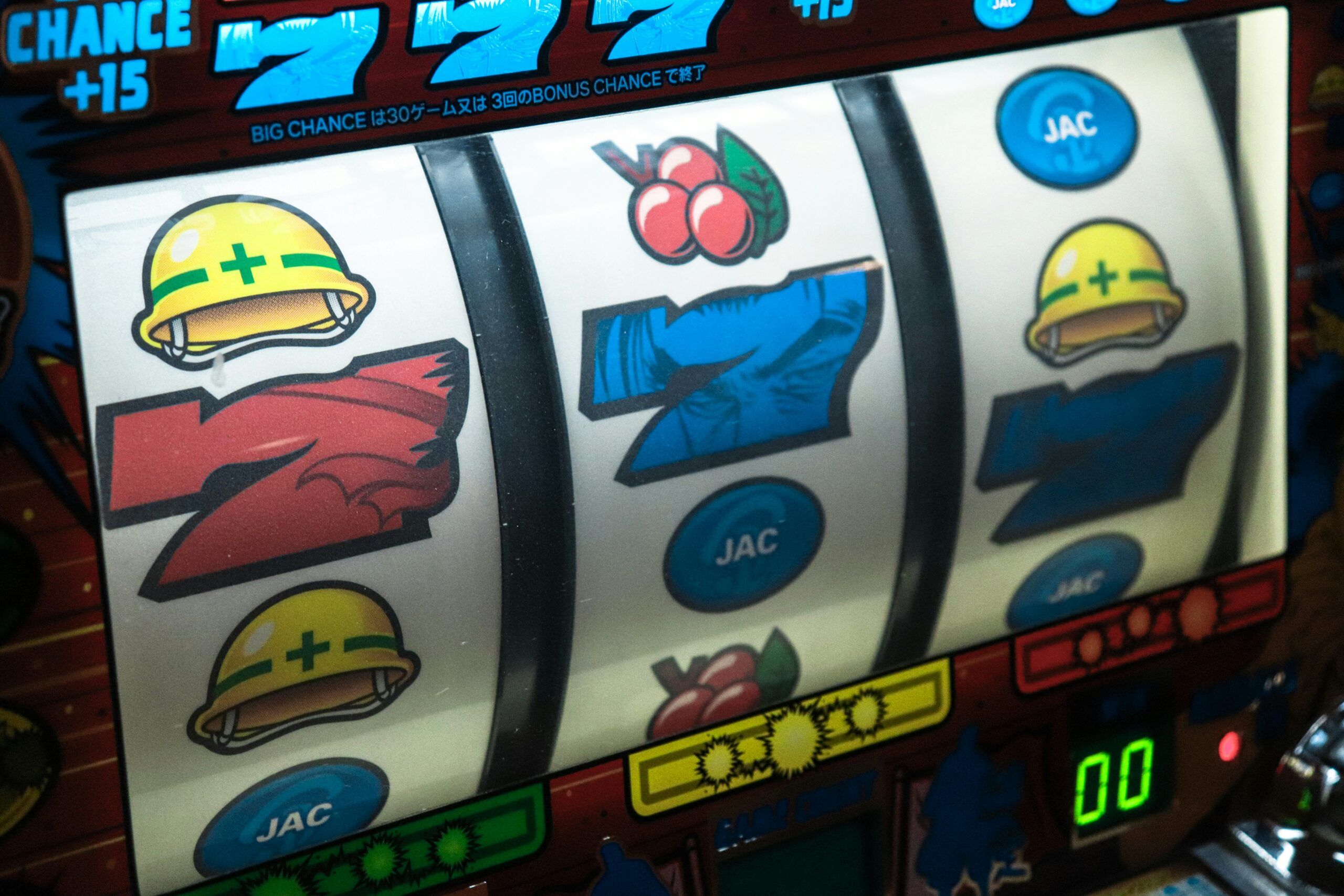
A few months ago, I was babysitting two kids, one eight and the other five years old. We were in the middle of a board game when the numbers six and seven happened to come up together. Suddenly, as if they had been struck by something. They giggled hysterically, chanting “Six-seven!” with their hands up and down. I was so confused.
Once I finally tucked the kids into bed, I found that I could not get over it, and I asked ChatGPT. It said that six and seven are merely two natural numbers whose meaning depends on context. When I typed “67” into Google, the entire screen began to shake up and down, mimicking the kids’ arm motions. Apparently, Google’s software engineers are in on the joke. I sank into the rabbit hole of YouTube. My homepage was instantly flooded with Gen Alpha1 prank videos. Some of them were quite dismissive, grounded in religious belief, or even cult-related. None of them did anything to quiet my curiosity. Finally, I found a New York Times article. It traced the whole phenomenon back to a song called “Doot Doot (6 7)” by the rapper Skrilla. Basically, as I understood it, the article discussed that Gen Alpha is using absurd memes2 to reclaim their own space and identity where they are constantly surrounded and monitored by the digital environment.
For most children performing it, these two numbers mean nothing. Whether it originated from a rapper or a TikTok video is irrelevant to them. So, it makes me more confused. How did a complete lack of meaning, paired with simple gestures, become a grand celebratory act for this generation?
Maybe I read and thought too much about them. The next day, there I was, sitting in a graduate seminar where the average age was about thirty, surrounded by serious people discussing serious things. It happened. The moment our discussion landed on “Page 67,” a switch inside my brain turned on. I felt like I had been hijacked by some virus. Before my filter could intervene, I blurted it out: “Six-seven!”
The room broke. The spell of seriousness cracked for a second, and a few people smiled in knowing recognition. Then, we returned to the discussion quickly, back to being adults again. But for that moment, I had stepped outside of it and became ridiculous out of nowhere. Honestly, it hit me: once you kick “meaning” out of the room for one moment, that weird, nonsensical joy comes crawling out from nowhere, but it is funny.
So, this Friday, I went back to babysit those two kids. I had done the mental work. I even practiced the hand motions to show them I could be one of them. I was waiting for that perfect, casual moment to trigger the switch.
I walked in, and we played. I pulled the trigger during the game, and… nothing. They did not have interest in “Six-seven!” anymore? What? Is it over? Wait! I just got it, and it has already gone? I asked the eight-year-old boy about it. He looked at me with very calm eyes and said, “It is not a thing anymore,” and asked me to play another board game with them.
That night, driving home in my twenty-year-old Toyota Corolla, listening to my favorite song, “Hallelujah,” by Leonard Cohen. As he repeated that “Hallelujah” over and over at the end of the song, his voice felt like a heavy anchor in the dark. I felt so peaceful and joyful. His “Hallelujah” has so many layers. The first time is a cry of longing; the second, a testament to brokenness; the third, a touch of the sacred. Each repetition breathes new life into it, filling it with volume and grit. This kind of repetition creates more contexts for me every time I listen to Cohen’s song. That quality has made the song “durable” for more than forty years since it was first written and recorded.
Unlike Cohen’s “Hallelujah,” the repetition of “Six-seven!” is, in reality, a licking of its thin, sugary coating of humor.
It is like a high-frequency mechanical wear. Because the interior of “Six-seven!” is a total vacuum for most people. It lacks any emotional logic or historical thickness to cushion the friction of its use. Every time those numbers are shouted, it is like sandpaper grinding away at the protective film of “novelty.” This repetition is all extraction and no investment. The more popular it is, the more overdrawing the dopamine, instant shocks of absurdity, and social validation. Once that paper-thin sugar coating is licked dry, what is left is a desolate core of nothingness. The children’s reaction to this “boredom” is a hint. They do not just move on; the kids I babysit looked tired of these two numbers when I tried to join with them.
During its peak, “Six-seven!” was a form of social capital, a password that granted you entry into the tribe of the “in-the-know.” Once the circle is saturated, once every kid has screamed it, and eventually, once even a thirty-year-old boring adult like me has tried to join the choir, the “shared secret” is gone. At that point, the symbol flips. It is not funny anymore; more than that, it is a red flag of obsolescence. Any person caught still shouting “Six-seven!” is cringe.
I parked my car, the day having passed so fast. At thirty years old, time just slips through my fingers every day; meaning has become my last defense against the creeping fear of getting old. I must find “value” in every passing second. I need to do it to make fleeting time stabilize as fixed assets. But for an eight-year-old, the current second is fat. When he screamed “Six-seven!” he got that moment. He does not need to hold its value in five or ten years; he does not need to explain himself because he is too busy enjoying the now.
When I stepped inside, my husband looked up from his book with a grin. He had seen me practicing my “Six-seven!”
“Well?” he asked. “Did the kids let you in?”
“It has already gone,” I said, tossing my keys onto the table.
“That fast?”
“Yeah…”
I sat down beside him, leaning into his arms, and rested for a while. Leonard Cohen was still playing on my phone. Yes, the world belongs to them, also to us. They have the moment; we have the years, so many years…
1 Generation Alpha includes those born between 2010 and 2024 (or early 2010s to mid-2020s).
2 Internet memes manifest in a variety of formats, including images, videos (e.g., GIFs), and other viral content. Key characteristics of memes include their tendency to be parodied, their use of intertextuality, their viral dissemination, and their continual evolution.