What the Pets of the Presidency Reveal
January 28, 2026
There are big political questions that prompt citizens to decide whether we agree with our president. But then there is the human question: what sort of person is this president? And what sort of person do the times allow him to be?
One way to begin answering the human question is to consider the nonhumans. I do not mean AI bots. I mean, for instance, squirrels. Warren G. Harding had a pet squirrel named Pete who was given free rein at the White House. Photos show him chattering away with the Navy Secretary. Teddy Roosevelt had flying squirrels. Harry S. Truman tamed the wild squirrels on the grounds and fed them by hand. Which may have caused the population boom had left Dwight D. Eisenhower, a golfer, so irate. The squirrels kept trying to bury or dig up acorns and walnuts, ruining his putting green, and they evaded all the traps the general ordered set. He tried ultrasonic whistles and recordings of dogs barking and cats meowing. In response, the squirrels stole his golf tees. At the height of frustration, he asked his staff to shoot the little guys. (They did not.) Those squirrels had “a freedom I would personally dearly love,” Eisenhower sighed.
Then there were the turkeys. Animal-lover Abe Lincoln was the first to pardon one, not for optics but to honor the affection his softhearted son Tad felt for the bird slated to be their Christmas dinner. A century later, John F. Kennedy returned a gift turkey to the farm from which it had come, saying, “We’ll just let this one grow.” (I am not sure whether the turkey moved his sympathies or just struck him as scrawny.) Ronald Reagan, enmeshed in the tensions of the Iran-Contra affair, disarmed the press by joking that he had “pardoned” a turkey named Charlie. The legal verb had gravitas, and in 1989, George H.W. Bush granted the first official pardon to a turkey, setting precedent for all presidents to follow. (A few looked abashed, but pardoning comes easily to Donald Trump.)
Sure, the ritual has become a mere stunt, and some of the White House pets have been for show, especially with the evolution of media hungry for photo ops. But George Washington had his beloved war horse, and Lincoln’s menagerie included two goats. Legend has it that John Quincy Adams received an alligator from the Marquis de Lafayette and kept him in a White House bathtub, which is probably apocryphal but too much fun to omit. Benjamin Harrison had a collie and two opossums, Mr. Protection and Mr. Reciprocity. Theodore Roosevelt had a motley crew of dogs, from a Pekingese to a Chesapeake retriever, and a small bear named Jonathan Edwards. Also a lizard, five guinea pigs, a big pig named Maude, a green snake named Emily Spinach, Josiah the badger, a hen, a one-legged rooster, a hyena, a barn owl, a macaw, a pony, and, inevitably, Peter the Rabbit. FDR focused on Fala, his now legendary Scottish terrier. Woodrow Wilson let a flock of sheep graze on the White House lawn to trim it, thus economizing and saving manpower during World War I. Herbert Hoover had fifteen dogs, a Persian cat, and a canary, and before becoming president also had goldfish, frogs, chickens, turtles, a rabbit, and, in explanation, two small boys. Calvin Coolidge let his pet raccoon, Rebecca, run around the White House knocking over plants and playing with a bar of soap in a half-filled bathtub. Grace Coolidge cuddled Rebecca regularly and took her for walks.
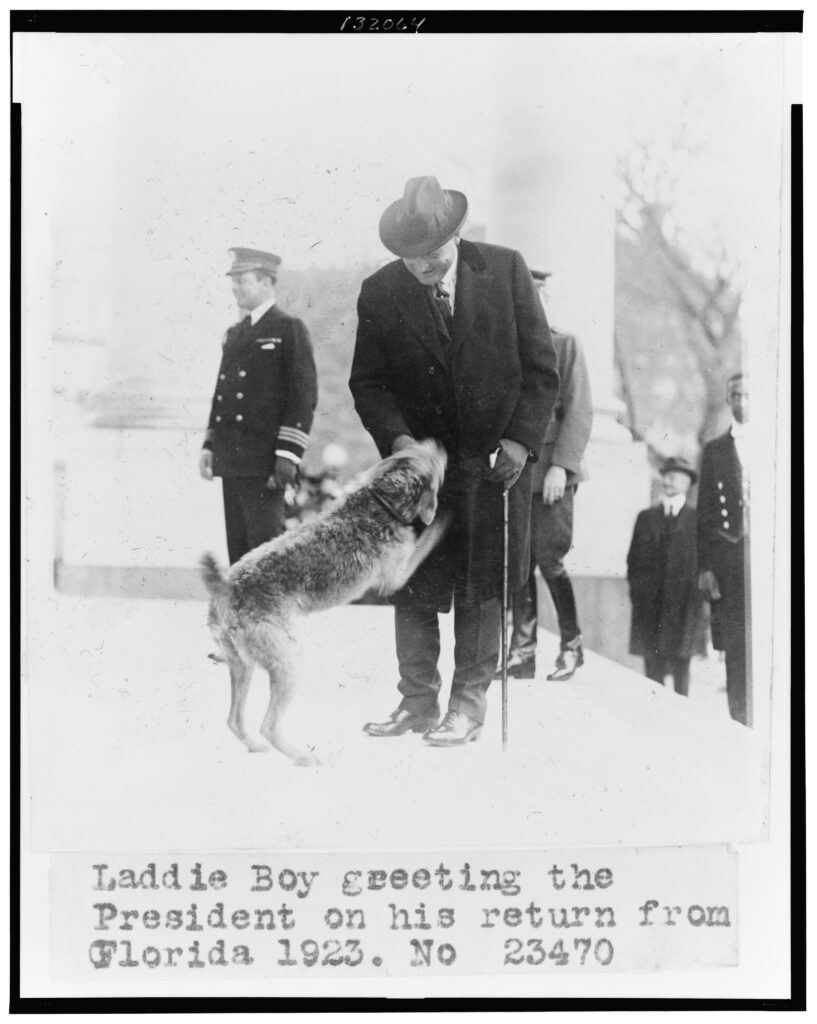
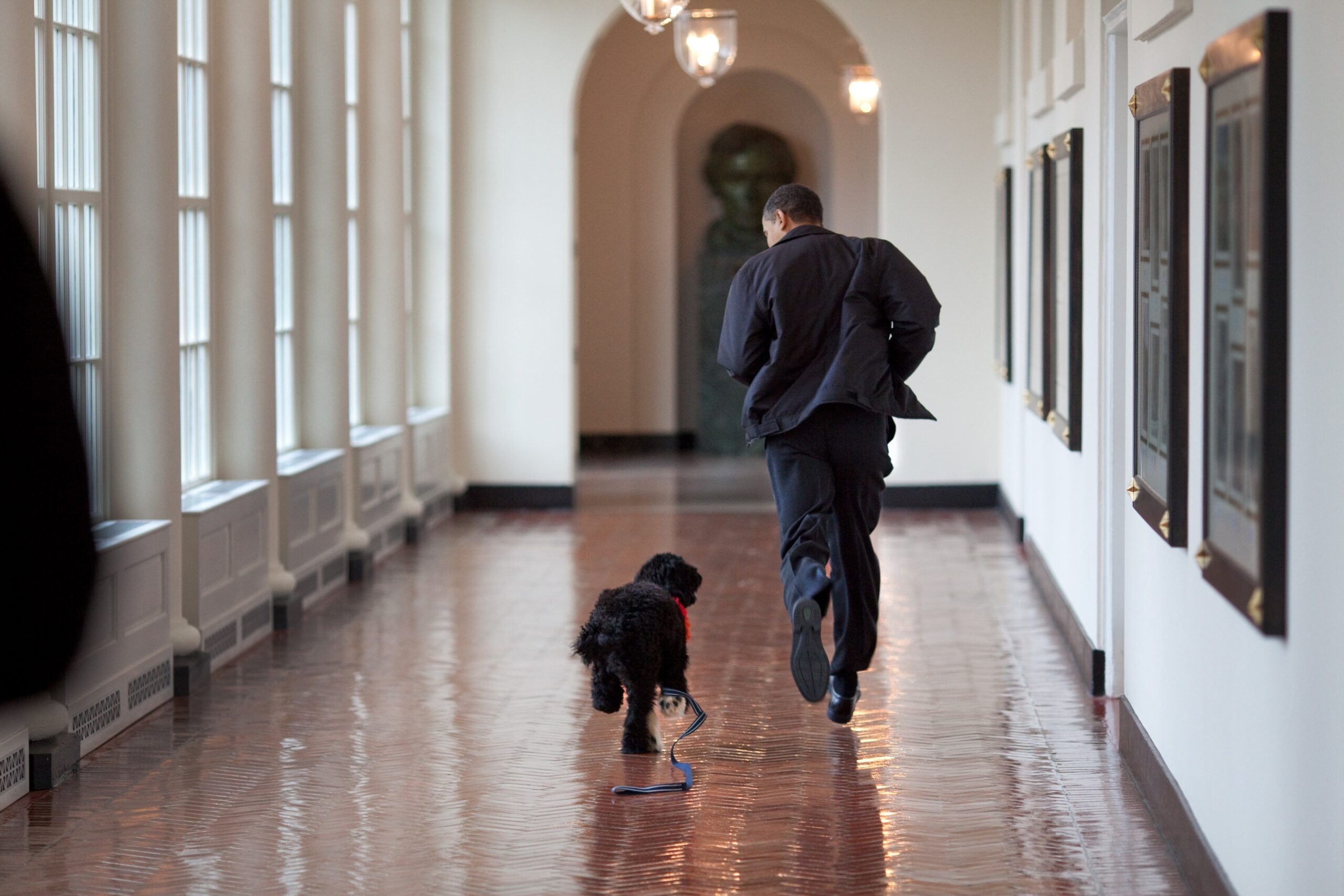
There is a lively warmth to this catalog, an ease and whimsy that are missing from the modern shortlist of expected, conventional pets. George Bush 41 had Millie, an English springer spaniel; his son had two Scottish terriers and a cat. Gerald Ford had a golden retriever and a cat. Bill Clinton had a chocolate lab and a cat. Barack Obama stalled until he deemed his daughters old enough to take care of a dog. Joe Biden got in trouble when his rescued German shepherd bit Secret Service agents (and the next shepherd did the same). Nobody has had a pet opossum, goat, or guinea pig for ages.
Nor do most of us; life in general has become a little more tame and sterile. But reading about the past now, it feels as though nature, and a down-to-earth rural simplicity, have vanished from the White House altogether. As though the president cannot ever truly relax—and by extension, neither can we.
Donald Trump has no pets. “How would I look walking a dog on the White House lawn?” he retorted when the question was asked. There is no mention on record of a puppy or a pet turtle in his boyhood. His first wife said he did not want her poodle to live with them.
The only other U.S. president who never had a pet while in office was James K. Polk. An advocate of American expansionism, he led the country into war with Mexico and dramatically increased the powers of the presidency. Andrew Johnson is a close second, but he squeaks under the bar because he tenderly fed the white mice who had invaded his bedroom.
Why should any of this matter? Because the reason for the PR pressure is that pets humanize. You have to love them, or at least laugh at them. And take care of them. And be inconvenienced by them. They relieve stress and keep things in perspective. When they are sick or dying, they rip your heart open. They are unquestioningly loyal—Trump should like that—but, uh-oh, they are not sycophants. They know their own minds. Also, they are fun. Unpredictable, often mischievous. Impossible to boss around. They humble you.
The public’s interest in the animals who live in our nation’s house is less frivolous than it seems. Restore their influence, and a few political questions might resolve themselves as well.