Thoughts on Traditional Marriage in the Age of Feminism
By Wen Gao
January 3, 2026
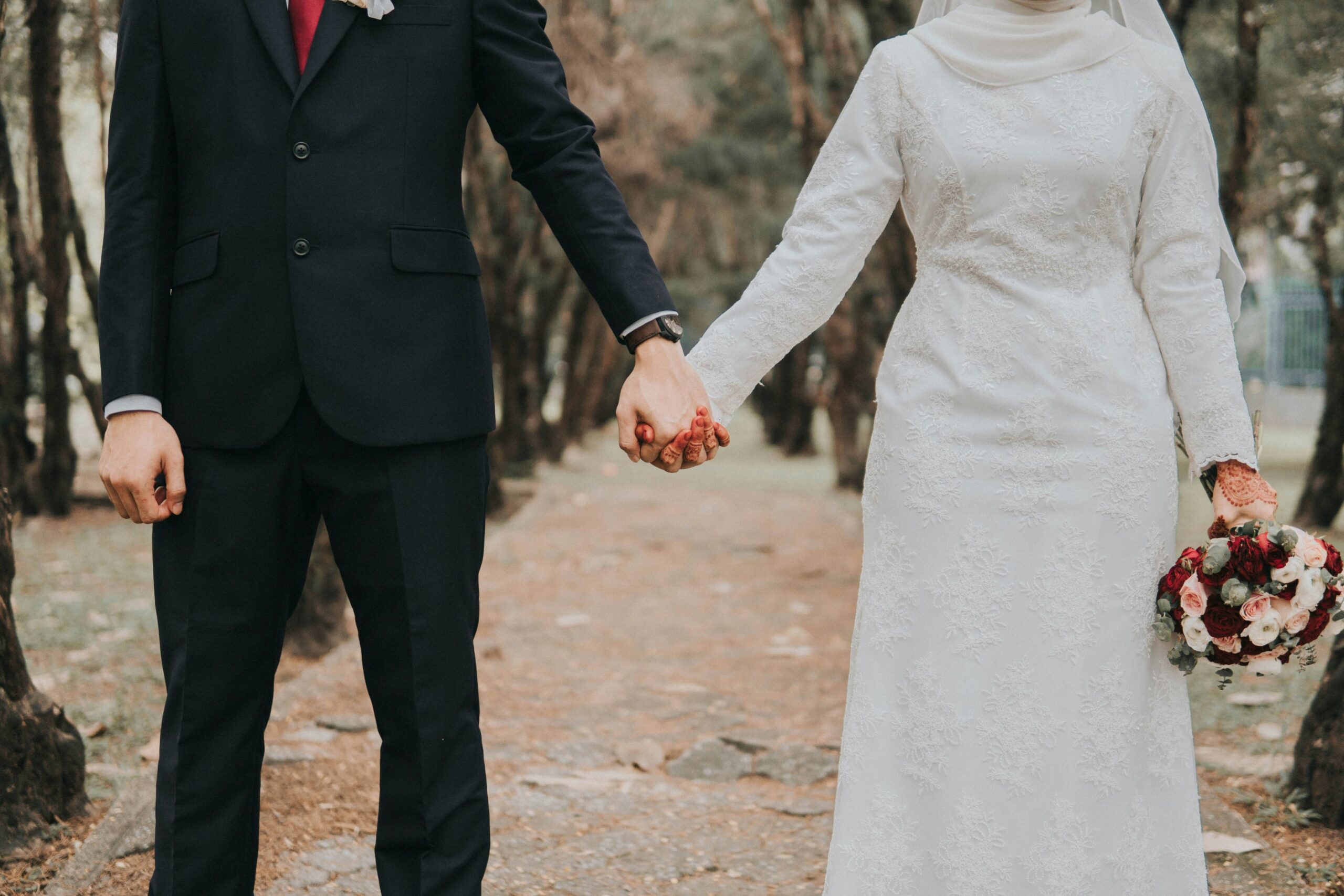
I, an Asian woman, married a White American man more than ten years older than me. When we step out together, sometimes some people immediately get an “if you know, you know” kind of face. Every time I catch that look, I want to hand out a disclaimer: “Hello, just to clarify. I am not being controlled, rescued, projected onto, nor am I reacting to any childhood-attachment-trauma-daddy-issues scenario, nor is he a rich guy. Thank you for your concern and judgment.”
What made me uncomfortable is not the hostility I felt, but the speed with which it erupted. An explanation was already in place before anyone knew who I was, how we met, or how we relate to one another. I had assumed myself to be a subject within this relationship. Instead, I came to realize that I was often read as a product of social structures.
This is my seventh year living abroad on my own. Independence has been my practical necessity. Then came this marriage, and ever since I have been absorbed into a narrative I never signed up for.
My husband and I, newlyweds of just one year, live an ordinary life. We drag each other to Costco on Saturdays, jointly complain about how much we hate a specific restaurant on the Delmar Loop, and endlessly debate the China and America relationship. Yes, he walks through the world with the undeniable privileges of a White American man. And yes, his “expert” insights into China often leave me caught between a laugh and a heavy sigh.
This is my seventh year living abroad on my own. Independence has been my practical necessity. Then came this marriage, and ever since I have been absorbed into a narrative I never signed up for. When I posted our courthouse wedding photos on social media, one online friend, perhaps with good intentions, left a comment: “If this is for the sake of making a living, I wish you luck.” Other responses were less generous. I was told I was being devalued by a pathetic courthouse wedding; I was brainwashed; I sold myself for a green card, and so on…. It is fascinating how people can extract an entire narrative of victimhood or greediness from a few photos.
I respect that all people are entitled to their own worldview, often forged from their own life lessons. But I admit, it left a bitter taste in my mouth. What unsettled me further was noticing that many of these comments came from women. I was either framed as a victim of patriarchal structures or cast as a calculating opportunist. These comments look like opposite perspectives, but I feel they are the same. The same as saying I was no longer someone capable of choice, that I was not progressive enough. My personal choice, other people’s personal choices, more and more become something to be explained or to be corrected. In this regard, choices are no longer treated as agency. They become tests for political awareness and ideological maturity.
The courthouse wedding was a decision. I did not want a big ceremony, and at that stage of my life, school and work mattered to me more. The agency disappeared once the decision was interpreted through the man I married. It became something that needed justification.
Sometimes I joke that my husband is my green card. People laugh. The tension lifts. The joke fits a story already being told that a cross-national marriage, especially an Asian woman and a White American man, must be a transaction. That love needs an explanation. When I say it first, I am not being honest. I am being efficient and a little bit ironic. I answer the question before it is asked. The joke protects me. I start managing how it will be read. That is how self-policing works. I learn the language so well that I begin to speak it myself.
This tendency is not confined to private lives like mine; but happens even to a woman as culturally powerful as Taylor Swift. In her new song “Wi$h Li$t,” Swift sketches a thoroughly ordinary life fantasy—wanting one person, imagining children, a family, and a suburban home with a basketball hoop in the driveway. Yet even these modest images were swiftly absorbed into political interpretation. Some listeners concluded that she was becoming “conservative,” as though a woman imagining stability or domestic life must automatically be retreating from progressive values. In this climate, women’s choices are understood before she herself is, the subject is no longer needed; the language of liberation turns into a new form of discipline.
In the name of resisting patriarchy, women are asked to hold ourselves. To be free is not enough. We must be free in the right way. Certain choices are read as conscious, others as compromised. I wonder: what was the point of all those years of the feminist fight for? Our ancestors fought for centuries for the right to marry whom we want, how we want, or not to marry at all. But now, that hard-won freedom seems to have come with a new set of shackles.
If feminism is to remain a project of emancipation rather than regulation, it must leave room for plural paths. Understanding and listening are not signs of political weakness. They are safeguards against turning collective ideals into instruments that silence the very individuals they aim to free.
Feminism taught me a great deal. It has been my compass, my armor, and my education. Feminism taught me that my life belongs to me. It sharpened my sense of the world. I know what it has given me. And somehow, I feel from inside that collective power also can be used against individuals if we do not use it the right way.
I am deeply happy in a marriage which looks so “patriarchal” to the outside world. Some choices appear conventional, even predictable, yet they remain choices all the same.
What seems more urgent to me is not the need to prescribe a single correct direction for history, but the need to practice understanding and listening. Women do not enter feminism from the same place, nor do they want the same things at the same time. The desires and risks facing a woman in her twenties are not identical to those of a woman in her fifties. Likewise, the priorities of a woman from “the ’hood” cannot be assumed to mirror those who work on Wall Street. When a single model of progress is treated as universal, difference is easily mistaken for failure. Lives that do not align with that model are read as backward, compromised, or insufficiently conscious. Yet liberation loses its meaning if it cannot account for unequal conditions, uneven timelines, and conflicting needs. If feminism is to remain a project of emancipation rather than regulation, it must leave room for plural paths. Understanding and listening are not signs of political weakness. They are safeguards against turning collective ideals into instruments that silence the very individuals they aim to free.
Feminism has shaped the way I understand myself and the world. It gave me language where there was once only discomfort, and clarity where there had been silence. I do not stand outside of it, nor do I wish to.